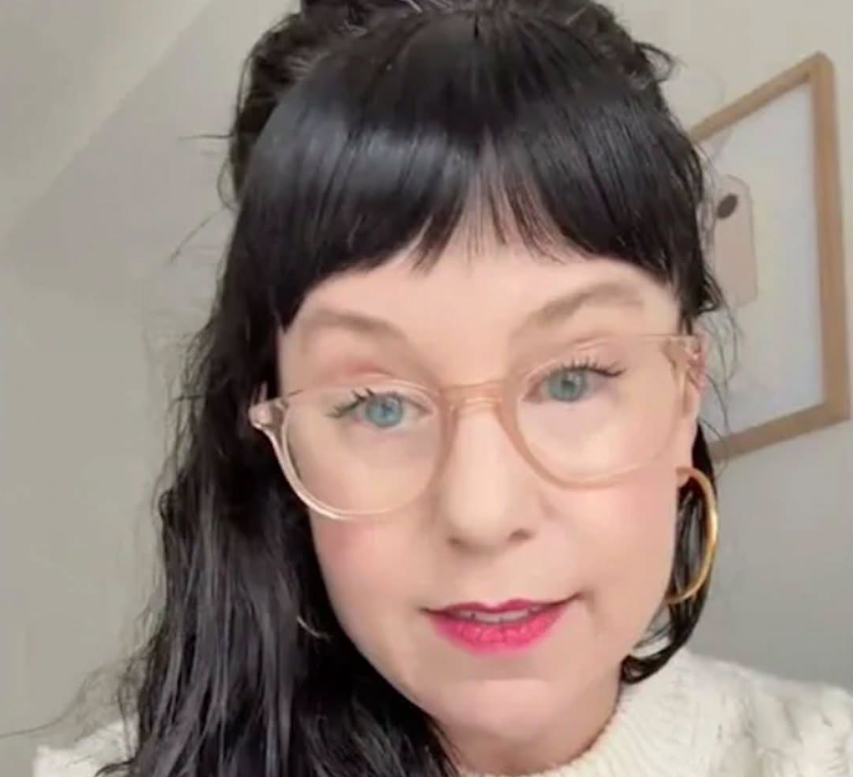
Rebecca Luna looked directly into the camera with remarkable calmness. There were no dramatic speeches, no attempts to shock, and no carefully crafted performance for social media. Instead, the 49-year-old mother, advocate, and TikTok creator quietly shared something almost impossible for her audience to comprehend. She explained that she knew exactly when her life would end because she had chosen the date herself. In Canada, where medical assistance in dying is legal under specific circumstances, Rebecca had made one of the most personal decisions imaginable. Her announcement left thousands of viewers heartbroken and ignited an emotional conversation about illness, autonomy, suffering, and what it truly means to face death with dignity.
For many people who followed Rebecca online, she had become much more than a content creator. Through honesty, humor, and extraordinary openness, she documented chapters of her life that many people hide from the world. She spoke candidly about surviving domestic abuse, overcoming addiction, rebuilding her identity, and learning to embrace hope after years of unimaginable hardship. Her willingness to discuss painful experiences without shame allowed strangers across the world to see pieces of their own struggles reflected in hers.
Then came the diagnosis that changed everything.
While many people in their late forties are focused on raising children, advancing careers, planning retirement, or celebrating new milestones, Rebecca received devastating news. She had developed young-onset Alzheimer’s disease, a progressive neurological condition that affects people well before the age most commonly associated with dementia. Unlike ordinary forgetfulness, the disease gradually damages memory, thinking, judgment, communication, and eventually the ability to perform even the simplest daily tasks.
For Rebecca, the diagnosis represented more than a medical condition.
It meant watching her future slowly disappear.
As the disease progressed, she began experiencing increasing difficulties with memory and daily functioning. Moments that once came naturally required concentration. Familiar routines became confusing. The certainty she had built throughout decades of surviving life’s hardships slowly gave way to uncertainty about what tomorrow might bring.
She understood what Alzheimer’s would eventually take.
Not only memories.
But independence.
Identity.
Recognition of loved ones.
The ability to make decisions for herself.
For someone who had spent years fighting to reclaim control over her own life after surviving abuse and addiction, losing that control felt especially devastating.
Throughout her journey, Rebecca continued sharing her experiences publicly.
Her videos were rarely focused on seeking sympathy. Instead, they became conversations about reality—the difficult, uncomfortable realities many families living with dementia understand all too well. She spoke honestly about fear, frustration, grief, and acceptance while encouraging others to have conversations many people postpone until it’s too late.
As her illness advanced, Rebecca eventually made another deeply personal decision.
After careful consideration, she chose to pursue medical assistance in dying (MAID), a legal option in Canada for eligible individuals who meet specific legal and medical requirements established under Canadian law. The process involves detailed assessments by qualified healthcare professionals to determine whether a person satisfies the legal criteria before assistance can be provided.
For Rebecca, the decision was not presented as giving up.
Rather, she described it as preserving the small amount of control she still possessed.
The disease could determine many things.
But she wanted the opportunity to decide when she would say goodbye, where she would spend her final moments, and who would be beside her when that time arrived.
Her announcement generated an enormous public response.
Supporters praised her honesty and courage in discussing a topic many people avoid entirely. Others expressed sadness that anyone should face such a devastating illness at such a young age. Still others raised difficult ethical questions about assisted dying, disability, autonomy, and how societies care for people living with progressive neurological diseases.
The conversations were emotional, respectful, and often deeply personal.
People shared stories about parents lost to Alzheimer’s.
Grandparents who no longer recognized family members.
Spouses slowly disappearing while still physically present.
Rebecca’s story became larger than one individual because so many families recognized pieces of their own experiences within hers.
In the days leading up to her death, Rebecca gradually stepped away from social media.
The woman known online as **@wheredidrebeccago** chose to spend her remaining time away from cameras and comment sections. Instead of creating more content, she focused on what mattered most to her—sharing quiet moments with family, surrounding herself with the people she loved, and experiencing as much peace as possible during the final chapter of her life.
For longtime followers, her absence felt profound.
They had become accustomed to hearing her voice regularly.
Then, suddenly, there was silence.
That silence carried extraordinary weight.
Rebecca’s legacy extends far beyond the final decision she made.
Long before discussing assisted dying, she had already inspired countless people by speaking openly about surviving abuse, rebuilding after addiction, confronting mental health challenges, and refusing to allow shame to define her future. Her willingness to be vulnerable encouraged many others to seek help, tell their own stories, and believe recovery remained possible even after tremendous hardship.
Her final chapter simply became another extension of that same philosophy.
She believed difficult conversations deserved honesty.
Whether discussing trauma.
Recovery.
Illness.
Or death.
For many supporters, that honesty represented tremendous courage.
At the same time, her story has highlighted one of the most sensitive ethical debates of our time. Medical assistance in dying remains deeply complex and is viewed very differently across cultures, religions, legal systems, and individual beliefs. Some see it as an important expression of personal autonomy and compassion for people facing unbearable suffering. Others believe every effort should instead focus on preserving life and expanding palliative and supportive care. These perspectives often reflect deeply held personal, moral, and religious values, and Rebecca’s story has brought renewed attention to those conversations without offering simple answers.
Perhaps that is why her story continues resonating with so many people.
It does not fit neatly into slogans or political arguments.
Instead, it presents the reality of one woman confronting an incurable illness while trying to make the most meaningful choices she believed remained available to her.
Her final videos did not ask viewers to agree with her.
They asked them to witness her humanity.
Today, Rebecca Luna is remembered not only for the heartbreaking announcement that captured worldwide attention but also for the extraordinary honesty that defined her life long before that moment. She transformed personal pain into conversations that helped strangers feel less alone. She encouraged openness where silence often prevailed. And in sharing both her struggles and her final choices, she challenged people everywhere to think more deeply about illness, compassion, dignity, and the importance of listening to those living through experiences few can truly imagine.
In the quiet that followed her final goodbye, Rebecca left behind more than millions of views or viral headlines. She left behind a legacy of courage, authenticity, and difficult conversations—reminding the world that while there may never be easy answers to life’s hardest questions, there is always value in approaching them with honesty, empathy, and profound respect for one another’s humanity.