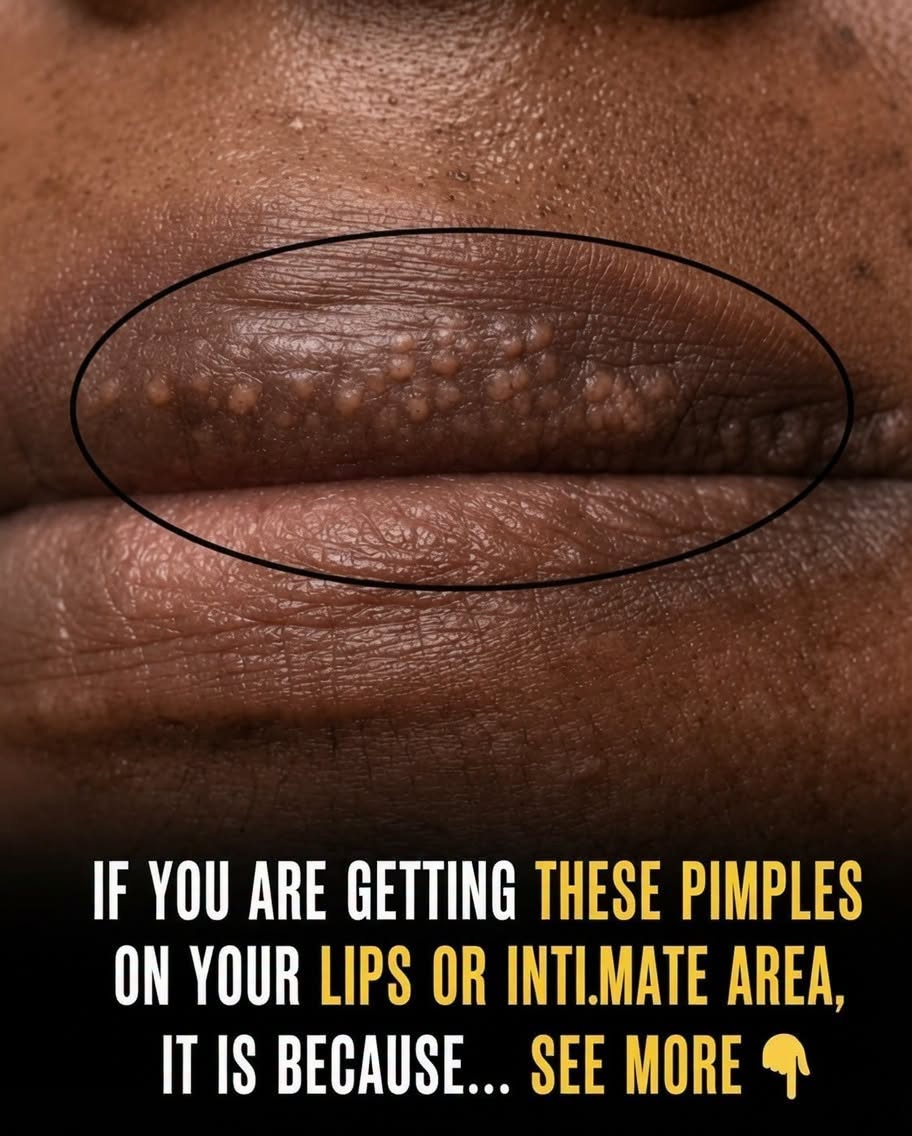
If You Are Getting White Pimples on Your Lips or Intimate Area, Here’s What They Could Mean
At first, they may look like tiny white dots that are barely noticeable. You might discover them while looking in the mirror, brushing your teeth, or taking a shower. Sometimes they appear around the edges of your lips, while other times you may notice similar-looking bumps in your genital area.
For many people, the first reaction is worry. They may wonder whether the spots are a sign of an infection, a skin condition, or something more serious. Others feel embarrassed and hesitate to ask a doctor about them, especially when the bumps appear in an intimate area.
But here’s something important to understand: not every white bump is dangerous, and not every bump has the same cause. Their appearance, location, texture, and associated symptoms can help determine what might be happening.
Understanding the possible causes can help you decide when simple observation is reasonable and when medical attention is necessary.
1. Fordyce Spots: Small White or Yellowish Bumps
One common explanation for tiny white or yellowish bumps around the lips or on the genital skin is Fordyce spots.
These are visible sebaceous glands, which produce the natural oils that help keep skin protected. They may appear as small, pale dots on the lip border or inside the cheeks. They can also occur on the penis, scrotum, or other genital skin.
Fordyce spots are generally harmless and are not sexually transmitted infections. They are also not caused by poor hygiene.
In many cases, they become more noticeable during adolescence or adulthood, and a person may have them for years without realizing what they are.
What they may look like:
-
Tiny white, cream-colored, or yellowish dots.
-
Several bumps grouped together.
-
Little or no pain, itching, or inflammation.
-
Spots that remain relatively stable over time.
If the bumps fit this description, Fordyce spots are one possibility. However, a clinician may need to examine them to distinguish them from other conditions.
2. Cold Sores: When the Bumps Appear Around the Lips
White bumps around the lips can sometimes be associated with a cold sore caused by the herpes simplex virus, usually HSV-1.
Cold sores do not always begin as obvious blisters. Some people first experience tingling, burning, itching, or tenderness in a particular area of the lip. Small fluid-filled blisters may then develop, break open, and form a crust as they heal.
Unlike typical Fordyce spots, cold sores usually change in appearance over several days and may cause discomfort.
Cold sores can spread through direct contact, including kissing and oral contact, particularly when an active sore is present. The virus can sometimes spread even when no visible sore is present.
If you develop a new cluster of painful blisters around your mouth, avoid kissing or oral contact until the area has healed and seek medical advice if you are unsure of the cause.
3. Genital Warts: Bumps That May Need Examination
White, flesh-colored, or pinkish bumps in the genital area can sometimes be genital warts associated with certain types of human papillomavirus (HPV).
These bumps may be smooth or have an irregular surface. They can appear individually or in clusters and may develop on the vulva, penis, scrotum, groin, or around the anus.
Genital warts are not always painful, which means someone may notice them only while bathing or changing clothes.
However, not every genital bump is a wart, and appearance alone is not always enough to identify the cause. A healthcare professional can examine the area and recommend appropriate testing or treatment if necessary.
Avoid trying to cut, squeeze, or burn genital bumps yourself. Products intended for ordinary hand or foot warts can damage sensitive genital tissue.
4. Molluscum Contagiosum: Small Bumps With a Central Dimple
Another possible cause is molluscum contagiosum, a viral skin infection that produces small, rounded bumps.
These bumps are often smooth, firm, and skin-colored, white, or pink. A characteristic feature is a tiny indentation in the center, although this is not always obvious.
Molluscum can affect different parts of the body, including the lower abdomen, thighs, and genital region. In adults, genital lesions can sometimes spread through intimate skin-to-skin contact.
The bumps are often painless, but the surrounding skin may become irritated or itchy.
Because molluscum can resemble other skin conditions, a medical examination is useful when the bumps appear around the genitals or their cause is uncertain.
5. Pearly Penile Papules: A Normal Variation
For some men, small white or skin-colored bumps arranged in one or more rows around the rim of the head of the penis are a normal anatomical variation known as pearly penile papules.
They are not caused by an infection, are not sexually transmitted, and do not indicate poor hygiene.
These bumps are generally similar in size, evenly arranged, and painless. They do not need treatment unless a clinician identifies another condition or there is a separate medical concern.
Recognizing this normal variation can prevent unnecessary anxiety. Nevertheless, new, irregular, painful, or changing bumps should not automatically be assumed to be pearly penile papules.
6. Irritation, Ingrown Hairs, or Inflamed Hair Follicles
Sometimes, bumps in the intimate area are related to shaving, friction, sweating, or inflammation around hair follicles.
An ingrown hair may create a small raised bump, occasionally with a white center. Folliculitis can also produce pimple-like spots, sometimes accompanied by redness, tenderness, or pus.
These bumps commonly appear on hair-bearing skin, such as the pubic region or groin, rather than on the inner surfaces of the genital organs.
Avoid shaving directly over irritated skin, and do not squeeze the bumps. If the area becomes increasingly painful, red, swollen, or warm, or if you develop a fever, seek medical attention.
7. When White Bumps Could Indicate an STI
Some sexually transmitted infections can cause lesions that people mistake for ordinary pimples. For example, genital herpes can produce painful blisters or sores, while syphilis may cause a painless sore during its initial stage.
Not all sexually transmitted infections cause visible symptoms, and the absence of pain does not rule out an infection.
Consider arranging a medical evaluation if the bumps:
-
Appear after a new sexual contact.
-
Develop into blisters, open sores, or ulcers.
-
Are accompanied by unusual discharge, burning during urination, or swollen lymph nodes.
-
Spread, multiply, or change noticeably.
-
Occur alongside a rash or other unexplained symptoms.
A clinician can determine whether testing is appropriate. If an STI is possible, avoid sexual contact until you have received advice about testing and precautions.
What Should You Do If You Notice These Bumps?
The safest first step is to avoid assuming that every white spot is acne or an infection.
-
Do not squeeze or pop them. This can cause irritation, bleeding, or secondary infection.
-
Avoid harsh products. Acne treatments, acids, and ordinary wart-removal products may injure the lips or genital skin.
-
Keep the area gently clean. Use mild cleansing methods and avoid excessive scrubbing.
-
Pay attention to changes. Note whether the bumps are painful, itchy, blister-like, spreading, or associated with other symptoms.
-
Seek medical advice when uncertain. New genital lesions, persistent bumps, sores, or unexplained changes deserve appropriate evaluation.
Seek prompt medical care for severe pain, rapidly worsening swelling, fever with spreading redness, or difficulty urinating. Painful genital blisters or sores should also be evaluated promptly, particularly if they have appeared recently.
The Most Important Thing to Remember
White bumps around the lips or in the intimate area can have several explanations, ranging from harmless anatomical variations to conditions that require treatment. Their location alone does not establish a diagnosis, and even similar-looking bumps can have completely different causes.
There is no reason to feel ashamed about asking a healthcare professional for help. These concerns are common, and clinicians are trained to assess them confidentially and professionally.
The key is not to panic, but not to ignore unexplained changes either. Understanding what the bumps look like and whether they cause other symptoms is a useful starting point for getting the right advice.
Medical note: This article provides general health information and cannot diagnose a skin condition. A healthcare professional can assess persistent or unexplained bumps and recommend treatment when needed.