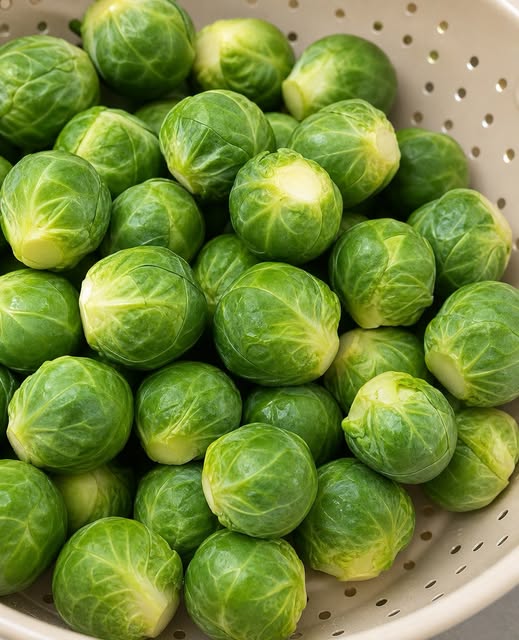
They were the punchline of every childhood dinner. A soggy, sulfurous punishment pushed around the plate while parents insisted, “Just take one bite.” For generations, Brussels sprouts became almost synonymous with everything children hated about vegetables: bitter flavors, strange smells, mushy textures, and the feeling that dinner would not end until the dreaded green spheres were gone. Yet now, somehow, the same vegetable stars on trendy restaurant menus, served crackling and caramelized, shaved into salads, roasted until deeply browned, or dressed with sauces that make people come back for another bite. People who once swore they would never touch Brussels sprouts again now order them willingly.
So what changed?
Not the plant. Our entire approach to cooking and flavor did.
For decades, Brussels sprouts were often ruined long before they reached the table. The most common method was simple but unforgiving: boil them for far too long, sometimes until every trace of firmness disappeared. Long boiling could magnify their sulfurous aromas, filling kitchens with an unmistakable smell and leaving behind limp, grayish-green orbs with little texture or sweetness. The longer they cooked, the more they seemed to confirm every child’s suspicion that vegetables were supposed to be unpleasant.
The vegetable itself was never necessarily the villain. The problem was that one cooking method became so common that it defined the ingredient. Instead of protecting the sprout’s natural texture and allowing its flavors to develop, overcooking stripped away much of what made it interesting. What remained was soft, watery, and intensely aromatic. Then that version was placed in front of generations of children and treated as something they were simply expected to tolerate.
Modern cooking gave Brussels sprouts a second life.
Instead of drowning them in water, cooks began using high heat, dry surfaces, and enough space on the pan for the sprouts to actually brown. Roasting allows their outer leaves to crisp while the centers become tender, creating a contrast that boiling could never provide. That deep browning also brings out a nutty, almost sweet character beneath the bitterness that once dominated the conversation.
And suddenly, the vegetable people remembered as a childhood punishment became something completely different.
A little lemon can brighten the flavor. Garlic can add warmth. Mustard can bring sharpness and balance. Nuts provide crunch. A small amount of bacon or another savory ingredient can add richness. These combinations don’t magically transform Brussels sprouts into another vegetable—they simply give the ingredient room to show more than one side of itself.
Texture matters, too. Raw and finely shaved, Brussels sprouts can become crisp and fresh additions to salads, holding onto dressings without collapsing. Lightly steamed, they can remain bright and firm instead of turning soft and waterlogged. Roasted, they can develop those dark, caramelized edges that make even skeptics reconsider what they thought they knew.
The transformation says something bigger about food. Sometimes an ingredient earns a bad reputation because people repeatedly encounter the same poorly prepared version of it. A childhood memory can become a permanent verdict: “I don’t like that.” But taste is often shaped by technique as much as by the ingredient itself.
That doesn’t mean everyone has to love Brussels sprouts. They aren’t a miracle cure, a superfood obligation, or a moral test of adulthood. If you still don’t enjoy them, that’s perfectly fine. But before declaring them terrible, it may be worth asking whether you’ve actually experienced them cooked well.
Because sometimes the villain was never the vegetable.
Sometimes it was simply the way we cooked it.
Brussels sprouts didn’t need to become something new to make a comeback. They only needed someone to stop boiling away everything that made them worth eating.