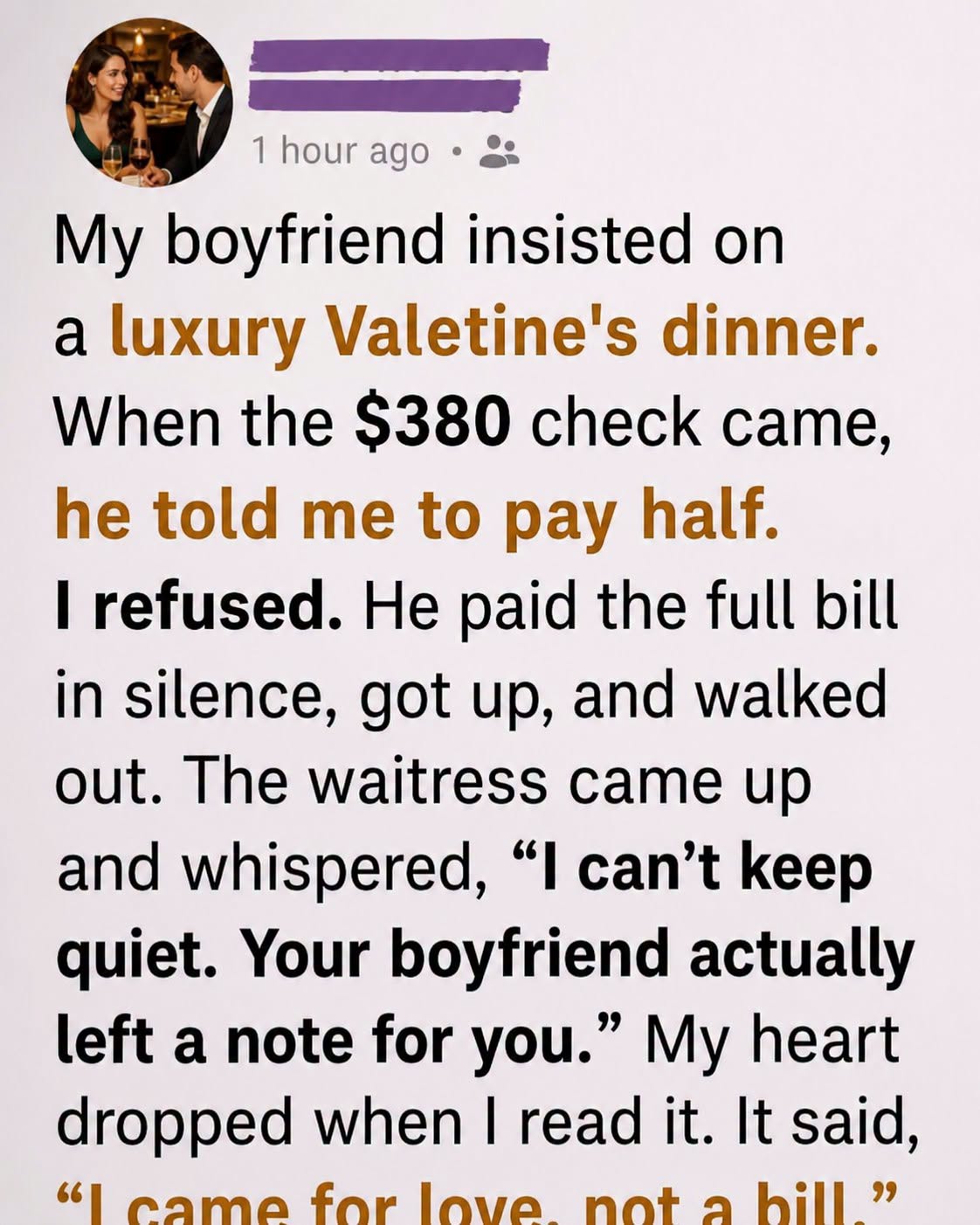
The moment the bill hit the table, everything shattered.
Seven years of shared holidays, quiet mornings, inside jokes, difficult conversations, and whispered plans for the future suddenly seemed to hang on a single number: $190. What she thought was the beginning of one of the most important nights of their lives became something entirely different. For days, she had imagined how the proposal might happen. She had pictured the question, the ring, the shock, the tears, and the possibility of finally taking the next step together. Instead, when the check arrived, she was confronted with a secret test she had never agreed to take.
He had carefully created the setting. The restaurant was extravagant, the evening was dressed up as something special, and every detail seemed designed to make her believe they were celebrating together. Yet he never mentioned the cost. He never asked what she was comfortable spending. He never suggested that the bill might become her responsibility. He simply waited.
When she hesitated over the $190, the atmosphere changed. The excitement disappeared. The warmth of the evening drained away, replaced by confusion and discomfort. Then came the note calling her “failed,” transforming an already painful moment into something cruel and calculated. In that instant, she realized the dinner had never simply been dinner. The proposal she had been dreaming about all week had apparently been tied to a test she didn’t even know she was taking.
He thought he was testing her generosity; instead, he exposed his own capacity for manipulation. By staging an extravagant night, choosing the restaurant, controlling the circumstances, and staying silent about the cost until the bill arrived, he turned what should have been a celebration into a trap. He created the rules, kept those rules hidden, and then judged her for not following them perfectly.
Her refusal was not proof that she was greedy or selfish. It was a boundary drawn in real time against a situation she had never helped design. She was being asked to respond to expectations that had never been communicated. And when someone later uses your reaction to a hidden situation as evidence of your character, the problem may not be the reaction—it may be the test itself.
When he later claimed that the proposal depended on how she responded to the bill, the meaning of the entire evening became painfully clear. Love, at least in that moment, appeared conditional. The future he had been offering could apparently be granted or withdrawn depending on whether she performed correctly under rules she didn’t know existed.
That realization can hurt more than the loss of the ring itself. Seven years of memories do not disappear because of one dinner. The holidays, mornings, conversations, and dreams were real. But one moment can reveal something about the structure beneath all those memories. It can show how a person handles power, disagreement, disappointment, and vulnerability when things don’t go according to plan.
Walking away hurt. After seven years, leaving was never going to feel simple. There was history to mourn, routines to lose, and a future she had already begun imagining. But walking away also brought clarity. She could finally see what marriage with him might have meant if this pattern continued: more tests, more silence, more hidden expectations, and more shifting standards she would only discover after she had “failed.”
She left with no ring on her finger, but she carried something far more valuable: certainty about what she would and would not accept. She learned that partnership cannot be built around secret examinations. It cannot depend on one person creating situations designed to measure the other person’s worth. And it certainly cannot thrive when love becomes a reward for passing tests.
True partnership is not measured by who pays a surprise $190 bill. It is measured by whether two people can sit across from each other and communicate honestly before the bill ever arrives. It means discussing money openly, expressing expectations clearly, respecting boundaries, and understanding that both people have an equal voice in decisions that affect them.
The night may have ended without a proposal, but it gave her an answer to a much larger question. She discovered that the future she wanted required something more than a ring and a romantic restaurant. It required trust, transparency, and shared power.
And sometimes, the most painful ending is also the clearest beginning. She walked away without the engagement she had imagined, but with proof that real love should never require someone to pass a secret test just to earn the right to be loved.