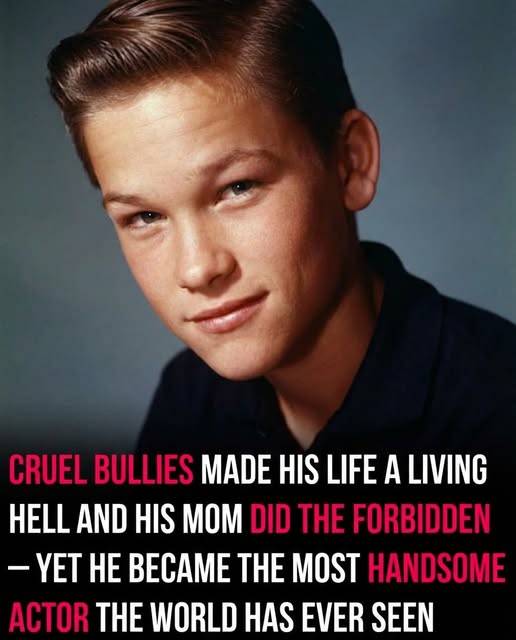
Patrick Swayze’s image of effortless grace, rugged masculinity, and an almost otherworldly on-screen presence is still ingrained in the public memory. Swayze had a compelling energy that felt both ethereal and profoundly grounded, whether he was creating clay with Demi Moore in a dim Manhattan loft or hoisting Jennifer Grey above his head in a rain-soaked forest. But long before he became the most well-known leading man in the world, he was a small child in Houston, Texas, struggling every day to maintain his dignity in a society that didn’t know what to do with a boy who loved dancing. His story of perseverance, concealed suffering, and an indomitable spirit that changed what it meant to be a man in the twentieth century is told from the victim of cruelty in the playground to the height of international fame.
Swayze was born on August 18, 1952, and his life was filled with a special fusion of fine art and hard work. Jesse Wayne Swayze, his father, was a structured and logical engineering draftsman. The Houston Jazz Ballet Company was formed by his mother, Patsy, a fiery choreographer. In the Swayze home, being creative was a discipline rather than a pastime. Patrick was an artistic and athletic polymath from a young age. He was one of the few kids who could go from a football field to a ballet barre, from a gymnastics competition to a violin recital, with ease. However, this adaptability was frequently seen with mistrust rather than respect in the social milieu of a Texas youth in the 1950s and 1960s.
Swayze was a target because of the same qualities that made him unique. His love of dancing was perceived as provocative in the school hallways. His peers ridiculed him mercilessly because they couldn’t connect his artistic sensitivity with his physical roughness. The young Swayze had to learn how to defend himself while continuing to engage in the pursuits that gave him energy because the taunting frequently turned into physical altercations. This was a pivotal time in his life. He took advantage of his peers’ animosity as fuel rather than caving in to pressure to fit in. He embraced a concept of “aggressive excellence,” driven by his mother’s unwavering will. He would just become the greatest dancer the world had ever seen if they were to condemn him for being a dancer.
But destiny had a way of changing his goals. Sports appeared to be his main way out of Houston for a while. He was a strong football player, but that dream came to an abrupt end when he suffered a terrible knee injury in college. It seemed like a disastrous failure at the time, but looking back, the change of direction saved his career. Now that professional athletics were out of the picture, he focused all of his attention on the theater. He prepared to travel to New York City, the ultimate testing ground for performers, in his early twenties. He pushed his body to its utmost while training with the esteemed Joffrey Ballet and Harkness Ballet companies. He met Lisa Niemi, a fellow dancer, during this period. She would be his partner for the following thirty-four years, giving him the emotional support he sorely needed over the upcoming tumultuous years.
It took some time for Swayze to make the leap from the realm of professional dance to the big screen, but when he did, it was like a tidal wave. After showcasing his acting abilities in ensemble hits like Red Dawn and The Outsiders, he was cast as Johnny Castle in Dirty Dancing, a role that would forever alter his life. Although the movie was a global sensation, Swayze’s ability to give a “tough guy” character a sense of deep vulnerability was a major factor in its success. He was more than just a dancer; he was a storyteller who conveyed ideas with his body that words could not. He became a household name, a sex icon, and a mainstay of the entertainment business almost immediately.
However, the “brightest stars” frequently burn with a heat that can be challenging to control. Swayze was struggling with the severe psychological effects of his abrupt rise behind the magazine covers and the yelling fans. A perfect storm of internal strife was produced by the demands of celebrity, the trauma of his early bullying, and the tragic death of his father. In a town that prized artifice over genuineness, Swayze was infamously self-critical and frequently felt like a fraud. He battled a well-documented battle with alcohol to deal with the sadness of personal losses and the oppressive intensity of the spotlight. He eventually sought assistance and reclaimed his life with a renewed feeling of sobriety and spiritual groundedness after navigating this dark chapter with the same unvarnished honesty that defined his performances.
Swayze persisted in defying expectations throughout the 1990s. He played parts that went against his reputation as a “hunk,” most notably in Ghost, which is still among the highest-grossing movies ever. Millions of people were moved by his capacity to express love and desire from beyond the dead, demonstrating that his appeal was based on something much more profound than physical attractiveness. In To Wong Foo, Thanks for Everything! Julie Newmar, he stunned audiences with a high-camp, life-changing performance as a drag queen. This part needed him to rekindle the toughness he had gained as a tormented youngster in Texas. He was a man who defied categorization and was always looking for assignments that challenged him to develop as a human and an artist.
Swayze’s last deed was arguably his most valiant. When he received a pancreatic cancer diagnosis in 2008, he bravely battled the terrible illness, leaving both his physicians and admirers in awe. He continued to work, appearing in the television series The Beast, despite going through arduous treatments. He was determined not to let his disease define him or take away his enthusiasm for life. In addition to fighting for his own life, he gave the world a last lesson on how to accept the inevitable with grace and dignity.
The world lost more than just a movie star when Patrick Swayze died in 2009. We lost a man who had effectively crossed the gap between the artistic and the athletic, the masculine and the feminine. Young individuals who feel “different” or out of place are nevertheless motivated by his legacy of tenacity. His experience demonstrates that early life traumas don’t always have to be lifelong restrictions; rather, they can be the same things that give someone the depth and fortitude to achieve their goals. Patrick Swayze taught us all how to transform suffering into a beautiful, long-lasting influence by fighting for life rather than merely dancing through it.