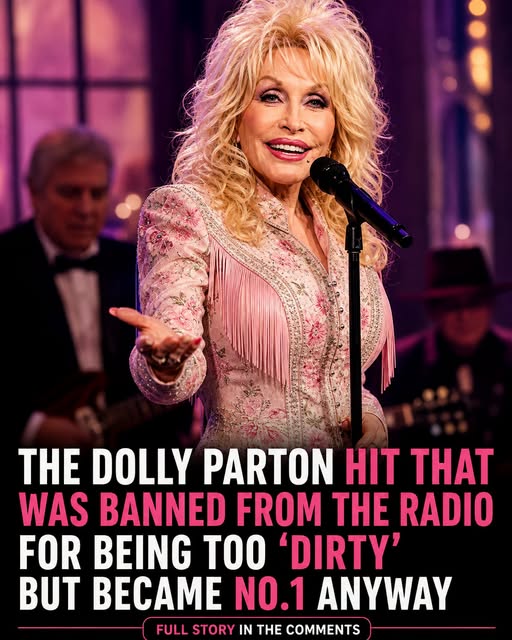
Dolly Parton thought she’d written a tender country ballad.
Some DJs thought she’d written something filthy.
In the mid-1970s, a single metaphor in “The Bargain Store” was enough to send certain conservative radio programmers into a panic. Stations hesitated. Phones lit up. Programmers debated whether the song was appropriate for their audiences. For a brief moment, something as simple as a country song about heartbreak became a surprisingly serious battle over what listeners were supposed to hear — and what they were allowed to hear.
But when the song finally reached ordinary listeners, they heard something very different from what those nervous men imagined.
They heard heartbreak.
They heard vulnerability.
They heard a woman admitting that she had been damaged by life but was still willing to love again.
When Dolly Parton walked into the studio with “The Bargain Store,” she believed she had captured a familiar ache: a heart worn down by disappointment, carrying scars from previous relationships, and quietly asking whether anyone would be willing to give it another chance.
The central metaphor was clever but painful.
Dolly compared a damaged heart to used merchandise in a bargain store — something that had been handled before, something that showed signs of wear, but something that still had value.
It was classic Dolly songwriting.
Take something ordinary.
Turn it into something emotional.
Make people smile for a second.
Then make them realize there is sadness underneath the joke.
The image of a heart being treated like secondhand merchandise was not meant to be provocative. It was meant to be human. The character in the song was essentially saying that life had left its marks, but those marks did not mean she was worthless.
She had been hurt.
She had been used.
She had been disappointed.
But she was still capable of love.
Yet once the record reached certain conservative radio stations, some male programmers focused on one particular phrase instead of the larger emotional message.
“You can easily afford the price.”
To Dolly, the line belonged naturally within the bargain-store metaphor. The singer was essentially offering a damaged heart at a reduced emotional “price,” asking whether someone would be willing to take a chance on something that had already been through life.
But some programmers heard something else.
They interpreted the language as sexual innuendo.
And suddenly, a song Dolly had written as a tender country ballad was being discussed as though it were scandalous.
The reaction was surprising even by the standards of the era.
Radio was incredibly powerful in country music. Getting a song onto the right stations could determine whether it became a hit or disappeared. A handful of influential programmers could shape what millions of listeners heard, meaning that a disagreement over a lyric could have real consequences for an artist’s career.
Dolly understood that reality.
She had already worked incredibly hard to build her name.
Every record mattered.
Every performance mattered.
Every opportunity mattered.
So the hesitation was not insignificant.
It was a reminder that success could be fragile when other people controlled the gate.
A songwriter could spend hours, days, or weeks crafting a song, pour personal emotion into every line, record it beautifully, and then discover that someone sitting behind a radio desk could decide that one phrase was too suggestive for their audience.
The artist might know exactly what the song meant.
The listener might understand it immediately.
But the gatekeeper still had the power to say no.
That was the tension surrounding “The Bargain Store.”
Some stations hesitated.
Others apparently worried about complaints.
And programmers debated whether the metaphor crossed a line.
But then something happened that Dolly could not control.
Listeners heard the song for themselves.
And they did not hear what the programmers feared.
They heard a wounded person trying to find love again.
They heard resilience.
They heard loneliness.
They heard the uncomfortable truth that people can be damaged by relationships without becoming damaged beyond repair.
The very metaphor that had frightened some radio programmers became the thing that allowed ordinary listeners to connect with the song.
Because almost everyone understands the idea of being “worn.”
People carry emotional scars.
They carry memories of relationships that ended badly.
They carry disappointments that change the way they approach the next person.
They sometimes wonder whether anyone will love them after everything they have been through.
That was the heart of Dolly’s song.
Not obscenity.
Not scandal.
Human vulnerability.
And the more people listened, the harder it became to keep the song contained by fear.
Stations began adding the record.
Listeners responded.
The controversy that had initially threatened the song’s momentum instead helped draw attention to it.
People wanted to hear what had supposedly caused all the fuss.
And when they finally did, many discovered that there was nothing particularly dirty about it at all.
There was simply a clever songwriter using an everyday object to explain something deeply personal.
The bargain store was the heart.
The merchandise was the emotional history.
The price was the risk of loving someone who had already been hurt.
And Dolly was asking a question that had nothing to do with scandal:
Can something that has been damaged still be valuable?
Her answer was yes.
Absolutely yes.
That message connected.
“The Bargain Store” ultimately climbed all the way to No. 1 on the country chart, proving that the audience had the final say.
The people listening in their cars, kitchens, bedrooms, workplaces, and living rooms were not interested in the panic surrounding one phrase.
They understood the emotion.
They recognized themselves in it.
And that is one of the most interesting things about songwriting.
A writer can create a lyric with one meaning in mind, but once the song reaches the public, listeners bring their own experiences with them.
One person hears heartbreak.
Another hears hope.
Someone else hears humor.
Another hears a memory of a relationship they wish they could forget.
The song becomes something larger than the writer originally imagined.
That was one of the lessons Dolly carried forward from moments like this.
Once a song leaves the writer’s hands, its meaning is no longer entirely theirs.
It belongs partly to the people who find themselves inside it.
That can be frightening for an artist.
But it can also be incredibly powerful.
Dolly had written about a heart that had been through something.
Listeners knew what that felt like.
They did not need a songwriter to explain every metaphor.
They simply recognized the feeling.
And perhaps that is why the controversy eventually became almost funny in retrospect.
The people who feared the song were looking for something scandalous.
The people who bought and listened to the song were looking for something true.
They found truth instead.
The episode also revealed something about Dolly herself.
She was never afraid of clever wordplay.
She understood humor.
She understood double meanings.
And she understood that country music could talk about difficult subjects without becoming vulgar.
Her songs could be funny and heartbreaking at the same time.
They could make people laugh while quietly exposing something painful.
That combination became one of her signatures.
She could take a seemingly simple idea and turn it into a story about dignity, loneliness, love, rejection, survival, or hope.
“The Bargain Store” was another example.
The character in the song was not pretending to be untouched.
She was admitting that she had been through things.
She was saying, in effect, that her past did not make her worthless.
And perhaps that message is even more powerful today than it was then.
Everyone carries some kind of emotional history.
Nobody arrives in a new relationship completely untouched by the past.
Some people are afraid of being judged for their scars.
Some believe that their mistakes make them less deserving of love.
Some wonder whether anyone will be willing to take a chance on them after they have been hurt.
Dolly turned that insecurity into a song.
And millions of people heard themselves in it.
The controversy may have started with a handful of nervous radio programmers.
But the audience ended it.
They listened.
They understood.
They bought the record.
And they pushed it to the top.
That journey from hesitation to No. 1 became more than a chart success.
It became a lesson in how art survives attempts to control its meaning.
You can censor a phrase.
You can worry about a metaphor.
You can decide that a lyric sounds suspicious.
But once people connect emotionally with a song, it becomes difficult to tell them what they are supposed to feel.
Dolly wrote a song about a heart in a bargain store.
The programmers heard something dirty.
The listeners heard something wounded.
And the charts proved which interpretation mattered most.
In the end, “The Bargain Store” was never really about merchandise.
It was about people.
People who have been hurt.
People who have made mistakes.
People who carry scars.
People who still want to be loved.
And Dolly Parton understood something that those nervous gatekeepers apparently missed.
Being used does not mean being useless.
Being damaged does not mean being worthless.
And having a past does not mean you cannot have a future.
That is why the song endured.
Not because of the controversy.
Not because of the nervous phone calls.
Not because some programmers thought one line sounded suggestive.
It endured because ordinary people heard something honest in it.
And once they did, there was very little anyone could do to take it away from them.