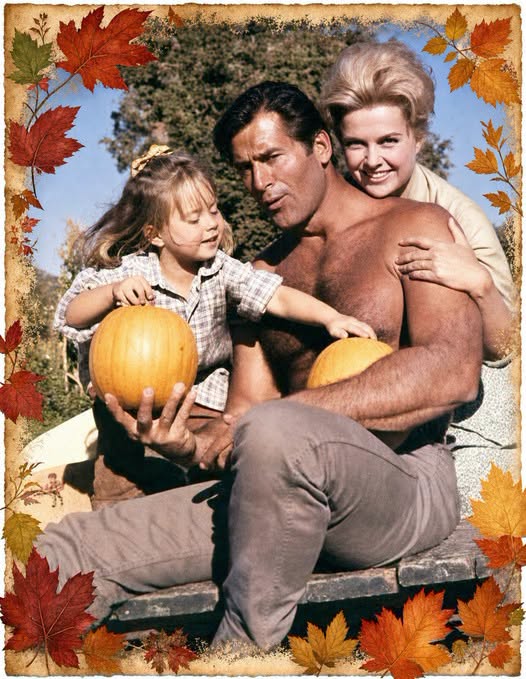
One old Hollywood photograph has brought a beloved television giant back into the spotlight. Standing beside an actress and a child is a man whose extraordinary height and commanding presence once made him one of the most recognizable figures in Western television. Yet Clint Walker was remembered for much more than his physical appearance. His appeal came from a combination of quiet confidence, natural screen presence and a style of acting that made his characters memorable without requiring exaggerated performances. For fans looking more closely at the photograph, the image opens a window into a remarkable life shaped by difficult beginnings, wartime service, Western stardom and a private family life that remained largely separate from his public image.
Walker was born in Hartford, Illinois, in May 1927. His early years were far removed from the glamour of Hollywood, and his path toward entertainment was anything but conventional. Before becoming a familiar face on television, he worked a variety of jobs and experienced the responsibilities of earning a living outside the film industry. These early experiences helped shape the background of a man who would eventually become one of television’s most recognizable Western heroes.
During World War II, Walker served in the United States Merchant Marine. His service came at a time when the world was experiencing enormous upheaval, and many young men were taking on responsibilities far beyond ordinary civilian life. Before he became known to millions of television viewers, Walker had already experienced a very different kind of journey, one that involved work, discipline and service during a difficult period in history.
After the war, his life gradually moved in a new direction. His impressive physical appearance and natural presence eventually helped open doors in the entertainment industry. Standing approximately six feet six inches tall, Walker was difficult to overlook. His height became one of his most recognizable characteristics, but it was his ability to bring strength and restraint to his performances that helped establish his reputation as an actor.
His major breakthrough arrived with the television series *Cheyenne*. Walker portrayed Cheyenne Bodie, a wandering cowboy whose adventures introduced audiences to a different kind of Western hero. The series became an important part of television’s expanding Western tradition, helping establish Walker as a leading figure in the genre. His character was strong and capable, but the performance also carried a measured quality that separated him from more exaggerated portrayals of frontier characters.
The success of *Cheyenne* made Walker a familiar name in households across America. At a time when Western programmes were an important part of television entertainment, his towering figure and calm screen presence made him particularly well suited to the role. Viewers came to associate him with the rugged landscapes, moral challenges and adventurous stories that defined the series.
Walker also expanded his career through appearances in feature films. Productions such as *Fort Dobbs* and *The Night of the Grizzly* further established his place among the memorable leading men of Western cinema. These roles allowed him to bring the same recognizable qualities to the big screen, while giving audiences additional opportunities to see him in stories built around the frontier and its challenges.
Although his acting career often placed him in the public eye, Walker maintained a personal life that was not always part of the entertainment headlines. He had a daughter, Valerie, from his first marriage to Verna Garver. Family life represented another important part of his story, separate from the fictional cowboys and adventurous characters audiences watched on television.
The vintage photograph has renewed curiosity about those personal chapters. Seeing Walker beside an actress and a child invites viewers to wonder about the people and moments captured in the image. Old photographs can carry a special emotional quality because they preserve a brief moment from a time that has long passed. A familiar celebrity may appear in an entirely ordinary setting, reminding audiences that behind every famous screen character was a real person with family connections and everyday experiences.
At the same time, a photograph should be understood within the limits of what it actually shows. Without reliable information identifying everyone in the image and explaining its original context, it would be unfair to attach unverified stories to the people pictured. Walker’s documented life and career already provide plenty of meaningful history without the need for speculation about his private relationships.
What made Walker distinctive was not simply that he was tall or that he became associated with Western television. His career reflected a combination of experiences that began long before his Hollywood success. He had worked ordinary jobs, served during wartime and entered the entertainment industry through a path that differed from that of many performers who pursued acting from an early age.
His portrayal of Cheyenne Bodie also became part of a television era that helped shape the way audiences understood the Western hero. The character represented strength, independence and a willingness to face difficult situations. Walker brought those qualities to the screen through a performance style that often relied on restraint rather than constant displays of emotion.
For classic television fans, revisiting his work is also an opportunity to remember a period when Western programmes played a major role in popular entertainment. The genre introduced audiences to memorable characters and dramatic landscapes, while performers such as Walker helped give those stories a recognizable identity. His contribution remains connected to that era, even as television has changed dramatically over the decades.
The old photograph may have been the reason people began looking at Clint Walker’s story again, but the image represents only a small part of his legacy. His life included hard work before fame, service during World War II, a successful television career and a family history that deserves to be treated with care.
Ultimately, Walker’s enduring appeal comes from the presence he brought to the screen and the memorable characters he left behind. His towering figure may have made him instantly recognizable, but his career was built on more than appearance. For audiences who remember *Cheyenne* and the classic Western era, his quiet authority remains one of the qualities that made him unforgettable.