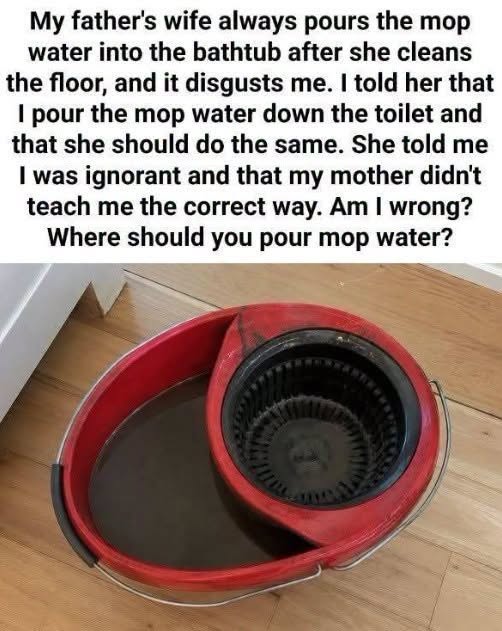
Finishing the floors should leave your home looking clean and feeling fresh, but one small mistake at the end of the job can create an entirely new problem. After spending time sweeping, mopping, and removing dirt from every corner, it may be tempting to empty the bucket into the nearest drain and move on. However, where you dispose of dirty mop water matters more than many people realize. Choosing the wrong place can contribute to clogged pipes, unpleasant odors, and messy splashes that turn a simple cleaning routine into another household chore.
For ordinary mop water containing a household cleaning product approved for drain disposal, a dedicated utility or laundry sink is generally the best option. These sinks are designed for practical cleaning tasks and are often more suitable for handling dirty water than bathroom or kitchen fixtures. They also provide enough room to empty a bucket carefully without creating unnecessary splashes around the surrounding area.
Before pouring anything away, take a moment to inspect the water. Mop buckets often collect more than just dirty liquid. Hair, dust, small stones, food particles, and other solid debris can gather at the bottom. If these materials are washed into the plumbing, they may contribute to blockages over time. Removing them first is a simple way to protect your drains.
Use a small strainer or another suitable tool to collect visible debris, then place it in the household trash. Avoid pushing solid waste through the drain simply because it appears small enough to disappear. Even tiny particles can accumulate, especially when combined with grease, soap residue, and other material already present in household pipes.
Once the larger debris has been removed, empty the bucket slowly into the utility sink. Pouring too quickly can cause dirty water to splash onto the floor, nearby surfaces, or your clothing. Afterward, rinse the sink thoroughly with clean water so that leftover dirt and cleaning residue do not remain in the basin. A quick rinse also helps keep the area ready for its next use.
Not every home has a dedicated laundry or utility sink. In that situation, a porcelain bathtub can be a reasonable alternative for ordinary mop water, provided the cleaning product’s disposal instructions allow it. Pour the water slowly through a mesh strainer to catch hair and solid particles. Once the bucket is empty, remove the trapped debris and dispose of it in the trash. Rinse the bathtub thoroughly to prevent dirty residue from drying on the surface.
The toilet is another possible option when a suitable sink or bathtub is unavailable, but it should generally be treated as a last resort. If you use it, pour the water cautiously toward the back of the bowl and avoid adding so much that the water level rises too high. Solid debris should be removed beforehand rather than flushed away. After disposal, make sure the bowl is clean and that no residue has been left around the surrounding area.
The type of cleaning product in the bucket is just as important as the drain you choose. Some household cleaners are suitable for ordinary drain disposal, while others have specific instructions or restrictions. Always read the product label and follow its disposal guidance. Never assume that every cleaning solution can safely be poured into a household drain.
One particularly important precaution is to avoid mixing cleaning chemicals. Combining different products can produce dangerous reactions, even when the amounts seem small. Never add another cleaner to the mop water to make disposal easier, and be especially careful around toilets where cleaning products may already be present. Products containing bleach, ammonia, acids, or other reactive ingredients should never be mixed unless their labels explicitly confirm that doing so is safe.
A little preparation can make the entire process easier. Before mopping, consider where the bucket will be emptied and keep a strainer nearby for collecting debris. When the cleaning is finished, remove solid waste, dispose of the liquid according to the product instructions, and rinse the chosen basin. These simple steps help prevent unnecessary mess and reduce the chance of plumbing problems.
Cleaning the floors should be the final step toward a fresher home, not the beginning of another problem. By choosing an appropriate drain, removing solid debris, pouring carefully, and following chemical disposal instructions, you can finish the job safely and leave your cleaning area just as tidy as the floors themselves.