The “Monster” Under the Bed: How a Dusty Pistachio Shell Taught Me About Fear, Laughter, and the Human Brain
It started with a strange shadow beneath the bed, a faint rustling sound in the middle of the night, and a feeling that something wasn’t quite right. For a moment, an ordinary bedroom became the setting for a terrifying mystery. What could possibly be hiding in the darkness? A tiny creature? Something moving in the shadows? Or perhaps something far more frightening than the imagination could explain?
The truth, as it turned out, was much less dramatic—and infinitely funnier.
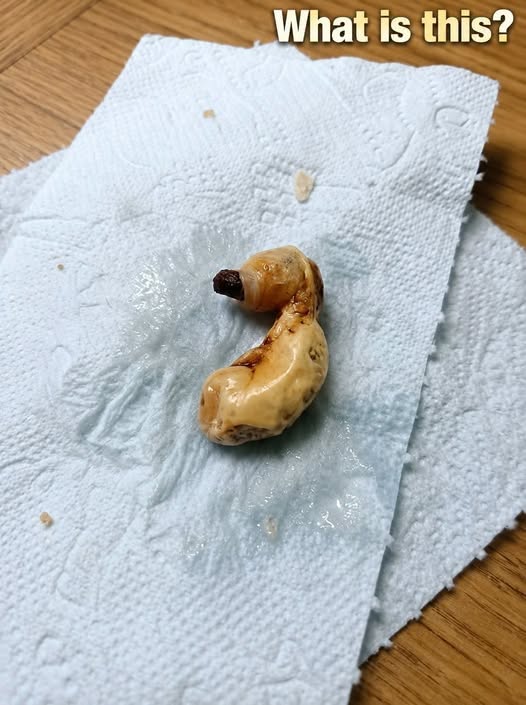
The mysterious “monster” was nothing more than an old, dusty pistachio shell.
Yet this tiny piece of trash managed to trigger a surprisingly powerful reaction, revealing something fascinating about the way the human brain processes fear, uncertainty, and unexpected discoveries.
When the Brain Turns Nothing Into Something Terrifying
Have you ever looked at a pile of clothes in a dark room and mistaken it for a person? Or heard a strange noise at night and immediately imagined the worst possible explanation?
You’re certainly not alone.
The human brain is constantly trying to make sense of the world around us. It uses past experiences, expectations, and sensory information to interpret what we see and hear. But when information is incomplete, especially in darkness, the brain sometimes fills in the missing details with assumptions.
This tendency can make harmless objects appear threatening.
A small shadow becomes a mysterious figure. A faint crack becomes a suspicious noise. And a forgotten pistachio shell beneath the bed can suddenly seem like evidence of something that shouldn’t be there.
Psychologists often discuss this tendency in connection with threat detection and pattern recognition. From an evolutionary perspective, quickly noticing potential danger could be beneficial, even if it sometimes meant reacting to something harmless.
In other words, our brains can occasionally prefer a false alarm over overlooking a genuine threat.
Why Darkness Makes Everything Seem Worse
There is a reason ordinary objects can appear much more frightening at night.
When lighting is poor, our visual system receives less information about shapes, textures, and distances. The brain must work harder to interpret what it sees, leaving more room for uncertainty.
If you are already tired, stressed, or expecting something unusual, that uncertainty can make your imagination even more active.
The result is a strange psychological experience: the less you know about something, the more possibilities your mind may generate.
And not all of those possibilities are comforting.
A strange object under the bed might be completely harmless in daylight. But at two o’clock in the morning, when the room is silent and your imagination is running wild, even a tiny piece of debris can become the center of a personal horror story.
The Moment Fear Turns Into Laughter
The most interesting part of the pistachio-shell mystery isn’t the fear itself. It’s what happens when the truth is finally revealed.
Imagine carefully approaching the bed, gathering the courage to investigate, and preparing yourself for a discovery that could explain the strange shape in the shadows.
You lean down, look closer, and discover the culprit.
A pistachio shell.
For a second, you might simply stare at it, wondering how something so ridiculous managed to frighten you. Then comes the laughter—the kind that emerges when tension disappears almost instantly.
This reaction has a psychological explanation.
When we experience fear, our bodies can become alert, our muscles tense, and our attention narrow toward whatever we believe might be dangerous. Once we discover that the threat is harmless, that tension can quickly dissolve.
The sudden contrast between what we expected and what actually happened can make the situation feel hilarious.
The greater the imagined danger and the more harmless the reality, the more absurd the experience may seem in retrospect.
Why the Human Brain Loves a Good Mystery
Humans naturally search for explanations. When something unexpected happens, we want to know why.
This is one reason mysterious sounds, unexplained shadows, and strange discoveries capture our attention so easily. They create a gap between what we know and what we want to understand.
Our brains attempt to close that gap by forming hypotheses.
Sometimes those explanations are accurate. Other times, we jump to conclusions before gathering enough evidence.
The pistachio shell is a perfect example of how quickly an assumption can become convincing when information is limited. The object itself never changed. Only our interpretation of it did.
And that is an important distinction.
Our feelings can be genuine even when the explanation behind them turns out to be mistaken. Feeling frightened does not necessarily mean that something dangerous is present.
Recognizing this can help us approach uncertain situations with greater curiosity and less panic.
A Small Lesson About Fear
The next time something seems frightening, it may help to pause and ask yourself a simple question: What do I actually know, and what am I imagining?
That doesn’t mean ignoring genuine danger or dismissing your instincts. It means giving yourself a moment to gather information before accepting the scariest explanation.
Turn on the light. Take another look. Listen carefully. Check the facts.
You might discover something serious that deserves attention—or you might discover that your mysterious nighttime visitor is nothing more than a forgotten snack.
Either way, looking for evidence is often more useful than allowing uncertainty to dictate the story.
The Unexpected Wisdom of a Pistachio Shell
There is something wonderfully human about being frightened by something completely harmless.
We all make assumptions. We all misunderstand situations. And sometimes, our minds transform ordinary experiences into elaborate stories that feel entirely real until new information arrives.
The dusty pistachio shell reminds us that fear isn’t always a reliable measure of danger. Sometimes it reflects what we don’t know, what we expect, or what our imagination has created in the absence of clear answers.
Perhaps the best response isn’t to feel embarrassed about being frightened.
Perhaps it’s to laugh, learn something about ourselves, and remember that the world is often less terrifying than the stories our minds tell us.
And if you ever hear a strange noise beneath your bed, take a breath before imagining the worst.
You never know.
It might just be a pistachio shell waiting for its moment of fame.