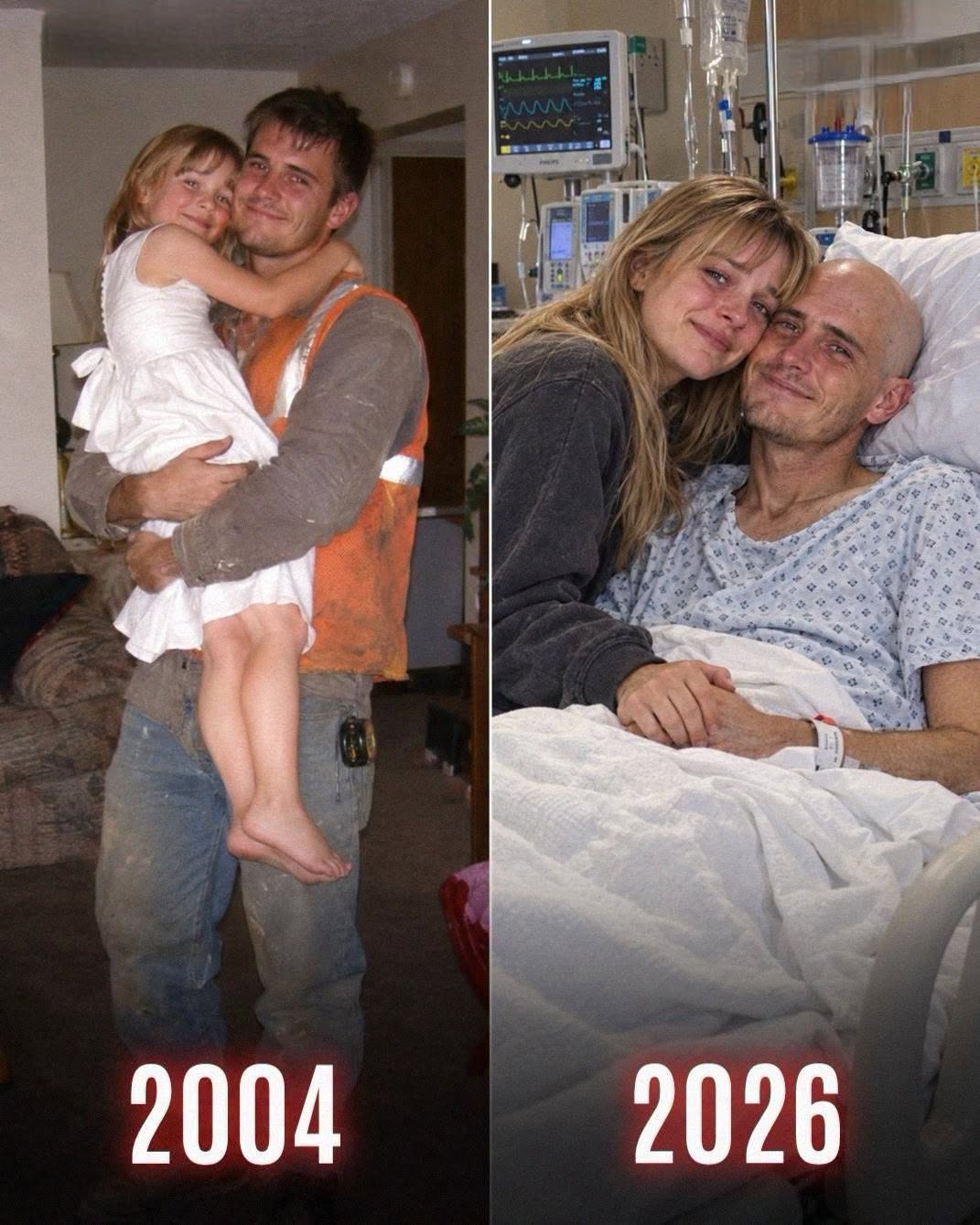
# The Truth My Father Hid for 20 Years: When I Confronted My Mother, She Blamed Him—Until I Pulled Out the Custody Papers
For twenty years, I believed my mother had abandoned me because she didn’t love me enough to stay.
My father never said anything cruel about her. Whenever I asked why she had left, he gave me the same answer.
“Sometimes, Simone, the people we love make choices we don’t understand.”
I grew up believing that he was protecting me from a painful truth.
I never imagined he was hiding part of it, too.
My name is Simone, and the truth about my parents shattered everything I thought I knew about my childhood.
But it also taught me something I wasn’t ready to understand: sometimes, two people can hurt you in completely different ways, and loving one of them doesn’t mean you have to excuse the other.
## Chapter One: The Mother Who Never Came Back
I was six years old when my mother left.
I remember the morning clearly, even though my father spent years trying to convince me that I was too young to remember much.
My mother stood beside the front door with a suitcase. She wore her favorite blue coat, the one with the loose button near the collar.
I sat at the kitchen table, coloring a picture of our family.
I had drawn three people holding hands beneath a yellow sun.
“Where are you going?” I asked.
She looked at me, then at my father.
“Mommy has some things she needs to figure out, sweetheart.”
“When are you coming home?”
She didn’t answer immediately.
That silence frightened me more than anything she could have said.
My father knelt beside my chair.
“Finish your picture, Simone. I’ll make you pancakes.”
But I wasn’t interested in pancakes.
I wanted my mother.
She kissed my forehead, picked up her suitcase, and walked out.
I ran after her, my little socks sliding across the hallway floor.
“Mommy! Don’t forget me!”
She turned once.
For a moment, I thought she would come back.
Instead, she said, “Be a good girl for Daddy.”
Then she left.
I waited by the window until it grew dark.
My father sat beside me, his arm wrapped around my shoulders.
“She’ll call,” he whispered.
And for a while, he believed it, too.
Years later, I would learn just how desperately he had believed it.
## Chapter Two: The Sacrifice Nobody Told Me About
My father, Daniel, raised me alone.
He worked long hours at a small construction company. Some evenings, he came home with dust on his clothes and exhaustion in his eyes. Yet he still helped me with my homework, attended school meetings, and learned to braid my hair from online videos because I wanted it to look like the other girls’ hairstyles.
He was not perfect.
He sometimes became impatient. He struggled to talk about feelings. When I asked about my mother, he grew quiet.
But he was there.
Every birthday, he bought a cake.
Every school performance, he sat in the front row.
Every time I got sick, he stayed beside my bed, checking my temperature throughout the night.
My mother, meanwhile, slowly became a stranger.
At first, she called occasionally.
Then the calls became shorter.
Eventually, they stopped.
When I was ten, I sent her a birthday card.
When I was twelve, I sent her a letter.
When I was fifteen, I found her on social media.
She had remarried.
She had two children.
There were photographs of family vacations, birthday parties, school graduations, and Christmas mornings. My mother smiled in those photographs in a way I barely remembered.
She looked happy.
She looked like a mother.
Just not mine.
I stared at a photograph of her standing between her husband and her two younger children. One of the children had her eyes. The other had her smile.
I wondered whether they knew about me.
I wondered whether she ever looked at them and remembered the little girl she had left behind.
That night, I asked my father a question I had carried for years.
“Was I not enough for her?”
He put down the dish towel he was holding.
“Simone, look at me.”
I didn’t want to.
“Please.”
I finally raised my eyes.
“You were always enough,” he said. “You never did anything to make your mother leave.”
“Then why didn’t she come back?”
His face tightened.
“I don’t know how to answer that without hurting you.”
I thought that was the truth.
I didn’t know that he was afraid of telling me the rest.
## Chapter Three: The Discovery That Changed Everything
I was twenty-six when Hannah contacted me.
Her message was brief.
Hi, Simone. My name is Hannah. I’m your mother’s daughter. I know this is unexpected, but I think you deserve to know what happened between your parents. I don’t want to take sides. I just don’t think you should have to live with unanswered questions anymore.
I read it several times.
My first instinct was to block her.
She was living the life I had wanted. She had grown up with our mother. She had family photographs, shared memories, and ordinary moments I would never get back.
What could she possibly know about my childhood?
Yet something in her message made me hesitate.
We began talking.
At first, our conversations were awkward. She asked about my job, my childhood, and my father. I asked about her life, although every answer seemed to reveal another piece of the family I had never been allowed to know.
One evening, she told me something that made my hands go cold.
“My mom went to college after she left your dad,” she said. “She always told us she paid for everything herself.”
I swallowed.
“Okay.”
“But I found some old financial documents in her things. They showed that your dad helped pay for her education.”
I stared at the screen.
“What?”
“There were payments made over several years. Tuition, books, living expenses. His name was on some of the records.”
I couldn’t speak.
My father had spent years working overtime so I could have school supplies, decent clothes, and a safe home.
And he had also helped finance my mother’s education after she left us?
Why?
Hannah sent me a photograph of one of the documents.
There it was.
My father’s name.
His signature.
And payment records that continued long after my mother had built a new life.
I called him immediately.
He answered on the second ring.
“Simone? Is everything all right?”
I wanted to scream.
Instead, I asked quietly, “Did you pay for Mom’s education?”
Silence.
Then he said, “Who told you that?”
It was the wrong answer.
I felt something inside me crack.
“So it’s true?”
“Yes.”
“Why?”
He took a long breath.
“Because I thought if I helped her finish school, she might come back.”
I closed my eyes.
He continued, his voice trembling.
“She had dreams before we had you. She wanted to become someone. I thought perhaps she felt trapped, perhaps she needed time. I believed that if I helped her get where she wanted to go, she might eventually want to come home.”
“And did she?”
“No.”
The word was barely audible.
“Did you ask her to come back?”
“Yes.”
“How many times?”
“More than I can remember.”
I pressed my hand against my mouth.
“And when she remarried?”
My father did not answer.
I already knew.
He had kept hoping even after she had chosen another life.
I hung up before he could say anything else.
For the first time in my life, I didn’t know whether I wanted to hug my father or ask him why he had allowed me to grow up believing that my mother had simply forgotten me.
Because now there was another question.
If he had helped her, if he had stayed connected to her life in some way, what else had he never told me?
## Chapter Four: The Family Gathering
A few weeks later, Hannah invited me to a family gathering at our mother’s house.
I almost refused.
I had spent twenty years imagining what I would say if I ever stood in front of my mother again.
In some versions, I screamed.
In others, I cried.
Sometimes, I simply walked away without giving her the satisfaction of knowing how much she had hurt me.
But the truth was that I didn’t know what I would do.
I went because I wanted answers.
The house was beautiful. Flowers stood on the dining table, and photographs covered the walls.
My mother had framed pictures of Hannah and her brother at every age.
I searched for a photograph of myself.
There wasn’t one.
Not a single one.
My mother appeared from the kitchen wearing a cream-colored blouse. She looked older than I remembered, but unmistakably familiar.
When she saw me, she froze.
“Simone.”
I nodded.
“Mom.”
She approached me cautiously, as though I were a guest she wasn’t sure she wanted to welcome.
“I wasn’t expecting you to come.”
“Neither was I.”
Hannah stood nearby, watching us.
We sat down with the rest of the family. Conversation continued awkwardly for a while, but I could barely hear it.
Finally, I turned toward my mother.
“I have a question.”
She put down her glass.
“All right.”
“Why did you leave me?”
Her expression hardened.
“Simone, your father and I had a very difficult relationship.”
“That doesn’t answer my question.”
“He made things impossible for me. He was controlling. He wanted everything his way.”
I felt my stomach tighten.
“Then why did you leave me with him?”
She looked away.
“I thought it would be temporary.”
“Temporary?”
“I needed to finish my education. I needed to get my life together.”
“And afterward?”
She folded her hands.
“Things became complicated.”
I almost laughed.
Twenty years of birthdays without her. Twenty years of unanswered questions. Twenty years of watching her raise two children while I wondered why I hadn’t been worth returning for.
And all she could say was that things had become complicated.
“You had two more children,” I said. “You raised them. You were there for their first days of school, their birthdays, their graduations. You had a whole life with them.”
Her eyes filled with tears.
“I never stopped thinking about you.”
“Thinking about me isn’t the same as being there.”
She flinched.
Then she said the words that changed the room.
“Your father kept you away from me.”
I stared at her.
“What?”
“He made everything difficult. He manipulated the situation. He made sure I couldn’t have the relationship with you that I wanted.”
Hannah looked stunned.
“Mom, you told me you declined visits because you weren’t ready.”
“That was different.”
“No,” I said quietly. “It wasn’t.”
My mother turned toward me.
“You don’t understand what your father was like.”
“Then help me understand.”
She began talking about their arguments, their failed marriage, the resentment that had built between them. She described a man who had hurt her and made her feel powerless.
Some of what she said sounded painfully plausible.
I knew my father was not perfect. I knew that people could be loving parents and still be difficult partners.
But then she made a claim that I could no longer ignore.
“He refused to let me see you. He used the custody arrangement against me.”
I reached into my bag.
“I brought something.”
I placed a folder on the table.
My mother looked at it, confused.
“What is that?”
“The custody documents.”
Her face changed.
I opened the folder and laid the papers before her.
The court records showed the custody arrangement. They documented the conditions under which visits could take place and the communications concerning contact between mother and daughter.
I had spent days reviewing the papers and confirming what they actually said.
They did not prove that my father had always behaved perfectly. They did not explain every private conversation between my parents.
But they did establish something important.
My mother had been given opportunities to maintain contact with me.
And the records showed that she had declined visits.
Again and again.
The room became silent.
I pointed to one of the entries.
“Here. A visit was offered. You declined.”
Then another.
“And here.”
My mother stared at the documents.
“You don’t know the whole story,” she whispered.
“You’re right,” I said. “I don’t. That’s why I’m asking you to stop telling me that Dad kept me away when these records show that you declined opportunities to see me.”
Her eyes filled with tears.
“I was struggling.”
“I believe you.”
She looked up, apparently surprised.
“I believe that you were struggling. I believe your marriage was painful. I believe Dad may have done things that hurt you.”
I paused, trying to steady my voice.
“But you still made choices. You chose not to visit me. You chose to build a new family without finding a way to remain part of my life.”
My mother began to cry.
For a moment, I wanted to comfort her.
That instinct had lived inside me for so long that it felt automatic.
But this time, I stayed where I was.
“I was a child,” I said. “I needed my mother. I didn’t need you to be perfect. I needed you to show up.”
She covered her face with her hands.
Nobody moved.
Then Hannah spoke.
“Mom, why didn’t you tell us about Simone?”
My mother had no answer.
And for the first time, I realized that the silence in the room was not mine to fill.
## Chapter Five: The Truth About My Father
I left the gathering before dinner.
Hannah followed me outside.
“I’m sorry,” she said.
I shook my head.
“You didn’t do this.”
“I know. But I should have asked more questions a long time ago.”
We stood beside my car in the fading light.
After a moment, she said, “There’s something else you should know.”
I looked at her.
“I found a letter among Mom’s old papers. It was written by your dad. She kept it with the financial records.”
My heart began to pound.
“Why didn’t you tell me?”
“I wasn’t sure what it meant. I thought you should read it yourself.”
She handed me an envelope.
My father’s handwriting was unmistakable.
I didn’t open it until I got home.
Inside was a letter written years earlier.
It was not addressed to my mother.
It was addressed to me.
My dearest Simone,
I don’t know whether you will ever read this. Perhaps I will find the courage to tell you everything before you are old enough to need these words. Perhaps I will wait too long.
Your mother and I hurt each other. I wanted her to return, and I believed that if I helped her finish her education, she might remember the life we once wanted together.
I paid what I could because I loved her. I also hoped that keeping a connection alive would somehow bring our family back together.
It didn’t.
I need you to understand something, my girl. I have never wanted you to hate your mother. But I have been afraid that if I told you the truth, you would hate me, too.
There were times when I should have told you more. Times when I thought I was protecting you by keeping quiet. Perhaps I was also protecting myself.
I wanted you to have a childhood without the weight of our mistakes. But in trying to spare you the truth, I may have made you carry something even heavier: the belief that you were not worth coming back for.
You were always worth coming back for.
If one day you learn that I was wrong to keep things from you, I will not ask you to pretend otherwise. I will not ask you to forgive me simply because I raised you.
I only hope that when you look back on our life together, you remember that I tried to love you well, even when I did not know how to tell you everything.
You deserved honesty.
I am sorry that I was afraid to give it to you.
All my love,
Dad.
I read the letter once.
Then again.
By the third time, I could barely see the words through my tears.
My father had hidden the truth.
He had allowed me to grow up without understanding the full circumstances of my mother’s departure. Perhaps he had feared that I would blame him. Perhaps he had wanted to protect me. Perhaps he had been protecting his own heart.
The letter did not make his silence right.
But it showed me that he had understood, at least eventually, what his silence had cost me.
And he had not written the letter to defend himself.
He had written it knowing I might never forgive him.
That was what hurt the most.
He had spent years trying to be the parent who stayed. Yet even his love had been tangled up with fear.
I called him.
He answered quietly.
“Simone?”
I tried to speak, but nothing came out.
“Did you read it?” he asked.
“Yes.”
A long silence followed.
“I’m angry with you,” I finally said.
“I know.”
“You should have told me.”
“Yes.”
“You let me spend years wondering why she didn’t love me enough to come back.”
His voice broke.
“I know, sweetheart. And I’m sorry.”
I cried then, not because everything was suddenly forgiven, but because I had finally heard him acknowledge the truth without asking me to make him feel better.
“I don’t know what to do with all of this,” I whispered.
“You don’t have to decide tonight.”
For once, my father wasn’t trying to give me an answer.
He was allowing me to have my own.
## Chapter Six: Learning to Hold Two Truths
The following months were difficult.
I was angry with my mother for the years she had missed. I was angry with my father for keeping important truths from me. I was angry that my childhood had been shaped by decisions I had been too young to understand.
Sometimes, I wanted to reject everything my father had done for me because of what he had hidden.
Other times, I wanted to dismiss his wrongdoing because he had been the one who stayed.
Neither response felt honest.
Eventually, I began speaking with a counselor.
During one session, I described the letter and asked a question I had been afraid to say aloud.
“Can someone be a good parent and still betray your trust?”
My counselor asked me to consider whether those two things had to cancel each other out.
They didn’t.
My father had loved me. He had worked hard to raise me. He had shown up in thousands of ordinary moments that had made my life safer and more stable.
He had also withheld information that I had a right to know.
Both things were true.
And my mother?
She might have suffered in her marriage. She might have struggled to rebuild her life. She might even regret some of her choices.
But her pain did not erase the impact of her absence.
I did not need to decide that either parent was entirely good or entirely bad.
I only needed to stop carrying responsibility for choices that had never been mine.
One afternoon, I visited my father.
We sat at the kitchen table where I had once waited for my mother to return.
“I don’t forgive you yet,” I told him.
He nodded.
“I understand.”
“But I don’t want to lose what we have.”
His eyes filled with tears.
“Neither do I.”
“I need you to be honest with me from now on. Even when the truth is uncomfortable.”
“I will.”
I reached across the table and took his hand.
It wasn’t a perfect reconciliation.
It was a beginning.
## Chapter Seven: A Different Kind of Legacy
Months later, I decided to do something in my father’s honor.
I established an education fund for single parents who wanted to return to school or complete professional training while raising their children.
I named it the Second Chance Education Fund.
The idea came from the complicated truth of my parents’ story.
Education had given my mother opportunities to build a new life. My father had helped finance that education because he hoped she would return.
But somewhere in the middle of their hopes, mistakes, and disappointments, the needs of a child had been lost.
I wanted the fund to support parents who were trying to build better futures without making their children pay the price for adult conflicts.
At the small launch event, my father sat in the front row.
When I spoke, I didn’t tell the audience that he had been perfect.
I told them that he had been present.
I told them that he had worked hard, made sacrifices, and loved me through years when neither of us knew how to talk about the pain in our family.
And I told them that love did not excuse every mistake.
Afterward, my father approached me.
“You didn’t have to do this for me,” he said.
“I know.”
“Then why?”
I smiled sadly.
“Because I wanted to turn something painful into something useful. And because you taught me that showing up matters.”
I paused.
“But I also want you to understand something. This fund doesn’t mean everything is forgiven.”
He nodded.
“I understand.”
For the first time, I believed him.
## Chapter Eight: The Sister I Never Expected to Find
Hannah and I continued talking.
At first, our relationship was fragile. We were learning how to know each other without pretending that our childhoods had been the same.
She told me about family holidays, arguments over chores, school events, and ordinary evenings at home.
Sometimes, those stories hurt.
I would hear about a birthday dinner and wonder why my mother had never called me on mine.
Other times, I found myself laughing at something Hannah said and realizing that I was enjoying the company of someone who had once represented everything I thought I had lost.
One day, she invited me for coffee.
“I don’t want you to feel like you have to forgive Mom because of me,” she said.
“I won’t.”
“And I don’t want you to feel like loving me means you’re betraying yourself.”
I looked at her.
“That thought has crossed my mind.”
She nodded.
“I figured.”
For a moment, neither of us spoke.
Then she reached across the table.
“I can’t give you back the years we didn’t have together, Simone. But if you’re willing, I’d like to make room for the years we still have.”
I took her hand.
“I’m willing to try.”
That was how our relationship began—not with instant sisterhood or a dramatic promise, but with coffee, honest conversations, and the decision to keep showing up.
We didn’t force closeness.
We allowed it to grow.
And slowly, it did.
## Chapter Nine: The Letters I Wasn’t Ready to Open
My mother began sending letters.
The first arrived three weeks after our confrontation.
She wrote that she had been young, frightened, and overwhelmed when she left. She wrote that her marriage to my father had been painful and that she had not known how to return without reopening old wounds.
She said she regretted the years we had lost.
She asked whether we could begin again.
I read the letter twice, then placed it in a drawer.
A month later, another arrived.
Then another.
Some contained apologies. Others contained explanations. A few seemed to shift between accepting responsibility and defending the choices she had made.
I did not answer.
Not because I wanted to punish her.
Because I was not ready.
For most of my life, I had imagined that meeting my mother again would finally give me the closure I needed.
Instead, it had given me more questions.
Was she truly sorry for leaving me, or was she sorry that I now knew the full story?
Could she acknowledge the hurt she had caused without turning every conversation into a discussion of what my father had done wrong?
Could we build a relationship based on honesty rather than guilt?
I didn’t know.
And I had finally learned that not knowing did not require me to rush into a decision.
One evening, Hannah asked whether I planned to respond.
“Maybe someday,” I said.
She nodded.
“That’s enough.”
I looked at the letters in the drawer.
For years, I had waited for my mother to choose me.
Now, for the first time, I understood that I could choose what happened next.
I could leave the door closed.
I could open it a little.
Or I could decide that a relationship was not possible unless certain things changed.
The choice belonged to me.
## Epilogue: The Truth I Finally Accepted
On the anniversary of my father’s birthday, I visited him with a small cake.
We sat together in the kitchen, drinking coffee and talking about ordinary things.
At one point, he looked at me and said, “Do you ever wish I’d done things differently?”
I considered the question.
“Yes,” I answered. “I wish you’d told me the truth sooner.”
He lowered his eyes.
“Me too.”
“But I also remember everything you did for me. I remember you waiting outside my school when it rained. I remember you learning to braid my hair. I remember you sitting beside my bed when I was sick.”
He smiled faintly.
“You remember the hair?”
“Unfortunately.”
We both laughed.
Then I grew serious.
“I don’t want to spend the rest of my life pretending your silence was right. But I don’t want to erase your love, either.”
He reached for my hand.
“You shouldn’t have to.”
And that was the closest we had come to peace.
My mother still had letters waiting for me. Hannah and I were slowly building a relationship of our own. My father and I were learning that honesty could be painful without being the end of love.
Nothing had been magically repaired.
There were still years we could never recover, apologies that could not undo the past, and questions that might never have satisfying answers.
But I was no longer the little girl waiting by the window, believing that someone’s decision to leave meant she wasn’t worth staying for.
I finally understood that my mother’s absence had never been a measure of my worth.
My father’s love had been real, even though his silence had hurt me.
And my own healing did not require me to excuse either of them.
I could love my father without pretending he had done everything right. I could acknowledge my mother’s pain without accepting it as an excuse for abandoning me. And I could leave the possibility of reconciliation open without sacrificing my peace to make it happen.
For the first time in my life, I wasn’t waiting for either of my parents to decide what our family meant.
I was deciding for myself.
And that was where my life truly began.