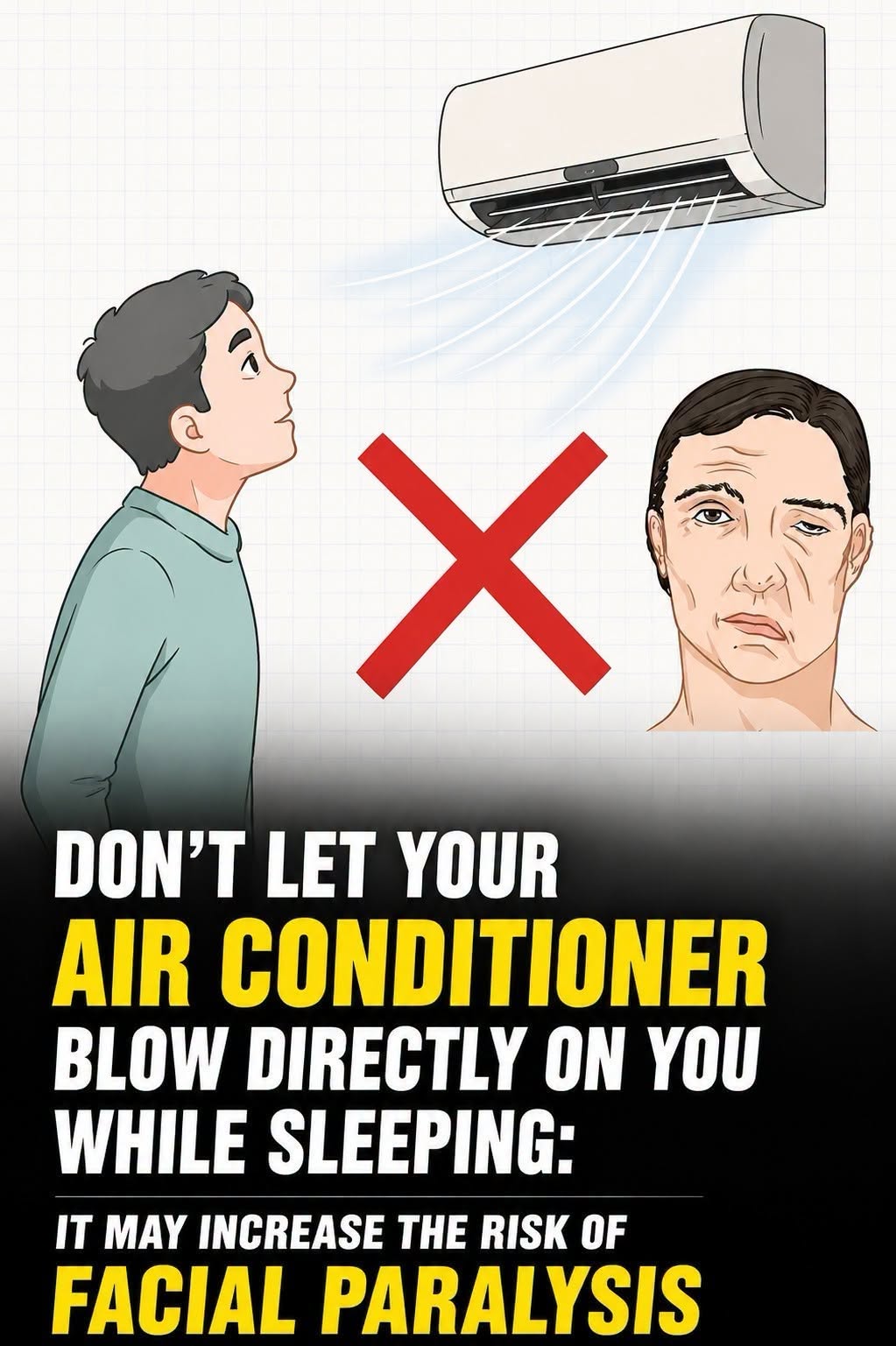
Don’t Let Your Air Conditioner Blow Directly on You While Sleeping: Could It Affect Your Facial Nerves?
On hot summer nights, air conditioning can make the difference between a restless night and a comfortable sleep. But a common warning circulating online suggests that sleeping with cold air blowing directly onto your face could increase the risk of facial paralysis.
Is there any truth to this claim? Can cold air really affect the nerves in your face, or is this another health myth that has spread online?
The answer requires separating a genuine medical condition from an unproven explanation.
1. What Is Facial Paralysis?
Facial paralysis occurs when a person loses some or all of the ability to move the muscles on one side or, less commonly, both sides of the face.
One well-known cause is Bell’s palsy, a condition involving dysfunction of the facial nerve. It can develop suddenly and may cause symptoms such as:
- Drooping of one side of the face.
- Difficulty smiling or closing one eye.
- Changes in taste.
- Increased sensitivity to sound.
- Pain around the ear or jaw.
Bell’s palsy is often temporary, and many people recover substantially or completely. However, its exact cause is not always clear, and inflammation of the facial nerve is thought to play an important role.
Importantly, there is no strong scientific evidence that sleeping with an air conditioner blowing directly on your face causes Bell’s palsy.
2. Can Cold Air Directly Cause Facial Paralysis?
This is where the distinction matters.
Cold air can cause discomfort, dry the eyes and nasal passages, and aggravate muscle tension in some people. Some people also report facial discomfort after prolonged exposure to cold temperatures.
However, these effects are not the same as paralysis.
Bell’s palsy has been associated with factors that may include viral reactivation and inflammation affecting the facial nerve. Research has explored whether environmental conditions, including cold weather, might be associated with its occurrence, but this does not establish that air conditioning directly causes the condition.
Therefore, the claim that an air conditioner blowing on your face while you sleep increases your risk of facial paralysis should not be presented as an established medical fact.
3. Why Might You Feel Uncomfortable After Sleeping in Direct Airflow?
Even without causing nerve damage, direct airflow can affect your comfort overnight.
Dry or irritated eyes: Air blowing toward your face may increase tear evaporation, particularly if your eyes do not close completely during sleep.
Dry nose and throat: Air conditioning can make indoor air feel dry, potentially causing irritation or discomfort when you wake up.
Muscle stiffness: Sleeping in an awkward position or remaining still for a long time can contribute to neck and shoulder discomfort. Cold airflow may make some people feel stiffer, although this does not mean their facial nerves have been damaged.
Disrupted sleep: A room that is too cold, excessive airflow, or a noisy air conditioner can make it harder to sleep comfortably.
These are reasonable reasons to adjust the direction of your air conditioner, even though they do not establish a risk of facial paralysis.
4. What Is the Best Way to Use Air Conditioning at Night?
You do not need to stop using air conditioning to sleep safely. A few simple adjustments can improve comfort.
- Redirect the airflow: Aim the vents away from your face and body rather than allowing a continuous stream of air to hit you.
- Choose a comfortable temperature: Avoid settings that make you shiver or wake up feeling excessively cold.
- Keep the filters clean: Follow the manufacturer’s instructions for cleaning and maintaining your unit.
- Reduce eye irritation: If airflow causes dry eyes, change your sleeping position or redirect the vents.
- Pay attention to symptoms: Persistent eye irritation, facial discomfort, or other unusual symptoms deserve appropriate medical advice.
The goal is comfortable sleep, not avoiding a proven cause of paralysis.
5. Who Should Take Extra Care?
People who already experience dry eyes, have difficulty closing their eyelids fully, or are sensitive to cold airflow may benefit particularly from redirecting the air conditioner.
People with certain medical conditions affecting the eyes or facial nerves should follow their clinician’s advice about protecting their eyes and managing symptoms.
However, ordinary exposure to air conditioning is not known to be a direct cause of facial nerve paralysis in otherwise healthy people.
6. Recognizing Facial Paralysis: When to Seek Help
Sudden facial drooping should never be attributed automatically to cold air or an air conditioner.
Facial drooping can be a sign of a stroke, particularly when accompanied by arm weakness, speech difficulties, confusion, vision problems, or sudden severe dizziness.
If facial drooping begins suddenly, call emergency services immediately. Do not wait to see whether it improves after warming up or resting.
Bell’s palsy can also require prompt medical assessment. Early evaluation is important because treatment may be more effective when started soon after symptoms begin.
Even if facial weakness appears limited to one side of the face, urgent assessment is necessary to distinguish Bell’s palsy from a stroke or another serious condition.
7. Should You Turn Off Your Air Conditioner Before Bed?
Not necessarily.
For many people, a cool bedroom improves sleep comfort, especially in hot weather. There is no need to give up air conditioning because of an unverified claim about facial paralysis.
Instead, focus on maintaining a comfortable room temperature and directing the airflow away from your face.
If you wake up with dry eyes, a sore throat, or neck stiffness, changing the temperature, vent direction, or sleeping position may help.
These practical adjustments can improve comfort without creating unnecessary fear about a medical condition.
The Bottom Line
Sleeping with an air conditioner blowing directly on your face may cause dryness or discomfort, but there is no strong evidence that this habit directly causes facial paralysis.
Bell’s palsy is a genuine medical condition involving the facial nerve, and sudden facial weakness can also indicate a stroke. Neither should be diagnosed based on sleeping conditions alone.
Use your air conditioner in a way that keeps you comfortable, avoid direct airflow if it irritates you, and seek immediate medical attention if you develop sudden facial drooping.
A comfortable night’s sleep is important—but accurate health information is just as important as the temperature in your bedroom.
Medical disclaimer: This article is for educational purposes and is not a substitute for professional medical advice, diagnosis, or treatment.