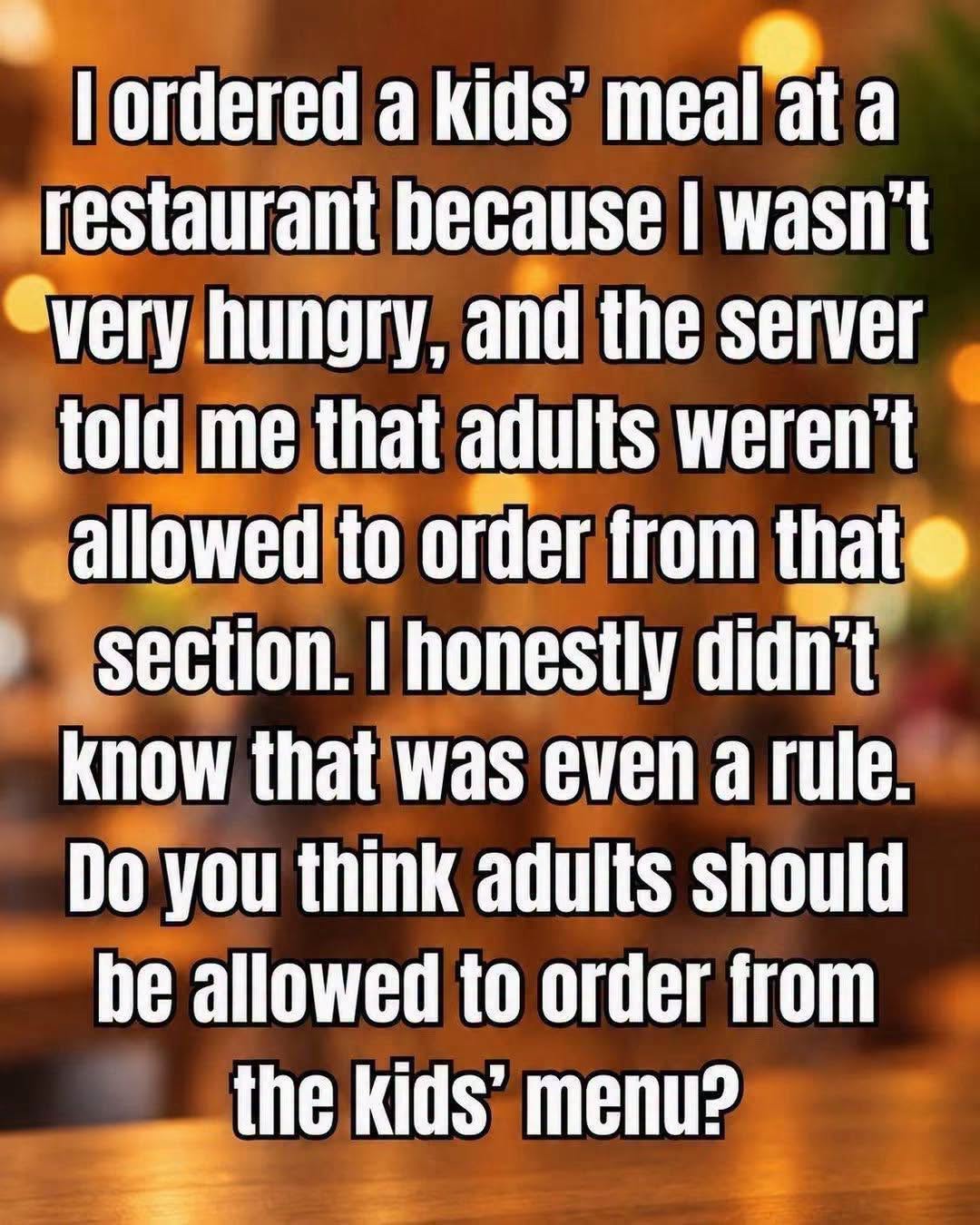
For many adults, choosing a children’s meal is not necessarily about trying to take advantage of a discounted price. It may simply be a practical decision based on appetite, personal preference, or the desire to avoid wasting food. Some people naturally prefer smaller portions, while others may not feel hungry enough to justify ordering a full-sized entrée. A lighter meal can also be appealing when someone wants to enjoy a restaurant experience without leaving the table feeling uncomfortably full. In these situations, the customer is not necessarily asking for special treatment; they are looking for an option that matches their needs.
Despite these reasonable motivations, adults who ask to order from a children’s menu can sometimes encounter an unexpectedly negative response. A server might refuse the request outright or explain the restriction in a way that makes the customer feel embarrassed. In some cases, the response can sound judgmental, as though ordering a smaller meal reflects a personal failing rather than an ordinary dining preference. What should have been a simple conversation about menu choices can quickly become an uncomfortable experience that overshadows the meal itself.
The embarrassment can be particularly frustrating because eating habits are personal. People have different appetites, preferences, and reasons for choosing particular portions. Someone may want a smaller meal because they are not very hungry, prefer to eat several smaller meals throughout the day, or simply dislike paying for food they know they will not finish. None of these reasons automatically means that a customer is attempting to exploit a restaurant’s pricing system. A request for a smaller portion should not require someone to explain or defend their appetite in front of other people.
At the same time, restaurants have legitimate reasons for establishing restrictions on children’s menus. Food prices, staffing, rent, utilities, and other operating expenses can place considerable pressure on businesses, particularly independent restaurants working with narrow profit margins. Children’s meals may be priced differently as part of a broader strategy to attract families, encourage group dining, and make eating out more affordable for parents. Allowing every adult to order those meals without restriction could affect the profitability of a pricing model that was designed for a particular customer group.
Restaurants also need to consider the difference between the cost of ingredients and the total cost of serving a customer. Even a smaller meal requires preparation time, kitchen space, staff attention, and service. Lower-priced menu items may be designed to work within specific assumptions about sales volume and customer behavior. From a business perspective, therefore, an age restriction is not automatically unreasonable or unfair. Owners have the right to establish clear policies that help them manage costs and maintain a sustainable operation.
However, recognizing a restaurant’s financial concerns does not mean that every refusal must be delivered without consideration for the customer. There is an important distinction between maintaining a policy and making someone feel uncomfortable for asking a question. Staff members can explain that a particular menu is reserved for children without suggesting that an adult’s appetite is unusual or inappropriate. A brief, polite explanation can preserve the restaurant’s rules while allowing the customer to feel respected.
There are also practical alternatives that could help both sides avoid unnecessary conflict. Restaurants could introduce smaller versions of selected entrées, offer half portions at clearly stated prices, or create a dedicated menu of small plates for adults who prefer lighter meals. These options would allow businesses to calculate prices according to their actual costs rather than relying on children’s menu pricing. They would also give customers greater flexibility without requiring restaurants to abandon existing age restrictions.
Another useful approach would be to make portion sizes and menu policies more transparent. If a restaurant does not permit adults to order children’s meals, stating that policy clearly on the menu can prevent confusion before an order is placed. Similarly, identifying smaller dishes and explaining available portion options can help customers make informed decisions. Clear information reduces the likelihood of awkward exchanges and allows both the business and its customers to understand what is available.
Ultimately, the issue is not whether adults should have unrestricted access to every discounted children’s meal. It is whether restaurants can recognize the legitimate demand for smaller portions while continuing to protect their financial interests. Customers should not expect businesses to operate at a loss, just as restaurants should not assume that every request for a smaller meal is an attempt to take advantage of a bargain.
A good dining experience depends on more than the food served at the table. It also depends on communication, flexibility, and the way customers are treated when they make a request. Restaurants have every reason to protect their bottom line, but customers deserve dignity and consideration, too. By offering reasonably priced smaller portions, communicating restrictions clearly, and responding to questions without judgment, restaurants can accommodate different appetites while maintaining sustainable pricing. A smaller order does not need to become a bigger conflict when practical choices and considerate service are part of the dining experience.