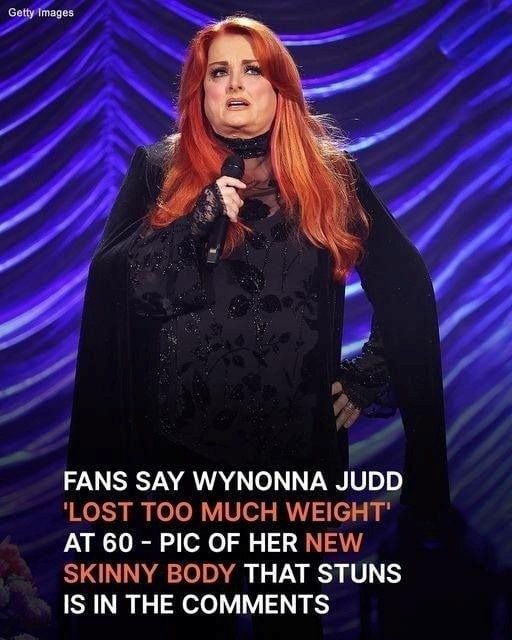
A single photograph was all it took to send the internet into another spiral of fascination, concern, admiration, and relentless judgment. When Wynonna Judd appeared in a new black outfit during a recent public appearance, fans immediately fixated on one thing: her body. Within hours, social media filled with emotional reactions ranging from praise to panic. Some people celebrated what they viewed as a dramatic transformation, calling her “stunning” and “reborn.” Others reacted with visible worry, insisting she looked too thin, too different, almost unfamiliar compared to the powerhouse country icon they had spent decades watching grow up in public. And somewhere beneath all the noise sat Wynonna herself — silent while millions of strangers projected their own emotions, memories, and insecurities onto her image.
The reaction was never really just about weight.
It rarely is when it comes to women who have spent their lives in front of audiences.
For decades, Wynonna Judd has occupied a uniquely emotional place in country music culture. She was never simply admired for polished glamour or untouchable celebrity perfection. Fans connected to her because she felt real — vulnerable, outspoken, imperfect, and deeply human in ways many stars spend entire careers trying to conceal. Her voice carried not only power but pain, resilience, heartbreak, humor, and survival. Over the years, she allowed audiences to witness struggles many public figures avoid discussing openly, especially her long and deeply personal battle with body image and weight.
That honesty became part of her identity.
Years ago, during emotional interviews — including memorable conversations on Oprah Winfrey’s platform — Wynonna admitted how profoundly shame and secrecy shaped her relationship with food, appearance, and self-worth. She described carrying emotional burdens silently for years, even hiding aspects of her pain from people closest to her. Fans saw not just a celebrity confession, but a woman articulating feelings millions understood privately themselves. For many people, especially women raised beneath impossible beauty standards, Wynonna became more than a performer. She became proof that vulnerability could coexist with strength.
That history is exactly why this new image triggered such intense reactions.
The internet doesn’t simply see a slimmer figure.
It sees history attached to that body.
People remember every old interview, every public struggle, every emotional confession. So when her appearance changes dramatically, audiences instinctively search for meaning beyond the photograph itself. Some viewers celebrate because they interpret the transformation as victory, healing, discipline, or renewed confidence. Others react with fear because sudden change reminds them of illness, grief, stress, aging, or emotional pain. And many are simply confronting something uncomfortable about themselves: how emotionally attached they have become to the physical appearance of someone they do not actually know personally.
That attachment becomes especially powerful because Wynonna’s life has been marked publicly by extraordinary personal loss.
The death of her mother, Naomi Judd, devastated fans almost as deeply as it devastated the family itself. The bond between mother and daughter had long been central to the public mythology surrounding The Judds. Together they represented not just musical success, but generational connection, family tension, reconciliation, and survival through hardship. After Naomi’s death, audiences began viewing Wynonna differently — almost protectively. Every appearance now carries emotional weight because fans understand she continues performing while privately carrying grief most people can barely imagine surviving under public scrutiny.
So when recent photos surfaced, people weren’t only evaluating her appearance.
They were searching for signs.
Signs of healing.
Signs of pain.
Signs of collapse.
Signs of resilience.
In many ways, the reaction says more about society than it does about Wynonna herself. Modern culture has developed an almost compulsive relationship with women’s bodies, particularly the bodies of famous women aging in public. If someone gains weight, they become a symbol of “letting go.” If they lose weight, people immediately speculate about illness, surgery, medication, emotional breakdown, or secret suffering. There is almost no physical state a woman can exist in publicly without becoming the target of commentary disguised as concern.
And concern itself can become invasive surprisingly fast.
Some fans flooded social media begging Wynonna to “eat biscuits and gravy again,” framing nostalgia as affection. Others compared her current appearance emotionally to Naomi’s later years, which intensified fears even further. Meanwhile countless commenters praised her transformation with language so exaggerated it unintentionally reinforced the same problem — reducing a complex human being into a body constantly evaluated by strangers.
Through all of it, Wynonna has largely remained silent.
And perhaps that silence matters most.
In an era where celebrities are expected to explain every visible change immediately, silence can feel almost radical. She has not rushed online to justify herself. She has not publicly defended her appearance or offered emotional reassurance to satisfy public curiosity. Instead, she continues stepping onto stages, singing with the same unmistakable voice that carried generations through heartbreak, faith, love, and survival long before internet debates existed.
There is something strangely powerful about that.
Because beneath all the speculation lies an uncomfortable truth: audiences often believe emotional connection gives them ownership over public figures. Fans who grew up listening to Wynonna feel protective of her partly because her music accompanied deeply personal moments in their own lives. That connection feels real emotionally, even if it remains one-sided in reality. As a result, people begin interpreting changes in her appearance almost like changes happening within their own family.
But admiration does not erase boundaries.
And concern does not automatically justify entitlement.
At its core, this entire conversation reveals how difficult society still finds it to allow women — especially famous women — to exist without constant physical interpretation. Every image becomes evidence. Every outfit becomes a statement. Every visible change demands explanation. Public figures become screens onto which millions project their own anxieties about aging, beauty, health, grief, control, and identity.
Meanwhile the actual human being inside the photograph remains far more complicated than the internet conversation surrounding them.
Wynonna Judd has survived extraordinary emotional storms across her life: fame, family conflict, addiction struggles within the family, public scrutiny, heartbreak, and devastating loss. Through all of it, she has continued singing. Continued showing up. Continued carrying herself through grief beneath bright lights while audiences watched closely for cracks.
Perhaps that is why this latest image unsettled people so deeply.
Not because she looks smaller.
But because change reminds audiences that time is moving forward — for her, for them, for everyone who once watched The Judds together decades ago and now sees mortality, memory, and aging reflected back through a single photograph.
Until Wynonna chooses to speak for herself, the speculation will continue circling endlessly online.
But maybe the most respectful response is not to demand explanations from her body at all.
Maybe it is simply to let her stand beneath the stage lights, sing the songs that carried millions through their own struggles, and exist as a woman whose worth was never defined by the size of the silhouette people happen to see in a photograph.