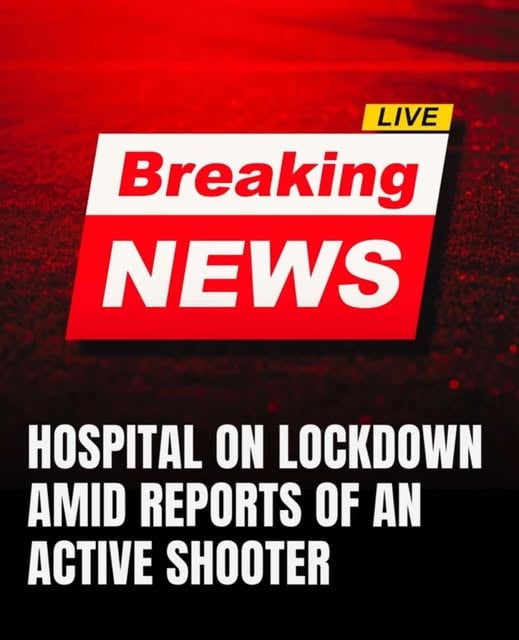
Everyone believes that hospitals are hallowed places of healing, recuperation, and complete safety where both patients and medical personnel can seek sanctuary from the perils of the outside world. The abrupt, horrifying outburst of violence at Corewell Health Beaumont Troy Hospital was particularly upsetting to the neighborhood because of this fundamental expectation of tranquility. When several rounds of gunshots suddenly reverberated through the hospital’s concrete parking garage, a seemingly ordinary, typical morning swiftly turned into complete, uncontrollable horror. The trust that hundreds of vulnerable patients and committed medical personnel depend on on a daily basis to navigate their healthcare journeys was completely destroyed by the unexpected attack.
At precisely 7:08 a.m., when shift changes and early appointments are most common, campus security staff frantically reported active gunfire on the property, sparking the emergency. In a matter of seconds, the vast medical campus was engulfed in complete bewilderment and mindless dread. The bullets echoed off the concrete structures, making it impossible to pinpoint the precise location of the threat. Patients who had just come for their planned morning visits froze in place or hastily rushed for any available cover, completely disoriented. As the clean morning air filled with the smell of gunpowder, devoted medical staff fell behind parked cars in the garage or ran back toward the main sliding glass doors, frantically attempting to make sense of the horrific situation taking place all around them.
Administrators and medical personnel immediately triggered stringent active shooter procedures deep within the hospital’s main structure, turning it from a busy hub for patient care into a strongly guarded emergency area. Vulnerable patients were carefully relocated from outside windows into safe, centralized triage areas, heavy fire doors were promptly sealed, and rooms were quickly locked from the inside. Fearful guests were packed into internal closets and windowless breakrooms by quick-witted nurses and physicians who led them away from lobbies, hallways, and large open areas. Because nobody inside the sealed units understood whether the active danger was going away from the garage or aggressively heading into the main hospital corridors, the emotional weight of anxiety was immediate and oppressive throughout the complex.
Law enforcement forces reacted with an overwhelming amount of force, treating the developing situation as an active shooter scenario that could result in mass casualties. Tactical policemen quickly dispersed throughout the medical campus as dozens of heavily armed police cruisers arrived on the area with sirens blasting. To stop anyone from approaching the danger zone, teams of officers methodically blocked off all main entry and departure points. While heavily armed K-9 units rushed the parking structures in search of the active shooter, specialized drone units were dispatched into the air to offer real-time overhead surveillance of the building rooftops. In an instant, an institution that was typically devoted to the gentle preservation of human life had become a strongly guarded, militaristic tactical battleground.
Important information started to come to light as the thorough investigation moved quickly forward, showing that the horrific event was not a random act of mass violence but rather the result of a focused, intensely personal dispute between two hospital staff members. A young male employee in the parking garage was specifically targeted by the shooter, who opened fire at close range, seriously injured him, and then left the area. Incredibly quickly, emergency medical personnel rushed the injured worker into the trauma center for life-saving care. In the meantime, tracking units found the fugitive suspect in a nearby neighborhood, captured him, and placed him under police custody without any more problems. However, the deep emotional impact of the violence went much beyond those who were immediately involved in the garage conflict, even after the gunman was safely imprisoned and the immediate physical threat was completely eliminated.
Shaken patients and terrified staff members described excruciating moments of complete horror in the torturous hours that followed the crisis’ conclusion. In the maternity department, mothers held their babies close, patients recuperating from major surgery were sequestered in dimly lit recovery rooms, and people seeking regular medical care sobbed in locked closets while waiting for confirmed updates on their own mobile phones. The terrifying knowledge that severe violence might easily breach a hospital’s security rocked the entire establishment, making caregivers face the precarious nature of their workplace.
The lockdown had a significant influence on the adjacent residential community as well. To safeguard residents from anticipated spillover violence, local schools, businesses, and residential communities immediately implemented strict preventative security measures. Hospital administration conducted emergency briefings in the afternoon after the shooting, placing a strong emphasis on the prompt deployment of crisis counseling teams, extensive psychological support services, and a thorough, top-down evaluation of all campus safety protocols. In an aggressive attempt to rebuild the basic sense of trust that had been taken from the campus, executives pledged to adopt greater security screenings, more armed patrols, and sophisticated surveillance techniques.
The horrific episode highlighted how fast a sense of complete safety can feel extremely fragile, even though the physical barriers were eventually removed and the daily routine of hospital life gradually restored to a superficial state of normalcy. The shooting at Corewell Health was a sobering reminder of how unpredictable contemporary security threats may be, underscoring the vital need of consistent emergency preparedness, institutional resilience, and deep compassion. These fundamental principles continue to be crucial in assisting committed medical personnel, susceptible patients, and the larger bereaved community in completely healing from the profound, invisible wounds of such an extremely traumatic event.