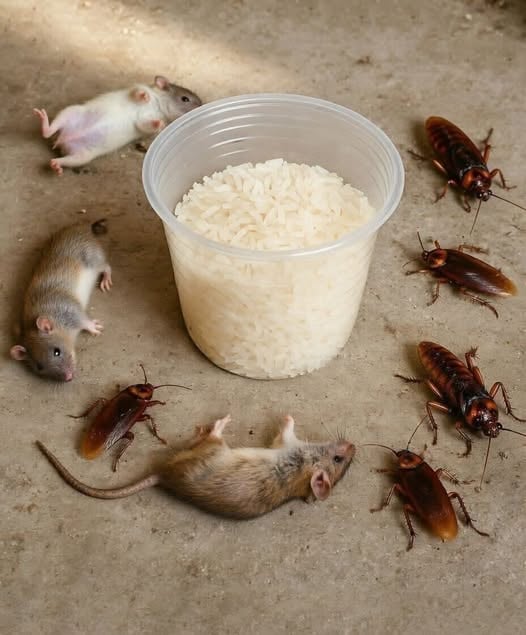
What makes a home feel truly unsettling is not always what you can see — it is what might already be hiding behind the walls, beneath the cabinets, or moving quietly through the darkness while everyone sleeps. A scratching sound at midnight. Tiny droppings behind the stove. A roach disappearing into a crack the second the lights come on. Once you notice the signs, it becomes difficult to stop imagining the hidden invasion spreading through spaces meant to feel safe.
Most people immediately think of expensive exterminators or harsh chemical sprays when pests appear. But some homeowners turn instead to surprisingly simple household ingredients — including ordinary rice — to create homemade bait designed to target cockroaches and rats discreetly and cheaply.
For cockroaches, cooked rice is sometimes mixed with sugar and boric acid powder to create bait that attracts them easily. The sugar draws insects in, while the boric acid acts slowly after consumption, damaging their digestive and nervous systems. Small portions are often hidden behind appliances, beneath sinks, or inside dark cabinet corners where roaches tend to travel unnoticed. Because the poison works gradually, exposed insects may return to nests before dying, potentially spreading the effect to others.
For rats and mice, some homemade remedies involve uncooked rice combined with ingredients such as baking soda or plaster powder along with sweet-smelling attractants like sugar or cocoa. The idea behind these mixtures is that rodents consume the bait believing it to be food, leading to dangerous internal reactions afterward.
But while these methods are widely shared online and can sound clever or “natural,” they also carry real risks.
Boric acid can be harmful if accidentally touched or consumed by pets or children. Homemade rodent mixtures may injure non-target animals or create sanitation problems if rodents die inside walls or inaccessible spaces. And unlike professionally regulated pest-control products, homemade remedies do not always work consistently or humanely.
That is why caution matters as much as effectiveness.
If someone chooses to use any homemade bait, it should always be clearly labeled, placed far away from food preparation areas, and kept completely inaccessible to children and animals. Gloves should be used when handling toxic substances, and local pest-control guidance should be followed whenever possible.
Still, the popularity of these rice-based remedies reveals something understandable: people want affordable ways to reclaim control over their homes. Infestations create embarrassment, stress, and a lingering sense that your personal space is no longer fully yours. Even simple scratching noises in the walls can make a house feel invaded.
And perhaps that is why these homemade solutions spread so widely — because they transform something ordinary sitting quietly in a pantry into a symbol of defense against the hidden creatures people fear most inside their homes.