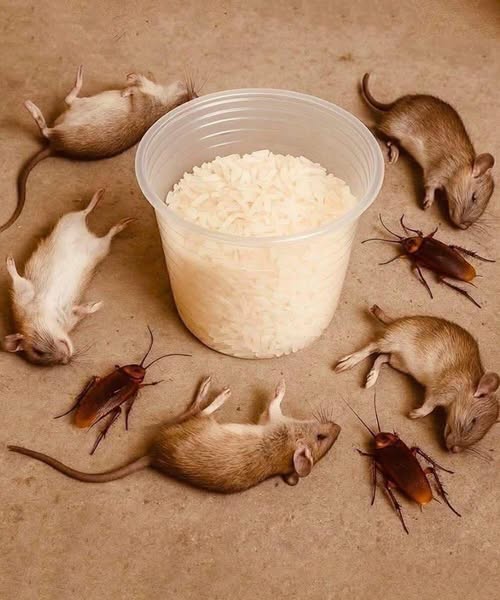
The Kitchen Staple That Could Help You Fight Rats and Cockroaches: What Really Works Against Household Pests?
They move through the darkness while the house is quiet. A scratching sound behind the wall, a sudden movement beneath the refrigerator, or a cockroach disappearing into a kitchen cabinet can quickly turn a comfortable home into a source of frustration. For many households, discovering rats or cockroaches is more than an unpleasant surprise. These pests can contaminate food, damage property, and create ongoing concerns about cleanliness and hygiene.
When an infestation appears, many people immediately reach for chemical sprays or expensive pest-control products. Others turn to traditional home remedies, searching for simple ingredients already sitting in their kitchen cupboards. Rice, sugar, mint, garlic, and other familiar household items are frequently mentioned in discussions about natural pest control.
But can a handful of rice really solve a serious pest problem?
The answer depends on what you are trying to control and how the ingredients are used. Although rice can serve as a food source or bait ingredient in certain circumstances, it is not a proven standalone method for eliminating rats or cockroaches. Some popular homemade recipes can also create unnecessary risks for children, pets, and other animals.
The good news is that there are practical, affordable ways to reduce pest activity without spraying chemicals throughout your home.
Why Rats and Cockroaches Enter Homes
Rats and cockroaches are attracted to environments that provide easy access to food, water, and shelter. Kitchens, storage rooms, basements, and areas behind appliances can offer all three.
Uncovered food, crumbs, overflowing rubbish bins, leaking pipes, and poorly sealed gaps can make a home especially attractive to pests. Even small amounts of food left overnight may provide enough nourishment to encourage repeated visits.
Rats can enter through surprisingly small openings, depending on their species and size. They may travel along walls, enter through damaged vents, or exploit gaps around pipes and doors. Once inside, they can gnaw on materials, damage packaging, and contaminate surfaces with urine and droppings.
Cockroaches are similarly persistent. They hide in cracks, cupboards, plumbing spaces, and warm areas near appliances. Some species can survive on very small quantities of food and water, making it difficult to control an established population simply by cleaning visible messes.
Understanding what attracts these pests is the first step toward controlling them. Rather than relying on a single ingredient, effective pest management focuses on removing food sources, blocking entry points, and using appropriate control methods.
Can Rice Really Eliminate Cockroaches?
Rice is a common food ingredient, and its texture makes it easy to combine with other materials. However, plain rice does not reliably kill cockroaches, and there is no good evidence that rice mixed with sugar provides a dependable solution to an infestation.
Some homemade recipes recommend combining cooked rice, sugar, and boric acid to attract and kill cockroaches. Boric acid is used in certain commercial pest-control products, but it must be handled according to the product label. Incorrect concentrations, poor placement, or accidental exposure can create risks for people and animals.
Homemade pesticide mixtures also have an important limitation: their effectiveness is unpredictable. Cockroaches may avoid a bait, find other food sources, or continue reproducing in hidden areas. A mixture that kills an individual insect does not necessarily eliminate the population living behind walls, beneath appliances, or inside cabinets.
A safer and more dependable approach is to use a commercially formulated cockroach bait or bait station approved for indoor use. Follow the instructions carefully, place it only in permitted locations, and keep it inaccessible to children and pets.
Sticky monitoring traps can also help identify where cockroaches are most active. They do not usually eliminate a large infestation on their own, but they can show whether control measures are working.
What About Using Rice to Kill Rats?
Another widely circulated home remedy suggests mixing uncooked rice with plaster of Paris, sugar, or cocoa. Other versions recommend rice and baking soda.
These recipes are often presented as inexpensive alternatives to conventional rodent control. However, their effectiveness is not reliably established, and they can cause unintended harm to pets and wildlife if placed where animals can reach them.
There is no dependable basis for treating rice mixed with plaster of Paris or baking soda as a proven rat-killing method. Relying on these mixtures may delay effective control while the rodents continue damaging property and contaminating food-storage areas.
If you suspect rats are living inside your home, use properly designed snap traps or other approved control products in accordance with their instructions. Place traps along walls and in areas showing signs of rodent activity, while ensuring they cannot be reached by children or pets.
For a significant infestation, a qualified pest-control professional can identify entry points, determine the scale of the problem, and recommend an appropriate treatment plan.
The goal should not simply be to kill a rodent that appears in the kitchen. It should be to stop rodents from entering, remove the conditions attracting them, and reduce the likelihood of another infestation.
Natural Repellents: Do Mint, Garlic, and Bay Leaves Work?
Mint oil, garlic, bay leaves, and cucumber peels are often recommended as natural ways to discourage household pests. Their strong smells may seem like an appealing alternative to conventional products.
However, evidence that these household ingredients can reliably eliminate rats or cockroaches is limited. Even when a particular scent temporarily discourages an animal, it is unlikely to solve a serious infestation on its own.
Essential oils also require caution. Some, including peppermint oil, can be harmful to pets depending on the substance, concentration, and exposure route. Concentrated oils should never be assumed safe simply because they are described as natural.
If you prefer to avoid pesticides, focus first on methods that do not depend on toxic substances or unproven repellents.
These include keeping food in tightly sealed containers, cleaning crumbs and spills promptly, repairing leaks, storing rubbish in covered bins, and sealing cracks around pipes and other openings.
Such measures are often more effective over the long term because they address the conditions that allow pests to survive.
Simple Steps That Can Make Your Home Less Attractive to Pests
You do not need to begin with expensive equipment to improve pest prevention. A few consistent habits can make a meaningful difference.
1. Store food securely. Keep rice, flour, cereal, pet food, and other dry goods in tightly sealed containers. Avoid leaving food uncovered overnight.
2. Clean hidden areas. Move appliances when practical and clean beneath refrigerators, ovens, and cupboards. Grease, crumbs, and food residue can attract pests even when the rest of the kitchen appears spotless.
3. Remove standing water. Repair dripping taps and leaking pipes. Cockroaches and rodents need access to water, so reducing available moisture can make an environment less attractive.
4. Seal entry points. Inspect gaps around plumbing, doors, vents, and foundations. Use appropriate materials to close openings and prevent pests from entering.
5. Manage rubbish carefully. Use bins with secure lids, empty them regularly, and clean any spills around waste-storage areas.
6. Monitor activity. Look for droppings, gnaw marks, damaged food packaging, egg cases, or repeated sightings. These signs can help you identify where pests are hiding and whether professional assistance is needed.
Consistency is essential. A single cleaning session may remove visible food, but long-term prevention requires maintaining these habits and addressing the places where pests enter or hide.
When Professional Pest Control Is Necessary
Occasionally seeing an insect does not always indicate a major infestation. However, repeated cockroach sightings, persistent rat noises, fresh droppings, damaged food packaging, or evidence of nesting suggest that a more systematic approach may be needed.
Cockroaches can hide in locations that are difficult to reach with ordinary cleaning products. Rats may occupy wall cavities, ceilings, storage areas, or spaces beneath floors. Treating only the visible area may leave the source of the problem untouched.
A pest-control professional can identify the species involved and recommend measures appropriate to the property. This can be especially useful when previous attempts have failed or when pests keep returning despite improved sanitation.
Professional advice is also important when dealing with rodent activity in food-preparation areas or when there may be contamination involving electrical wiring, insulation, or stored goods.
A Cleaner Home Starts With the Right Strategy
The idea that an ordinary kitchen ingredient could solve a frustrating pest problem is understandably appealing. Rice is inexpensive, familiar, and readily available. But a simple homemade recipe is not necessarily an effective or safe pest-control method.
For cockroaches and rats, the most dependable approach combines prevention, careful monitoring, appropriate traps or approved bait products, and professional help when necessary.
Avoid relying on mixtures made with plaster of Paris, baking soda, or improvised pesticide ingredients. These methods are not dependable substitutes for established pest-control practices and may expose children, pets, or other animals to unnecessary risks.
Ultimately, reclaiming your home is not about discovering a secret ingredient. It is about understanding what attracts pests, cutting off their access to food and shelter, blocking their entry routes, and choosing control methods that are both effective and safe.
With the right strategy, you can reduce pest activity, protect your kitchen, and make your home a less welcoming place for unwanted visitors—without turning your living space into a hazardous environment.