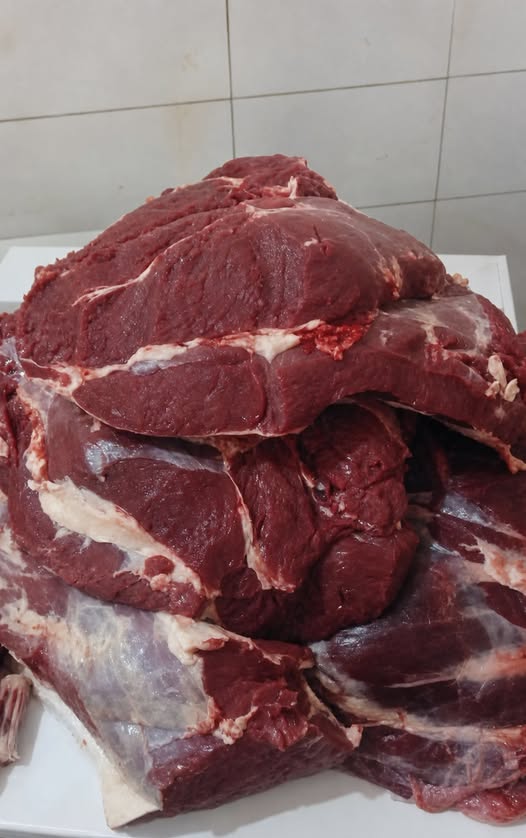
That bright red steak in the display case might be lying to you.
It looks perfect.
It looks fresh.
It looks safe.
But the color you trust so instinctively can be one of the most misleading signals in the entire store.
Under bright supermarket lights, behind layers of plastic, and surrounded by carefully designed packaging, meat can appear newer, fresher, and more appealing than it actually is. The reddest package may grab your attention first, but bright color alone cannot tell you whether the meat is safe to eat.
What you see is chemistry.
Not honesty.
Fresh beef can naturally change color depending on how much oxygen reaches the surface. Vacuum-sealed beef, for example, can appear surprisingly dark or even purplish while still being perfectly fresh. Once the package is opened and the meat is exposed to oxygen, it can develop the familiar bright cherry-red color that shoppers often associate with freshness.
That dramatic change does not necessarily mean the meat suddenly became better.
It simply means oxygen changed the chemistry of the pigments in the muscle.
And the reverse can happen too.
Meat can lose some of its bright red appearance without automatically being spoiled.
This is where shopping by color alone can lead you astray.
Supermarket lighting can also influence what you see. Display cases are designed to make products look appealing, and the lighting can make certain colors appear more vibrant. Packaging adds another layer, because clear plastic and carefully arranged trays encourage shoppers to judge the product visually before considering anything else.
The result is simple.
You may reach for the reddest steak because your brain has learned that red means fresh.
But red does not equal safe.
And pale or darker does not automatically equal spoiled.
Color is only one piece of information.
The smarter approach begins with the package itself.
Look carefully at the label.
Check the use-by or sell-by information where applicable, storage instructions, and product details rather than relying on phrases designed primarily to attract attention.
Words such as “premium,” “natural,” or other marketing descriptions can influence how we perceive a product, but they are not substitutes for proper handling and food-safety information.
Then inspect the package.
Is the plastic intact?
Is the seal secure?
Is the tray leaking?
Is there an unusual amount of liquid?
Does the packaging look swollen or damaged?
None of these observations should be treated as a perfect test on its own, but together they can provide useful clues about whether you should choose another package.
Temperature matters too.
Raw meat should be kept properly chilled. If a package feels noticeably warm or you are concerned that it has not been kept cold enough, color should be the last thing convincing you to buy it.
Then there is the question of what happens after you bring it home.
This is where good handling becomes far more important than appearance.
Keep raw meat refrigerated and avoid leaving it sitting at room temperature longer than necessary. Store it in a way that prevents juices from contaminating other foods, and wash your hands and utensils appropriately after handling it.
When you open the package, smell and texture can provide additional information.
A strong, unpleasant, or unusual odor can be a warning sign. A surface that feels unusually slimy or sticky can also be concerning.
But even these checks have limitations.
That is one of the most important things to remember about raw meat.
Dangerous bacteria do not necessarily announce themselves with a strange color or smell.
Food can look normal and still contain harmful microorganisms.
That is why cooking temperature matters.
A food thermometer provides information that your eyes cannot.
Instead of trying to judge whether meat is safe simply by its appearance, use the appropriate safe internal temperature for the type of meat you are preparing. A thermometer is far more reliable than guessing based on whether the steak looks “done.”
The same principle applies at the grocery store.
Your eyes can tell you what the meat looks like.
They cannot tell you its entire history.
You cannot see how long it has been sitting there.
You cannot see every temperature change it may have experienced.
And you certainly cannot see bacteria.
That does not mean you should be afraid of buying meat.
It means you should stop treating color as a guarantee.
The bright red steak may be perfectly good.
The darker steak may also be perfectly good.
And neither one earns a safety certificate simply because it looks attractive.
Supermarkets are designed to make shopping convenient, but they are also designed to make products appealing.
That is why packaging, lighting, presentation, and marketing can have such a powerful effect on our decisions.
The reddest steak catches the eye.
The nicest package feels more trustworthy.
The familiar words on the label create confidence.
But good food decisions require more than visual appeal.
Look at the entire package.
Consider the date.
Check the seal.
Pay attention to storage temperature.
Handle the meat properly.
And when you cook it, use a thermometer instead of relying solely on appearance.
The smartest shopper isn’t the person who finds the reddest steak.
It is the person who knows that color is only one clue—and often a surprisingly unreliable one.
Because when it comes to meat, the most convincing thing in the display case may also be the thing telling you the least about what really matters.
The color can catch your eye.
But the quiet details are what should guide your decision.