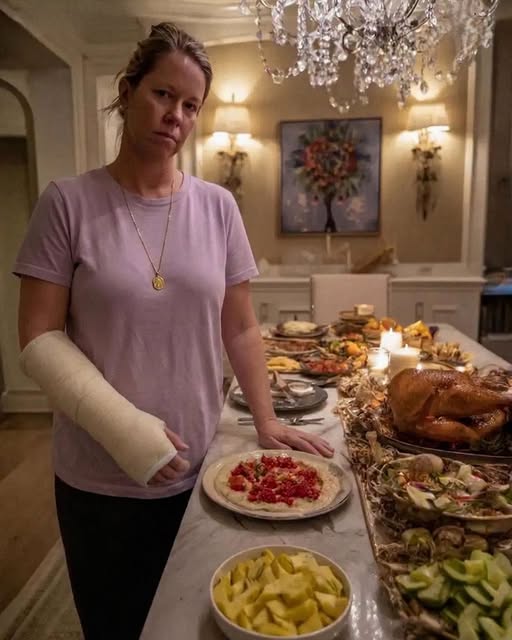
The injury was not an accident, but the result of my husband Jason’s negligence. The night before his birthday weekend, the temperature dropped sharply, turning the moisture on our porch into a sheet of ice. I had repeatedly asked him to shovel and salt the steps, but he stayed absorbed in his phone, dismissing my concerns. He said he would do it later—a promise that, in practice, always meant never.
The next morning, as I left for work with my hands full, I stepped onto the porch and immediately lost my footing. I fell hard, landing on my right arm. The pain was immediate and intense, and I heard the unmistakable crack of bone against concrete. I called out for help, but Jason didn’t come. Our neighbor, Mrs. Patel, found me and called an ambulance.
At the hospital, I was diagnosed with a serious fracture and placed in a full arm cast. The doctor instructed complete rest and no physical strain. When I returned home, I expected concern or at least acknowledgment of what had happened. Instead, Jason focused on his upcoming birthday gathering. He complained that my injury was inconvenient, since he had already told guests I would be preparing food and that the house needed cleaning.
When I explained that I physically couldn’t cook or host, he insisted I still fulfill my responsibilities, framing it as essential for his reputation. That moment made something clear to me: the imbalance in our marriage was not occasional, but structural. I stopped arguing and told him I would “handle it.”
After he left, I began making arrangements—not for the party, but for myself. I used my personal savings to hire a professional cleaning service and a catering company to take over the event entirely. Then I contacted my lawyer. We had previously discussed separation, and the paperwork was already prepared. I asked for it to be finalized in time for the gathering.
The next day, the house was transformed. Cleaners restored everything to order, and the caterers set up a full professional spread. Jason returned home and assumed I had pushed through my injury to make everything perfect for him. He even took credit for the preparations in front of guests, continuing to treat me as though my role was to serve, regardless of my condition.
Later, his mother added to the situation, dismissing my injury and reinforcing the expectation that I should have continued fulfilling domestic duties. I said nothing and waited.
Midway through the party, the doorbell rang. Jason opened it to find a process server, the cleaning service manager, and the caterer. He was handed legal documents, including divorce papers, along with final invoices. When he realized what he was reading, the atmosphere in the room shifted immediately.
I stood and addressed the guests calmly. I explained the sequence of events: the ignored warning about the ice, the fall, the lack of response, and his expectation that I still perform household labor despite my injury. I made it clear that I had not failed to host the party—rather, I had stepped away from a role that had never been shared equally.
I then stated that I was ending the marriage.
My belongings were already packed. I left with a friend who was waiting outside, while Jason reacted in anger and disbelief, focused more on the public exposure than on what had led to it.
That night, I stayed elsewhere, resting as instructed and beginning the process of separation. The physical pain remained, but the emotional burden I had carried for years felt lighter.
Jason got his birthday celebration exactly as planned. What he didn’t expect was that it would mark the end of a marriage built on imbalance, where responsibility was expected but respect was not.