The story of Kurt Cobain is often framed through the lens of global fame and musical revolution, but its roots lie in the quiet, working-class streets of Aberdeen. Born on February 20, 1967, at Grays Harbor Hospital, he grew up surrounded by the damp air of the Pacific Northwest and a family background quietly infused with music. His mother worked as a waitress, his father as a mechanic, and in his earliest years, Kurt was remembered as a bright, energetic, and deeply creative child. He drew constantly, sang from a very young age, and by four was already experimenting at the piano, crafting simple songs inspired by artists like Electric Light Orchestra, The Beatles, and Terry Jacks. Everything about his early life suggested promise—but that foundation was more fragile than it appeared.
At nine years old, his world fractured. His parents’ divorce deeply affected him, triggering a shift from a lively, affectionate child into someone withdrawn and defiant. He later spoke about the shame and instability he felt, longing for a sense of normalcy that had suddenly disappeared. As both parents moved on with new relationships, Kurt struggled to find belonging. His father’s remarriage left him feeling displaced, while his mother’s involvement in an abusive relationship exposed him to violence at a young age—experiences that would leave lasting emotional scars.
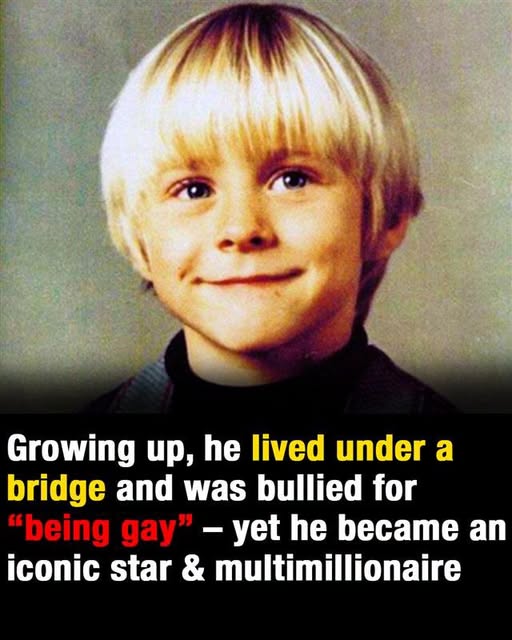
This turmoil followed him into school. Once capable and even athletic, he began to resist authority in subtle and overt ways, deliberately underperforming and rejecting expectations. He grew increasingly resentful of his hometown, which he saw as narrow-minded and judgmental. By high school, his sense of alienation had intensified. He befriended a gay student and became a target for bullying, with rumors spreading about his own identity. Rather than retreat, Kurt leaned into the assumptions, using them as a quiet act of rebellion against the culture around him. His appearance and behavior became more expressive, even confrontational, reflecting an inner struggle that was becoming harder to contain.
Amid the chaos, creativity remained his refuge. He drew constantly, often producing provocative or unsettling images that mirrored his internal state. But structure was slipping away. He eventually dropped out of high school after failing to meet graduation requirements and, faced with an ultimatum, left home. What followed was a period of instability—drifting between places, jobs, and identities. The often-told story of him living beneath the Wishkah River Bridge may be partly mythologized, but it captures the essence of his isolation: a young man disconnected from society, searching for meaning.
That meaning began to take shape when he discovered the local punk scene. The rawness and honesty of that music resonated deeply. After working odd jobs—including a stint as a janitor at his former high school—he committed himself fully to music. He formed Nirvana, and after early struggles, the lineup solidified with the arrival of Dave Grohl. In 1991, they released Nevermind, and its lead single, Smells Like Teen Spirit, erupted onto the global stage. Almost overnight, Kurt became the voice of a generation, bringing vulnerability and emotional intensity into mainstream rock in a way that hadn’t been seen before.
But the success came with a cost. Fame magnified the struggles he already carried—chronic pain, depression, and increasing heroin use as a form of escape. His relationship with Courtney Love and the birth of their daughter Frances Bean Cobain placed his personal life under intense public scrutiny. The contradictions became impossible to ignore: an anti-establishment artist turned global icon, a deeply sensitive individual trapped in a world of relentless attention.
On April 8, 1994, Kurt Cobain was found dead in his Seattle home at the age of 27. His death, ruled a suicide, marked the end of a life that had profoundly reshaped music and culture in just a few years. Despite the immense success—both artistic and financial—his legacy was complicated by unresolved personal struggles and the absence of clear estate planning, which led to prolonged legal disputes after his passing.
Kurt Cobain remains a powerful symbol of both creative brilliance and personal fragility. His music continues to resonate not just because of its sound, but because of its honesty. He gave voice to feelings of alienation, pain, and searching—feelings that still connect with anyone who has ever felt out of place in the world.