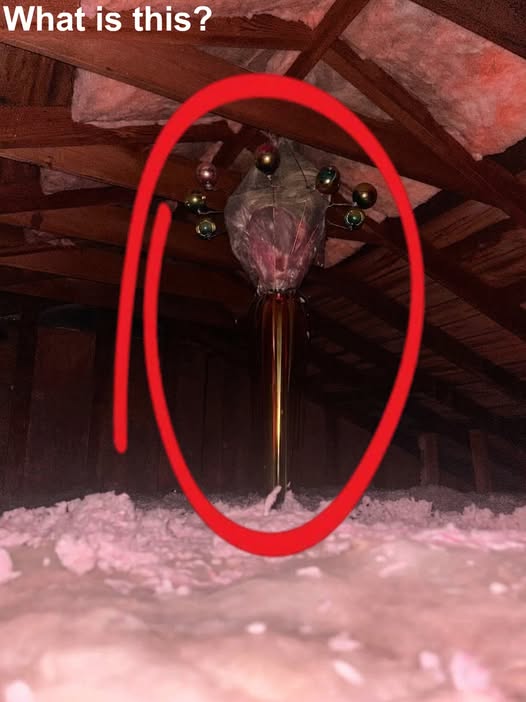
Attics have a way of turning the ordinary into something that feels unfamiliar, even unsettling. They hold years—sometimes decades—of forgotten items, all altered by dust, darkness, and time. In that dim, quiet space, it’s easy for the mind to fill in the gaps and imagine something far more mysterious than what’s actually there. But more often than not, what seems strange at first glance becomes clear with patience and a closer look.
When you come across something unusual in an attic, the best response is to slow down and observe. Objects that appear confusing from a distance often reveal recognizable details when examined carefully. A certain texture, a manufactured edge, or a faded design can point to what the item once was. With better lighting and a bit of focus, something that initially feels unsettling usually turns out to be something ordinary—just changed by time.
A big part of the confusion comes from how materials age. Attics experience extreme temperature swings and humidity shifts, which can warp wood, discolor plastic, and coat fabrics in thick layers of dust. Over time, these changes can make everyday objects look completely different. A decoration, a broken appliance part, or a piece of old furniture might lose its original form so much that it becomes unrecognizable without context.
There’s also a psychological side to it. Attics naturally put people on edge—they’re quiet, dim, and full of shadows. In that environment, the brain is more likely to misinterpret what it sees. This is often explained by pareidolia, the tendency to see meaningful shapes—like faces or figures—in random objects. A pile of fabric can look like a person, or tangled wires can resemble something alive. Knowing this can help keep your imagination in check.
If something truly puzzles you, there are plenty of ways to figure it out. Many odd attic discoveries turn out to be tools or household items from earlier generations—things that simply aren’t used anymore. With a bit of research or help from online communities, even the strangest objects can often be identified. What once seemed eerie can become a small piece of history.
And that’s really what attics are—archives of the past. Every object, no matter how strange it looks now, once had a clear purpose. Taking the time to understand it turns a moment of uncertainty into one of discovery. Instead of something to fear, it becomes something to learn from.
In the end, the key is perspective. When you replace assumption with curiosity, the unknown becomes manageable. Most of the time, there’s nothing hiding in the attic except time itself—quietly reshaping the familiar into something that just needs a second look to be understood.