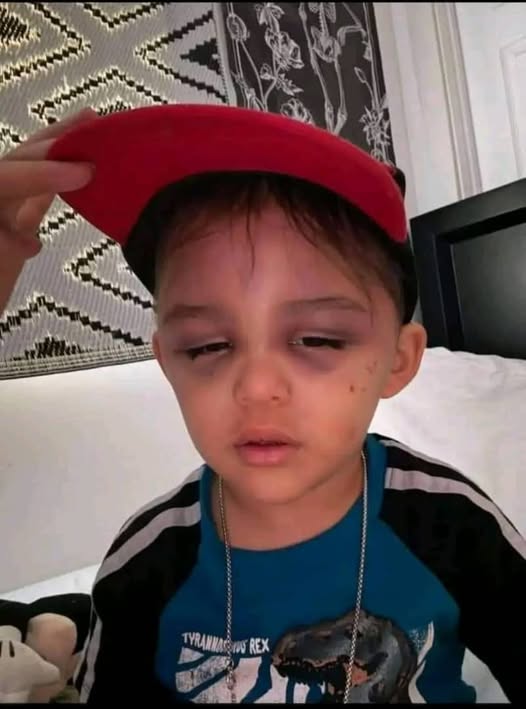
The warning signs were everywhere, if only someone had truly looked. The bruises, subtle at first and then impossible to ignore, told a story that words could not fully capture. The strange, fragmented tales he offered—stories that never quite made sense, full of pauses and uneasy glances—were attempts at communication that were too easily dismissed. The way his eyes roamed each room, scanning for any hint of safety or recognition, was a silent plea: someone, anyone, please see me. Yet on March 6, 2026, that plea remained unanswered. A young boy’s “silent cries” were swallowed by layers of adult hesitation, polite avoidance, and a fatal, creeping doubt. This was not a mystery to solve, nor a sudden horror to be shocked by. It was a tragedy built slowly, quietly, by those who could have intervened but did not.
We did not lose this boy to an unforeseeable event. We lost him incrementally, piece by piece, through a series of small failures and quiet inactions. Each time an adult noticed something amiss, felt that unmistakable knot of fear in their stomach, and chose comfort over confrontation, the damage deepened. His life was chipped away by hundreds of tiny silences: the neighbor who glanced away rather than ask questions, the teacher who hesitated to press for clarity out of fear of being wrong, the relative who dismissed the signs with a thoughtless “it’s not my place.” Every one of them had enough evidence to spark worry, yet not enough—so they told themselves—to justify action. And so the boy’s suffering continued, invisible in plain sight, until the final, irreversible moment.
What remains now is a clarity that is as brutal as it is necessary. We must understand that our responsibility to children begins not when all doubts are erased, not when every scenario is perfectly understood, but the moment something feels off, when instinct tells us that a situation is dangerous. A phone call to authorities, a quiet conversation with a nurse or school counselor, or a report to child protective services is never an accusation—it is a lifeline. We can apologize later for overreacting. We cannot rewind a final injury, a final night spent in fear, a final breath taken too soon. His story is a permanent reminder that hesitation can kill.
It must reorder our instincts. We must teach ourselves and our communities to lean in, to ask uncomfortable questions, to risk awkwardness rather than gamble with a child’s life. Our silence did not merely fail to protect him; it empowered the abuser, giving space, invisibility, and time to inflict harm. But our courage going forward can be a shield for the next child in danger. Each act of vigilance, each willingness to listen and act, creates a barrier against abuse that no amount of regret can substitute. In honoring him, we must commit to being the adults who do not look away, who confront fear and uncertainty with action, and who understand that in matters of children’s safety, hesitation is deadly—and intervention is sacred.