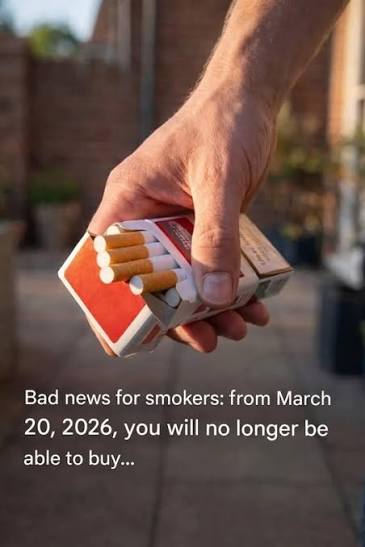
For millions of smokers, buying a pack of cigarettes has become an increasingly painful experience—not because the product has changed, but because the price has. What was once considered an everyday purchase is rapidly becoming a significant expense, forcing many smokers to reconsider habits they have maintained for years or even decades. In France, one of Europe’s most aggressive anti-smoking strategies is playing out at the cash register, where cigarette prices continue climbing year after year. Behind every higher price tag lies a deliberate public health policy designed to reduce smoking by making tobacco less affordable.
Today, purchasing a pack of cigarettes in France costs far more than it did only a few years ago.
Depending on the brand, a standard pack of 20 cigarettes now typically sells for around **€12.50 to €13**, placing France among the countries with the highest cigarette prices in Europe. For regular smokers, those increases have transformed what was once a routine purchase into a substantial monthly expense.
The rising prices are no accident.
They are the result of government policy.
French health officials have long argued that increasing tobacco taxes is one of the most effective ways to reduce smoking, particularly among young people who may be discouraged from starting if cigarettes become too expensive. Numerous public health studies have shown that higher prices often lead to lower tobacco consumption, especially among teenagers and lower-income smokers.
As a result, taxation has become the government’s primary tool.
In fact, the majority of what smokers pay never reaches the tobacco manufacturers.
Approximately **75% to 80%** of the retail price of a cigarette pack consists of taxes collected by the French government. Those taxes include excise duties and value-added tax (VAT), leaving manufacturers and licensed tobacconists with only a relatively small share of the final selling price.
For many smokers, that means they are paying more in taxes than for the cigarettes themselves.
Beginning in 2023, France introduced another important change.
Rather than requiring lawmakers to approve every future increase individually, tobacco taxes are now linked to inflation. This means cigarette prices can continue rising automatically as the overall cost of living increases, making yearly price increases increasingly predictable.
Supporters argue that this creates a stronger long-term public health strategy.
Critics say it places an ever-growing financial burden on smokers.
Whatever one’s opinion, the impact is impossible to ignore.
Someone smoking one pack per day at **€13** spends nearly **€400 each month**, adding up to more than **€4,700 per year** before accounting for any future price increases. For many households, that represents a significant portion of disposable income.
The effect extends beyond traditional cigarettes.
Rolling tobacco has experienced similar price increases, reducing one of the most common ways smokers previously saved money. Likewise, many of the least expensive cigarette brands have become substantially more costly, narrowing the price differences between premium and budget options.
As prices continue rising, smokers increasingly face difficult decisions.
Some choose to quit.
Others reduce the number of cigarettes they smoke each day.
Some switch to alternative nicotine products where permitted.
Others living near international borders travel to neighboring countries where tobacco remains considerably cheaper, purchasing cigarettes legally within applicable customs allowances.
Price differences between France and nearby countries can be substantial.
In some neighboring nations, cigarette packs may still cost roughly **€4 to €6**, making cross-border shopping financially attractive for smokers living close enough to travel. These differences have contributed to ongoing debates about illicit tobacco trade, cross-border purchasing, and whether extremely high national prices may unintentionally encourage consumers to buy elsewhere.
Meanwhile, public health officials remain focused on the broader objective.
Smoking remains one of the leading preventable causes of disease and premature death worldwide, contributing to increased risks of lung cancer, heart disease, stroke, chronic respiratory illnesses, and many other serious health conditions. Governments that support higher tobacco taxes argue that even modest reductions in smoking rates can translate into significant improvements in public health over time.
For that reason, France has made no secret of its long-term ambitions.
Officials have openly discussed creating a “smoke-free generation” by reducing tobacco use through a combination of education, smoking cessation support, advertising restrictions, and steadily increasing prices.
Some projections suggest that, if current policies continue, a pack of cigarettes could eventually approach **€20** within the next decade.
Whether those projections become reality will depend on future inflation, government decisions, and broader economic conditions. Nevertheless, many smokers already view that possibility as increasingly plausible given the consistent upward trend of recent years.
The debate remains deeply divided.
Supporters believe higher prices save lives by encouraging smokers to quit and discouraging young people from starting.
Opponents argue that taxation disproportionately affects lower-income smokers and may increase financial hardship without addressing nicotine addiction itself.
Both perspectives continue to shape discussions across France and other countries considering similar policies.
One thing, however, is difficult to dispute.
The humble cigarette pack has become far more than a consumer product.
It now represents a collision between public health, personal choice, government revenue, economic policy, and individual addiction. Every increase at the checkout counter reflects not simply inflation, but a deliberate effort to reshape behavior through financial pressure.
For today’s smokers, the question is no longer just whether cigarettes are expensive.
It is how expensive they are willing—or able—to become before a different decision is made.
As prices continue their steady climb, millions of smokers will face the same difficult calculation each time they approach the cashier: pay more, seek alternatives, purchase elsewhere where legal, or take the opportunity to quit. Whatever path each individual chooses, one reality is becoming increasingly clear—the cost of smoking in France is no longer measured only in health, but also in every euro spent at the register.