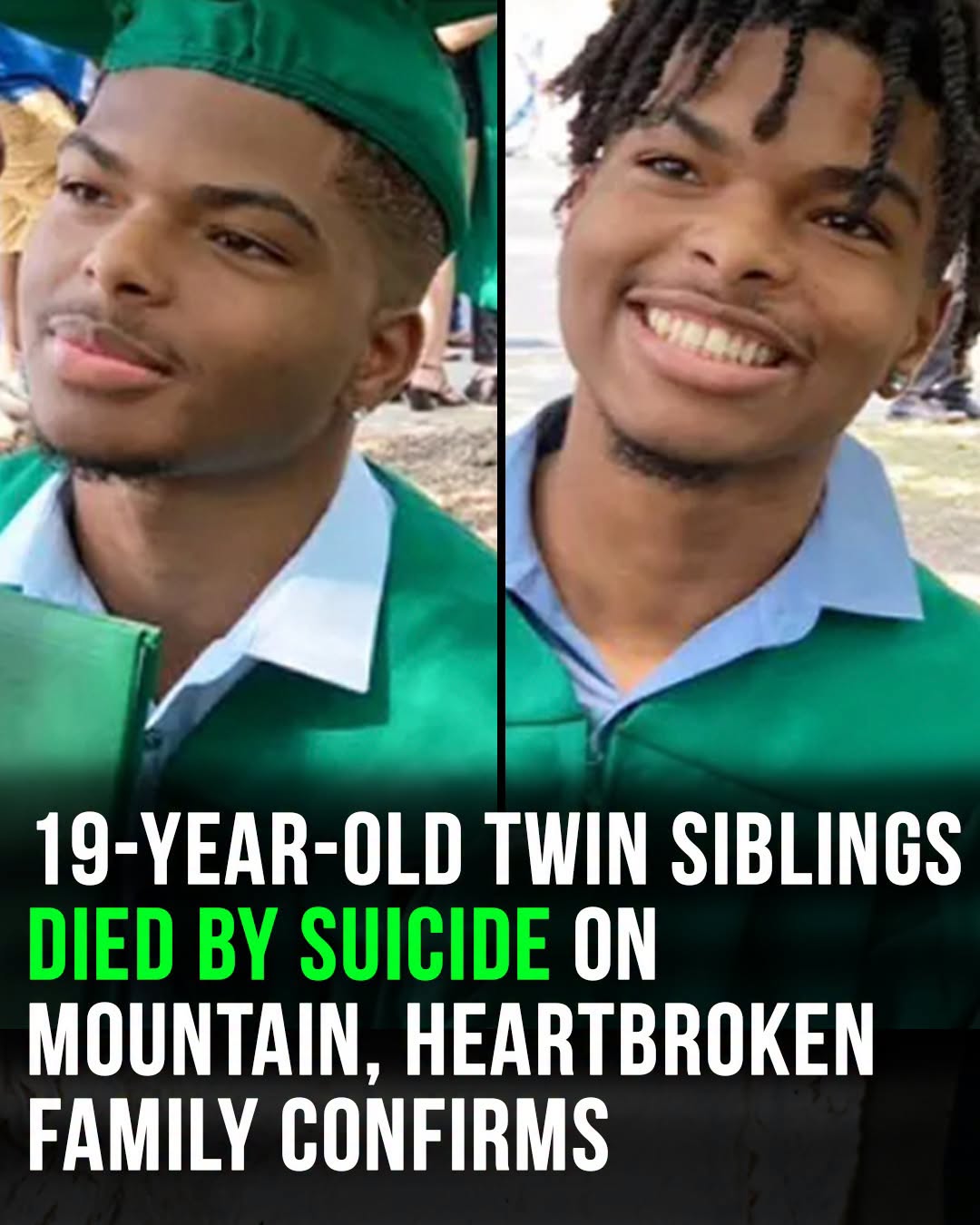
They were supposed to be planning the next chapter of their lives, not becoming the center of a heartbreaking mystery that would capture national attention. At just 19 years old, twin brothers Qaadir and Naazir Lewis shared an extraordinary bond that everyone around them admired. Family members described them as inseparable from the day they were born. Wherever one brother went, the other was never far behind. They laughed together, dreamed together, and faced life’s challenges side by side. When they left home for what relatives believed would be an ordinary trip, nobody imagined it would end in a tragedy that would leave their loved ones searching desperately for answers. What followed was more than a year of grief, disbelief, independent investigations, and painful questions before the family finally reached a conclusion they never wanted to accept.
The brothers were reportedly expected to travel to Boston, a trip that seemed routine and offered no obvious signs that anything unusual was about to happen. Friends and relatives later recalled conversations that gave no indication of immediate danger or crisis. Like many young adults their age, the twins had plans, ambitions, and a future that seemed wide open. Their disappearance therefore triggered immediate concern among those who knew them, but few imagined where the search would ultimately lead.
Days later, hikers exploring Bell Mountain in Georgia made a devastating discovery. High above the surrounding landscape, in an area known for its scenic overlooks and breathtaking views, they found the bodies of the two young men. Authorities quickly secured the area as investigators began piecing together what had happened. News of the discovery spread rapidly, sending shockwaves through the local community and leaving family members struggling to comprehend how two healthy young men could have died in such an isolated location.
Initial reports immediately fueled speculation. Because both brothers had died from gunshot wounds, investigators considered several possible scenarios while gathering evidence. Among the possibilities discussed early in the investigation was the difficult question of whether the deaths could have resulted from a murder-suicide. Such early investigative theories are common as law enforcement works to eliminate possibilities, but for the Lewis family, even hearing those words was unbearable. They rejected the suggestion completely, convinced that it failed to reflect the relationship between the brothers or the people they knew so well.
Their aunt became one of the family’s strongest public voices. Speaking through interviews and social media, she repeatedly insisted that the twins loved one another too deeply for either to harm the other. She described them as young men who supported each other through everything. The idea that one brother could have intentionally taken the other’s life simply did not fit the family’s understanding of who Qaadir and Naazir were. Instead, relatives believed there had to be another explanation that investigators had somehow missed.
Rather than quietly accepting the initial findings, the family committed themselves to searching for every possible answer. What followed was an extraordinary effort fueled by grief, determination, and love. They reviewed investigative documents, asked difficult questions, consulted experts, and refused to let uncertainty become the final chapter of the brothers’ story. Their determination reflected something many grieving families experience after sudden tragedy—the desperate hope that one overlooked detail might completely change the outcome.
With support from donations and concerned members of the public, the family arranged for independent autopsies to be performed. They also retained outside homicide investigators to examine the available evidence separately from the official investigation. Every report, every forensic review, and every expert opinion was carefully examined. They wanted to ensure that no possibility remained unexplored. The process was emotionally exhausting, often forcing family members to relive the trauma repeatedly while confronting details no parent, sibling, aunt, or grandparent ever wants to hear.
Investigators from the Georgia Bureau of Investigation continued conducting their own comprehensive review. Crime scene evidence, forensic analysis, ballistic examinations, medical findings, and witness information were all analyzed as part of the investigation. As the months passed, officials continued evaluating every piece of available evidence before reaching their conclusions. The lengthy process reflected the seriousness of the case and the importance of ensuring that no significant detail was overlooked.
Meanwhile, the family lived in a painful state of uncertainty. Every new report created hope that unanswered questions might finally receive a different explanation. Every expert opinion carried enormous emotional weight. Loved ones searched for inconsistencies, unexplained circumstances, or overlooked evidence that might point toward foul play. The emotional burden became almost as overwhelming as the loss itself.
As more independent experts completed their evaluations, however, a difficult pattern began to emerge. Despite approaching the evidence separately, the specialists repeatedly reached conclusions that aligned with the official findings. The forensic evidence consistently indicated that the injuries had been self-inflicted. Although the family desperately wished for another explanation, the available physical evidence increasingly pointed toward the same heartbreaking conclusion.
Accepting that conclusion did not happen overnight. Grief rarely follows a straight path, particularly when sudden loss leaves behind confusion instead of certainty. Denial often becomes a form of emotional protection, allowing families time to process unimaginable pain at a pace they can survive. For the Lewis family, that period lasted many months as they exhausted every reasonable avenue of investigation before gradually acknowledging what the evidence appeared to show.
Eventually, their aunt spoke publicly once again—but this time her message carried a different tone. Rather than continuing to challenge every finding, she explained that the family had reached a painful place of acceptance after reviewing all available information. It was not the outcome they wanted. It was not the answer they had prayed for. But after independent reviews, outside experts, and countless hours studying investigative materials, they felt they could no longer ignore the overwhelming weight of the evidence.
Even with acceptance, countless emotional questions remain. Families often struggle to understand why someone experiencing emotional distress may never fully reveal the depth of their pain. Mental health challenges can exist beneath outward appearances of happiness, success, or normal daily life. Loved ones frequently look back searching for warning signs they might have missed, wondering whether one conversation or one phone call could have changed everything. Those questions often have no satisfying answers.
Instead of allowing grief to become the family’s final legacy, relatives chose to redirect their energy toward helping others. Donations originally raised to support funeral expenses have increasingly been used to promote mental health awareness and counseling initiatives. Their hope is that speaking openly about emotional struggles may encourage someone else to seek help before reaching a crisis point. By sharing their family’s painful journey, they hope other families might recognize warning signs sooner or feel less afraid to discuss depression, anxiety, or emotional pain.
Mental health professionals frequently emphasize that many people experiencing severe emotional distress do not openly express the intensity of their suffering. Some continue attending school, going to work, laughing with friends, and making future plans while privately battling overwhelming feelings of hopelessness. Because of this, experts encourage regular conversations about emotional well-being and remind families that asking someone how they are truly feeling can sometimes open the door to lifesaving support.
The deaths of Qaadir and Naazir Lewis have therefore become more than a tragic headline. They have become part of a larger conversation about mental health, family support, and the importance of reducing the stigma surrounding emotional struggles. Their loved ones continue honoring the twins not only by remembering who they were, but also by encouraging others to seek counseling, speak honestly about their feelings, and recognize that asking for help is a sign of strength rather than weakness.
No investigation can erase the pain of losing two young men whose lives ended far too soon. No report can restore the years their family expected to share with them. Yet after months of searching for different answers, the family has reached a place where acceptance does not mean forgetting. Instead, it means carrying forward the memory of Qaadir and Naazir with honesty, compassion, and a commitment to helping others who may be facing invisible struggles of their own.
Their story serves as a powerful reminder that behind every headline are real families navigating unimaginable grief. While the search for answers may eventually come to an end, the work of healing continues long afterward. By choosing openness instead of silence and hope instead of despair, the Lewis family hopes their sons’ legacy will become one of compassion, awareness, and encouragement—reminding anyone who may be struggling that help is available, their life has value, and they never have to face their darkest moments alone.