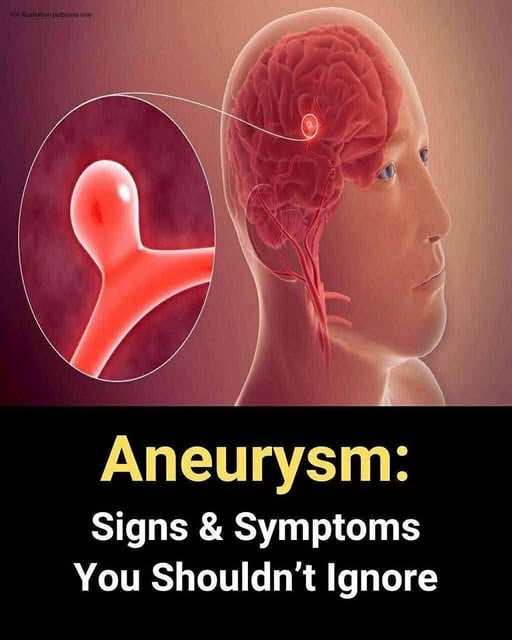
A bolt of pain unlike anything you’ve ever experienced can arrive without warning. One moment everything feels normal, and the next, your vision blurs, the room seems to tilt, and your body reacts in ways that are impossible to ignore. In those first few minutes, confusion and fear can set in quickly. What makes situations like this so serious is how rapidly they can unfold—sometimes leaving very little time to understand what is happening. Conditions like a brain aneurysm can progress suddenly, and in some cases, the first major symptom may also be the most critical signal your body gives.
Many people, however, don’t immediately recognize the seriousness of what they’re feeling. A sudden, intense headache is often dismissed as stress, dehydration, fatigue, or a migraine. That reaction is understandable—headaches are common, and most are harmless. But there is a difference between a typical headache and one that feels completely unfamiliar, overwhelming, or “the worst ever experienced.” That difference can matter.
A brain aneurysm occurs when a weakened area in a blood vessel in the brain begins to bulge. If that area starts to leak or rupture, it can lead to bleeding around the brain. This type of bleeding is associated with a hemorrhagic stroke, a medical emergency that can develop quickly and requires immediate attention. The effects can be severe, ranging from significant complications to life-threatening outcomes.
One of the challenges is that warning signs are not always recognized in time. In some cases, there may be subtle symptoms before a rupture—such as unusual headaches, changes in vision, or mild neurological changes—but these can be overlooked or attributed to less serious causes. In other cases, the first noticeable sign is sudden and intense, leaving little room for delay.
Because of this, awareness becomes extremely important. A headache that feels drastically different from anything you’ve had before—especially if it appears suddenly and intensely—should not be ignored. When that kind of pain is combined with other symptoms, the need for immediate action becomes even more urgent.
Signs that require attention can include:
blurred or double vision
confusion or difficulty thinking clearly
a drooping eyelid or changes in one eye
nausea or vomiting
stiffness in the neck
sensitivity to light
seizures
sudden weakness or numbness, particularly on one side of the body
These symptoms do not always mean the same condition, but when they appear suddenly and together, they indicate that something serious may be happening. In those moments, the safest step is to seek emergency medical help immediately. Calling emergency services is critical—driving yourself or waiting to “see if it passes” can delay care when time matters most.
Certain factors can increase the likelihood of developing issues related to blood vessels in the brain. These may include age, high blood pressure, smoking, heavy alcohol use, and family history. Women are also statistically at higher risk in some cases. Understanding these factors doesn’t mean a problem will occur, but it highlights the importance of paying attention to unusual symptoms.
The key message is not to create fear, but to encourage awareness. The body often provides signals when something is wrong, even if those signals are brief or unexpected. Recognizing when a symptom is outside the range of what you normally experience can make a difference in how quickly help is sought.
In situations like this, acting quickly can be life-saving.
Listening to your body—especially when something feels drastically different—can be one of the most important decisions you make.