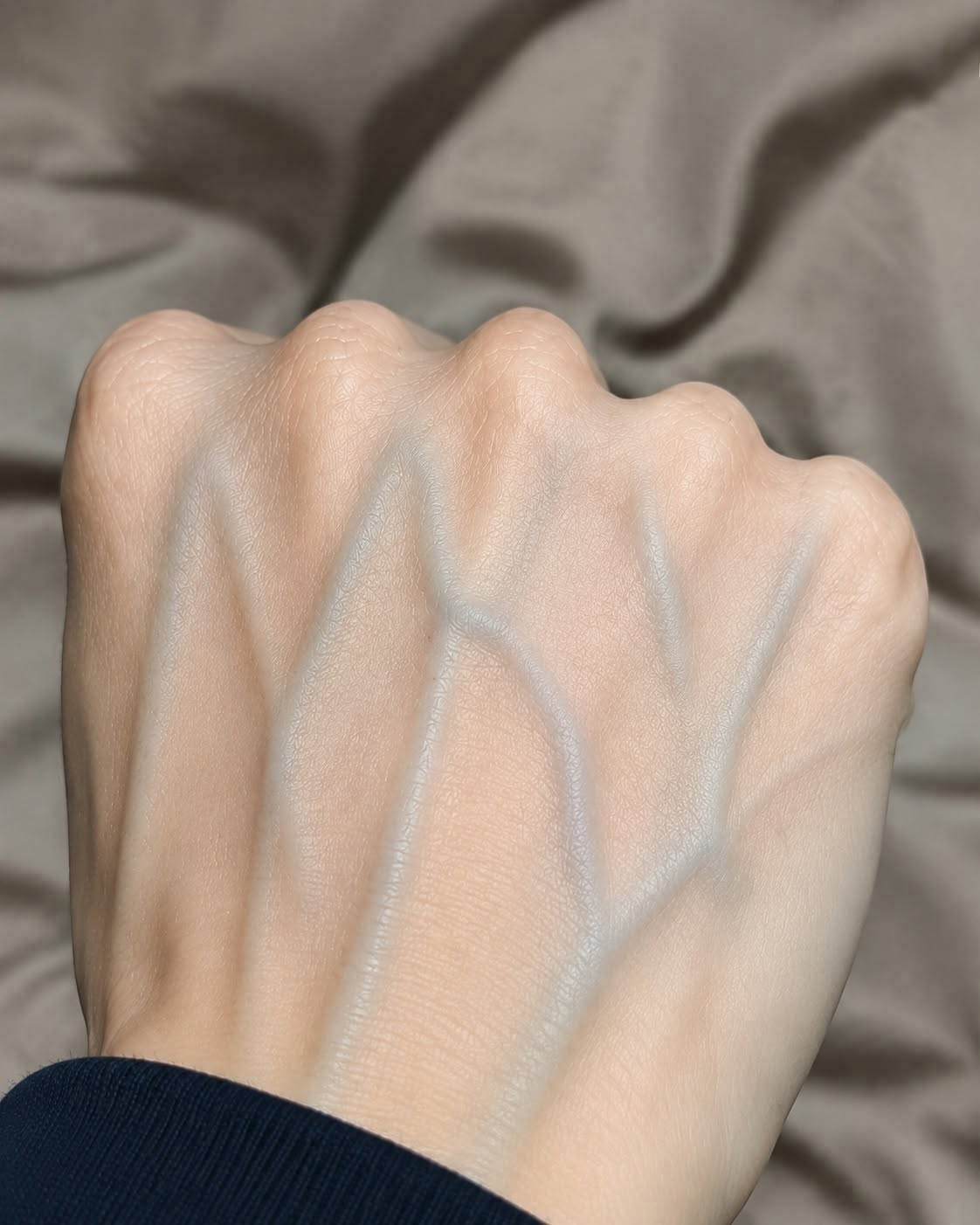
You glance down at your hands one ordinary afternoon and suddenly notice them.
Thin blue lines.
Twisting pathways.
Veins standing out beneath your skin with a clarity you swear wasn’t there before.
At first, it seems insignificant.
Just another small change in a body that evolves every day.
But then a troubling question creeps into your mind.
Why are they suddenly so visible?
And more importantly, should you be worried?
For many people, prominent veins are nothing more than a cosmetic concern. They notice them in the mirror, compare them to old photographs, and wonder whether age, exercise, or genetics are responsible.
Yet others experience something far more unsettling.
A moment of uncertainty.
A quiet fear that these visible veins might be warning signs of something happening beneath the surface.
Something serious.
Something dangerous.
The truth lies somewhere between reassurance and vigilance.
Because while visible veins are usually harmless, they are also part of one of the most important systems in the human body.
And when that system begins to struggle, the body often sends signals long before a major problem develops.
Your circulatory system is constantly working behind the scenes.
Every second of every day, blood travels through an intricate network of arteries and veins, delivering oxygen, nutrients, hormones, and countless other substances necessary for survival.
Veins perform one of the most difficult jobs in this system.
Unlike arteries, which receive pressure directly from the heart, veins must move blood back toward the heart while fighting gravity.
To accomplish this task, they rely on tiny one-way valves that prevent blood from flowing backward.
When these valves function properly, blood moves efficiently through the body.
When they weaken or fail, problems can begin to emerge.
That is why understanding your veins matters.
Not because every visible vein signals danger.
But because knowing the difference between normal and abnormal changes can make a significant difference in protecting your health.
In many cases, visible veins are completely natural.
Skin thickness plays a major role.
People with fair or thin skin often notice veins more easily because there is less tissue covering the blood vessels beneath the surface.
The blue or green appearance is not actually the color of the blood itself.
Rather, it is the way light interacts with skin and underlying structures.
For these individuals, prominent veins may simply be part of their natural anatomy.
Body composition also affects vein visibility.
Individuals with low body fat often display more noticeable veins because there is less fatty tissue separating the vessels from the surface of the skin.
This is especially common among athletes, bodybuilders, runners, and highly active individuals.
In fitness communities, visible veins are frequently viewed as a sign of conditioning and physical development rather than a medical concern.
Age introduces another factor.
As the years pass, the skin gradually loses collagen and elasticity.
The tissue becomes thinner.
The structures beneath become easier to see.
Many older adults notice veins appearing more prominent even when nothing else about their health has changed.
It is simply part of the body’s natural aging process.
Temperature can influence vein appearance as well.
On hot summer days, blood vessels expand to help the body release excess heat.
This process, known as vasodilation, causes veins near the surface to become larger and more noticeable.
Once the body cools down, the veins often return to their normal appearance.
Exercise creates a similar effect.
During physical activity, muscles require increased oxygen and nutrients.
Blood flow increases dramatically.
The vessels expand to accommodate the demand.
As a result, veins may temporarily bulge and appear much darker or larger than usual.
For most healthy people, this response is completely normal and disappears after the workout ends.
However, not every change should be dismissed.
Certain symptoms deserve attention.
Pain is one of them.
A visible vein that suddenly becomes painful should never be ignored.
Likewise, swelling, warmth, tenderness, redness, or significant skin discoloration may indicate that something more serious is developing.
These signs suggest inflammation or impaired circulation rather than normal vascular activity.
Sometimes veins begin to feel unusually hard.
They may appear twisted, rope-like, or enlarged.
In other cases, surrounding skin becomes irritated or develops unusual color changes.
When these symptoms occur, medical evaluation becomes important.
One of the most common vascular conditions is the development of varicose veins.
These enlarged, twisted veins occur when the internal valves weaken and blood begins pooling inside the vessel.
Instead of moving efficiently back toward the heart, blood accumulates.
Pressure increases.
The vein stretches and enlarges.
At first, the condition may seem largely cosmetic.
Many people notice only the appearance.
Over time, however, symptoms can become increasingly uncomfortable.
Leg heaviness.
Aching.
Burning sensations.
Cramping.
Fatigue after standing.
Swelling around the ankles.
For some individuals, untreated varicose veins progress into chronic venous insufficiency, a condition in which the circulatory system struggles to return blood effectively from the lower extremities.
The consequences can significantly affect quality of life.
Even more concerning is the possibility of blood clots.
Deep vein thrombosis, commonly known as DVT, occurs when a clot forms within a deep vein, usually in the leg.
This condition can be dangerous because the clot may partially or completely block blood flow.
Symptoms often include swelling, tenderness, warmth, redness, and deep aching pain.
Sometimes the symptoms are subtle.
Sometimes they appear suddenly.
The greatest danger occurs if part of the clot breaks free.
Once detached, it can travel through the bloodstream and reach the lungs.
This condition, called a pulmonary embolism, is a medical emergency that can become life-threatening within minutes.
That is why sudden swelling, unexplained pain, or rapid changes involving veins should never be ignored.
When in doubt, seeking professional medical advice is always the safer choice.
Fortunately, many vascular problems can be prevented or managed through healthy lifestyle habits.
Movement is one of the most powerful tools available.
Walking, swimming, cycling, and other forms of regular exercise help maintain strong circulation and reduce blood pooling in the legs.
Maintaining a healthy weight decreases strain on the vascular system.
Hydration supports healthy blood flow.
Avoiding long periods of sitting or standing can also reduce stress on veins.
For individuals whose jobs require prolonged sitting, simple movement breaks throughout the day can make a meaningful difference.
Even standing up and walking for a few minutes every hour helps keep blood circulating properly.
Elevating the legs periodically can also provide relief and improve venous return.
Compression stockings offer another valuable option.
These specialized garments apply gentle pressure that supports blood flow and helps prevent blood from pooling in the lower legs.
Many healthcare providers recommend them for individuals with varicose veins, circulation issues, or increased vascular risk factors.
Ultimately, your veins are constantly telling a story about your body.
Most of the time, visible veins simply reflect genetics, age, physical fitness, temperature, or normal anatomy.
They are not warnings.
They are not emergencies.
They are simply part of who you are.
But understanding when something changes is equally important.
Pain.
Sudden swelling.
Warmth.
Redness.
Skin discoloration.
New sensitivity.
These are signals worth taking seriously.
The goal is not fear.
The goal is awareness.
Your body communicates continuously through small signs and subtle changes.
Learning to recognize the difference between a harmless variation and a genuine warning allows you to protect your health without unnecessary anxiety.
In the vast majority of cases, those visible blue lines beneath your skin are simply evidence of a remarkable circulatory system doing exactly what it was designed to do.
Yet staying informed, paying attention, and seeking help when something feels wrong remain some of the most valuable health decisions anyone can make.
Because the body often whispers before it screams.
And listening early can make all the difference.