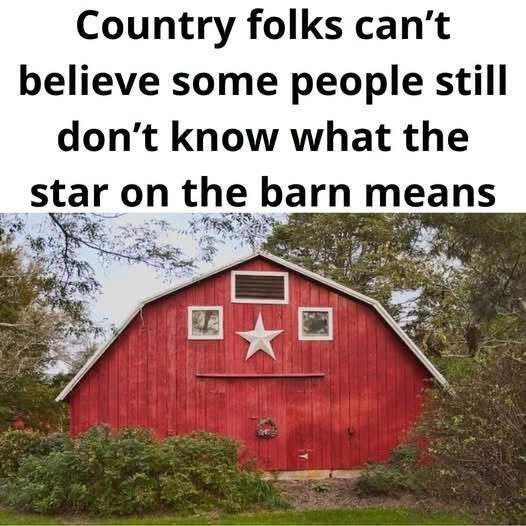
The star above that weathered barn door isn’t just decoration. It’s a quiet warning, a whispered wish, a memory carefully nailed into aging wood. Once, its colors promised luck, protection, prosperity, and survival in a world where a single failed harvest could change a family’s future. Generations passed beneath those stars believing they carried meaning far deeper than simple beauty. Now, most people drive past without noticing them at all, dismissing them as another piece of countryside scenery. But that chipped, faded, painted star still holds a message. It still speaks for the families who placed it there and the hopes they carried through uncertain seasons.
Long before barn stars became mass-produced décor in home catalogs and decorating stores, they were connected to traditions rich in symbolism, community identity, and folklore. Among Pennsylvania Dutch communities, colorful barn designs and later hex signs became associated with meanings that could vary depending on the artist, family, and tradition. Certain colors came to represent ideas such as love, protection, harmony, growth, abundance, or good fortune. Red might suggest strength or passion, blue peace and spirituality, green fertility and life, while darker colors could symbolize protection or stability.
Carefully painted geometric designs were never merely random splashes of color. Circles, stars, hearts, birds, flowers, and other shapes could carry their own symbolic associations, creating patterns that seemed almost like a visual language. For some people they were decorative expressions of heritage; for others, folklore gave them deeper protective or spiritual significance. Either way, they reflected something intensely human—the desire to place hope onto the buildings, fields, and homes upon which entire families depended.
Imagine the world in which many of those traditions developed. Farming meant living at the mercy of weather, illness, unpredictable harvests, and circumstances that could rarely be controlled. A violent storm could destroy months of work overnight. Disease could threaten livestock, crops, or family members without warning. In such an uncertain life, symbols of protection and prosperity offered something important: a visible reminder that people could still hope, believe, and create meaning even when nature refused to cooperate.
As farming changed, technology advanced, and old beliefs gradually softened, the stars stayed behind. Their meaning shifted from generation to generation. What may once have carried spiritual, cultural, or folkloric significance increasingly became a symbol of family heritage and rural identity. The star could quietly mark who built the barn, who worked the surrounding fields, who raised children there, and who spent decades hoping the next season would be kinder than the last.
Eventually, those designs traveled far beyond the farms where people associated them with tradition. Today, barn stars and similar decorations appear on sheds, porches, garages, restaurants, and suburban homes hundreds of miles from Pennsylvania Dutch country. Many owners may simply appreciate their rustic beauty without knowing anything about the histories and legends attached to them. Yet even when the original symbolism has faded, the star continues to suggest endurance, home, and belonging.
So when you see one now hanging above an old barn door or mounted carefully on a modern porch, you may be looking at more than rustic charm. You’re seeing the surviving echo of generations that decorated the places they depended upon with symbols of hope and identity. Beneath the chipped paint and weathered edges is something remarkably enduring: someone’s insistence that the place they called home, the work they performed there, and the story they left behind will not simply vanish unnoticed.