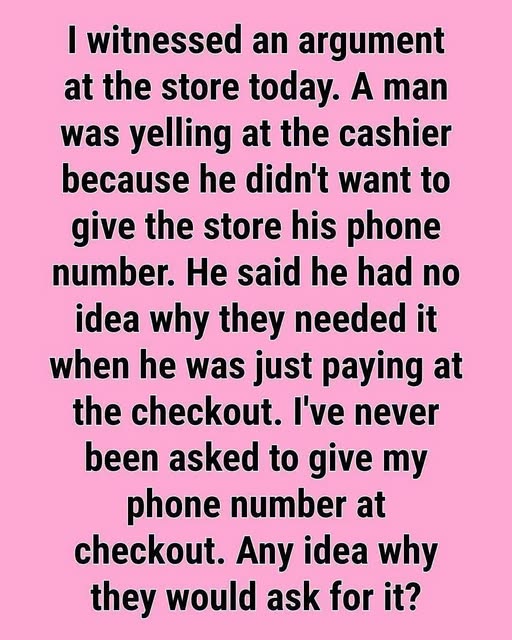
The question sounds simple enough. You’re standing at the checkout counter, your purchases are scanned, and before the payment terminal appears, the cashier asks, “Can I get your phone number?” For many people, the response is automatic. They recite ten digits without a second thought, hoping to receive a discount, earn loyalty points, or unlock a special promotion. Yet behind that brief exchange lies a much larger conversation about privacy, convenience, and how personal information has become one of the most valuable currencies in modern retail.
Retail loyalty programs have become a familiar part of everyday shopping. Supermarkets, pharmacies, clothing stores, home improvement chains, and countless other businesses offer rewards in exchange for basic contact information. A phone number often serves as the quickest way to identify returning customers without requiring them to carry a physical membership card. The process is fast, convenient, and, for many shoppers, entirely worthwhile.
In return, customers may receive lower prices, personalized coupons, birthday rewards, early access to sales, or points that accumulate toward future purchases. For families shopping regularly at the same stores, these savings can become significant over time. Many consumers view the exchange as a practical trade-off: a small amount of personal information in return for meaningful financial benefits.
However, that exchange extends beyond the immediate discount.
Every time a loyalty account is used, the retailer may be able to associate purchases with that customer profile. Over time, this can create a record of shopping habits, including which products are purchased most often, how frequently visits occur, seasonal buying patterns, and responses to promotions or discounts. Businesses often analyze this information to better understand customer preferences and improve inventory planning, marketing campaigns, and personalized offers.
For many retailers, this type of information helps answer important business questions. Which products are becoming more popular? Which promotions encourage repeat visits? What items are frequently purchased together? Understanding these patterns can help stores improve customer experiences while managing inventory more efficiently.
From the customer’s perspective, those same insights may produce more relevant offers. Someone who regularly purchases pet supplies might receive coupons for pet food. A customer who frequently buys baby products could receive promotions for children’s clothing or household essentials. Rather than sending identical advertisements to everyone, retailers increasingly tailor promotions based on shopping behavior.
Many shoppers appreciate this personalization.
Others feel less comfortable.
Privacy concerns often arise not because customers object to discounts, but because they may not fully understand how their information is collected, stored, used, or shared. While retailers typically describe their data practices in privacy policies, those documents are often lengthy and rarely read in full before someone joins a loyalty program.
Questions naturally follow.
How long is purchase history retained?
Who has access to it?
Can customers delete their accounts?
Are profiles shared within a family of affiliated brands?
How are marketing preferences managed?
The answers vary from one company to another, making it important for consumers to understand the specific policies of businesses they choose to engage with.
Another consideration involves data security. Organizations that collect customer information generally implement security measures designed to protect personal data, but no system is entirely immune from cyber threats. Across many industries, data breaches have occasionally exposed customer information despite ongoing investments in cybersecurity. Although phone numbers alone are less sensitive than financial account numbers, consumers may still reasonably prefer to limit how widely their personal information is distributed.
This does not necessarily mean loyalty programs should be avoided.
Instead, many privacy experts encourage informed participation.
Consumers can often choose programs that offer clear privacy policies, adjust marketing preferences, opt out of promotional communications, or review what information is associated with their accounts. Some retailers also provide online portals where customers can manage privacy settings or request access to the information stored about them, depending on applicable privacy laws.
Equally important, customers always retain the choice not to participate.
Declining to provide a phone number does not generally require an explanation. A simple, polite “No thank you” remains a perfectly acceptable response. While declining may mean paying standard prices rather than promotional discounts, some shoppers consider that an acceptable trade-off for limiting the amount of personal information connected to their purchases.
Others take a balanced approach.
They participate only in programs they use frequently, avoiding the creation of unnecessary accounts at stores they rarely visit. This strategy allows them to benefit from savings where they matter most while minimizing the number of businesses collecting their information.
The broader discussion reflects a larger reality of today’s digital economy. Personal information increasingly supports services people use every day, from online shopping and streaming subscriptions to travel bookings and grocery rewards. In many cases, consumers voluntarily exchange certain information for convenience, personalization, or financial savings.
The important distinction is understanding that this exchange is a choice.
Being aware of how loyalty programs generally operate allows shoppers to make decisions aligned with their own priorities. Some value customized offers and ongoing discounts. Others place greater importance on minimizing data collection. Neither approach is inherently right or wrong; each reflects different personal preferences regarding privacy and convenience.
As technology continues evolving, retailers will likely develop even more sophisticated ways of improving customer experiences through digital tools, personalized recommendations, and integrated shopping platforms. At the same time, privacy regulations and consumer expectations continue encouraging greater transparency about how personal information is collected and managed.
Ultimately, entering a phone number at the checkout counter is about more than receiving a coupon. It represents a decision about how much information you choose to share in exchange for certain benefits. The most valuable outcome is not necessarily the discount itself, but making that decision with a clear understanding of what the exchange involves. Whether you enthusiastically join every rewards program or politely decline each invitation, the choice remains yours—and informed choices are always the strongest foundation for protecting both your wallet and your privacy.