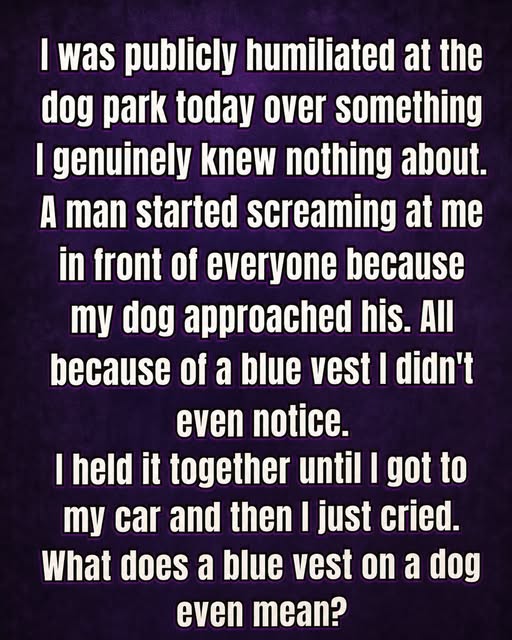
A blue vest on a dog is not always just a cute accessory. Sometimes, that small splash of blue is a warning, a lifeline, and a silent request for respect. To a passerby, it may look like nothing more than a colorful piece of clothing. But for a handler and a working dog, that vest can represent something far more important. It can mean that the animal has a job to do—and that interrupting that job could have serious consequences.
Many people see a dog and instinctively want to smile, reach out, call its name, or offer a quick pat. It’s a natural reaction. Dogs are comforting, friendly, and difficult to ignore. But when that dog is working, even a few seconds of distraction can break its concentration. A person who approaches with nothing but good intentions may unknowingly create a dangerous situation for both the dog and the person relying on it.
That simple piece of blue gear can sometimes indicate that a dog is assisting someone with a disability. A service dog may be guiding a person who is blind or visually impaired, helping them navigate crowded streets, stairs, doors, and unexpected obstacles. Another may be trained to alert its handler to certain medical conditions, respond to seizures, retrieve medication, or provide physical support when someone is losing balance.
In those moments, the dog isn’t simply a pet.
It may effectively be part of its handler’s medical or mobility equipment.
The partnership between the two can take years to develop. The handler must learn to trust the dog, and the dog must learn to remain focused despite everything happening around it. Cars, children, other animals, loud noises, food, strangers, and countless other distractions can all compete for the dog’s attention.
That’s why something as innocent as calling the dog over can be a problem.
The animal may be trained to ignore people who try to interact with it. But that doesn’t mean it should be tested. Even a highly trained working dog can be distracted, and every unnecessary interruption creates another obstacle for the person depending on it.
Blue gear can also be associated with dogs that are still in training. These animals may eventually become service dogs, but they are still learning how to behave appropriately in public. A trainee might be practicing how to walk calmly through a busy shopping center, remain focused in a restaurant, or ignore strangers who desperately want to say hello.
For these dogs, the lesson is concentration.
And for everyone around them, the lesson is patience.
There are also dogs that work in a very different environment. Therapy dogs may wear blue accessories while visiting hospitals, schools, nursing homes, or other places where their presence provides comfort. Their job may involve helping people feel calmer, less lonely, or less anxious during difficult moments.
But it’s important to remember that **blue itself is not a universal code.**
Sometimes a blue vest, bandana, harness, or collar is simply blue because the owner likes the color. There is no guarantee that every dog wearing blue is a service animal, therapy dog, or trainee. The meaning can vary depending on the organization, location, and individual handler.
That’s why the safest approach isn’t to assume what the color means.
Instead, pay attention to the context.
If a dog appears to be working, is wearing service-related equipment, or is accompanied by someone who clearly needs assistance, give them space. Don’t call the dog. Don’t whistle. Don’t reach down to pet it. Don’t offer food. And don’t encourage children or other dogs to approach.
That small act of restraint can make a surprisingly large difference.
Imagine depending on your dog to guide you across a busy intersection, alert you to a medical problem, or help you maintain your balance. Now imagine a stranger suddenly stopping the dog to pet it while you’re trying to cross the street. What feels like a friendly interaction to one person could become a genuine disruption for another.
The same principle applies to photographs. A working dog may look adorable, and it’s understandable to want a picture. But approaching closely or trying to attract its attention simply for a photo isn’t worth interfering with its work.
Sometimes the kindest thing you can do for a dog is **nothing at all**.
Walk past. Give it room. Let the handler continue.
And if the handler chooses to speak with you, follow their lead.
A blue bandana may ultimately mean nothing more than someone’s favorite color. But knowing that it *can* signal a working or assistance animal encourages a more respectful habit: pause before reaching out.
Because behind that dog may be a person relying on an extraordinary partnership that most strangers will never fully see.
The dog may be guiding someone home.
It may be detecting something before anyone else can.
It may be helping someone stand, walk, cope, or feel safe.
Or it may simply be learning how to perform one of the most important jobs it will ever have.
So the next time you see a dog wearing blue, you don’t have to be afraid of it or assume you know its story. Just give the team a little space and let the dog do its job.
That moment of restraint isn’t unfriendly.
**It’s respect.**