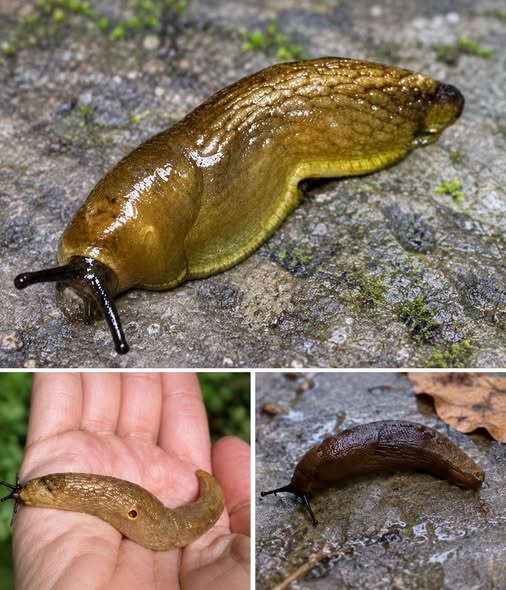
The first slug on your floor feels like a small horror.
The second feels like a message.
By the third, you start wondering what else might be creeping through your home that you can’t see.
These soft, silent visitors can be deeply unsettling. They seem to appear out of nowhere, leaving a thin, silvery trail across the floor as they slowly make their way through a room. You may immediately wonder how they got inside, whether there are more hiding somewhere, and what could possibly be attracting them.
But slugs don’t usually appear at random.
They follow conditions.
Water.
Darkness.
Cool temperatures.
Moisture.
And tiny openings that you may never have noticed.
Finding a slug indoors is unpleasant, but it can also be a useful warning. Instead of thinking only about how to remove the creature, it can be worth asking a more important question:
**Why was it able to get inside in the first place?**
Slugs are naturally drawn to cool, damp environments where they can avoid drying out. Around a house, that might mean wet soil, dense vegetation, piles of mulch, shaded corners, or areas where rainwater consistently collects.
If your home provides a convenient route from those conditions to the interior, a slug may eventually follow it.
That route could be surprisingly small.
A gap beneath an exterior door.
A crack near the foundation.
An opening around a pipe.
A space where wiring enters the building.
A poorly sealed window or door frame.
To you, these openings may look insignificant.
To a small creature searching for moisture, they can be an entrance.
And once you understand that, the slug becomes less mysterious.
It isn’t necessarily invading your home because your house is somehow dirty.
It may simply be following the easiest path toward a cool, damp place.
That’s why the silvery trail it leaves behind can be more useful than the slug itself.
If you discover one on the floor, don’t immediately remove it and forget about the incident. Take a moment to look around.
Where is the trail going?
Did it begin near a door?
Does it disappear beneath a baseboard?
Does it lead toward a bathroom, laundry area, kitchen, or another place where plumbing enters the wall?
Is there a damp corner nearby?
The trail may provide a clue about where the animal entered.
Once you’ve identified a possible route, inspect the corresponding area from the outside.
Look closely around the foundation.
Check the soil near exterior walls.
Examine mulch and leaves that may be holding moisture against the house.
Look beneath decks, steps, and other shaded structures.
Check downspouts and make sure rainwater is being directed away from the foundation rather than pooling beside it.
Standing water deserves particular attention.
A puddle that seems harmless after a rainstorm can become part of a larger moisture problem if it repeatedly appears in the same place. Water collecting near the foundation can keep surrounding soil damp and create an environment that attracts all kinds of moisture-loving organisms.
Dense vegetation can have a similar effect.
Plants growing directly against exterior walls may create shade and retain moisture, making the area around your home cooler and wetter than it needs to be. Leaves, mulch, and other organic material can also provide shelter for slugs and other small creatures.
Creating some separation between vegetation and the structure can improve airflow and make the area less hospitable.
Inside the house, focus on possible entry points.
Check door sweeps and weather stripping.
Look for visible cracks around windows.
Inspect places where pipes or cables pass through walls.
Pay attention to gaps along baseboards and areas near exterior doors.
You don’t need to seal every microscopic opening in your home, but obvious gaps that connect a damp exterior environment with the interior are worth addressing.
And moisture control is even more important.
A slug appearing indoors doesn’t automatically mean your house has serious water damage. But repeated sightings should encourage you to look for conditions that might be keeping parts of the building unusually damp.
A slow leak beneath a sink.
Condensation around pipes.
Poor drainage beside a wall.
A blocked gutter.
A downspout releasing water too close to the foundation.
An area of soil that never seems to dry.
These issues may seem unrelated to a small slug crawling across your floor.
They aren’t necessarily unrelated.
Moisture is the connection.
And excessive moisture can create problems far beyond slugs.
Persistent dampness can contribute to unpleasant odors, encourage mold growth, damage certain building materials, and create conditions that are attractive to other pests. Water that repeatedly reaches wood or other moisture-sensitive materials can also contribute to deterioration over time.
That is why the most useful response isn’t simply killing or removing the slug.
It’s investigating the environment that allowed it to appear.
Think of the slug as a tiny messenger.
You may not appreciate the message.
You may definitely not want to receive it at two o’clock in the morning while walking barefoot through your kitchen.
But it can still tell you something.
Your home may have a moisture source you haven’t noticed.
There may be a gap that needs sealing.
The soil may not be draining properly.
A downspout may be sending water in the wrong direction.
Vegetation may be creating a damp corridor directly beside the foundation.
The individual slug isn’t necessarily the main problem.
The conditions that attracted it may be.
This is also why repeatedly finding slugs can be more significant than finding a single one.
One slug could have simply wandered inside under unusual circumstances.
Several sightings suggest that the surrounding conditions are consistently favorable.
The more often they appear, the more useful it becomes to search for a repeatable route.
Look for patterns.
Do they appear after heavy rain?
Are they always found in the same room?
Do they show up near a particular doorway?
Are their trails concentrated around plumbing or exterior walls?
Those details can help narrow down the source.
And you don’t have to turn your home into an impenetrable fortress to make a difference.
Small improvements can add up.
Keep gutters clear.
Direct downspouts away from the foundation.
Correct obvious drainage problems.
Remove unnecessary piles of leaves and organic debris against the house.
Trim dense vegetation where it stays wet against exterior walls.
Repair damaged door seals.
Close obvious gaps around entry points.
Address leaks promptly.
Keep indoor areas properly ventilated and dry.
Each step reduces the combination of moisture, shelter, and access that makes your home appealing to wandering slugs.
The goal isn’t to eliminate every creature from your property.
Wildlife will always exist around a home.
The goal is to create a reasonable boundary between the outdoor environment and your living space.
And sometimes, an unpleasant discovery can help you maintain that boundary.
The first slug makes you jump.
The second makes you suspicious.
The third makes you investigate.
And that investigation may reveal something you would never have noticed otherwise.
Perhaps the soil beside your foundation is constantly wet.
Perhaps a gutter is overflowing.
Perhaps a door sweep has deteriorated.
Perhaps a small crack has been allowing moisture and wildlife to move through.
The slug itself may be gone within minutes.
But the information it leaves behind can remain valuable.
Because that silvery trail isn’t just something disgusting to wipe away.
It can be a clue.
A tiny indication that somewhere around your home, water, darkness, shelter, and access have come together in a way you may want to change.
So the next time you find a slug on your floor, don’t panic.
Remove it safely.
Then look around.
Follow the trail.
Check the doors.
Inspect the baseboards.
Look beneath sinks and around plumbing.
Step outside and examine the foundation, soil, mulch, vegetation, gutters, and downspouts.
Because sometimes the most unpleasant visitor is also the most useful warning.
That little slug may not be the problem you’re trying to get rid of.
It may be the first sign pointing you toward the problem you haven’t noticed yet.