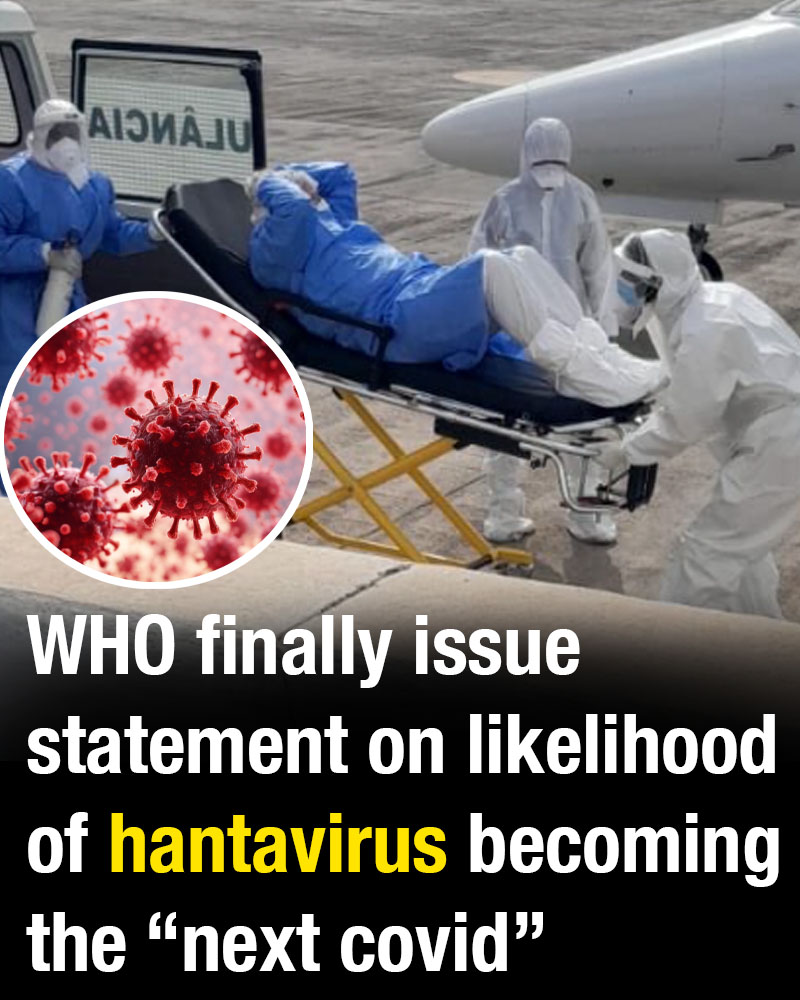
Panic is spreading across the open sea. Three people are dead, nearly 150 passengers remain trapped aboard a cruise ship under growing quarantine restrictions, and fears surrounding a deadly virus with a reported fatality rate approaching 40% are once again reviving memories many people hoped never to relive after the Covid-19 pandemic.
The headlines alone sound terrifying.
A mysterious outbreak.
Passengers isolated in confined corridors.
Medical teams rushing between cabins.
Investigators unable to fully explain how the infection began spreading.
And perhaps most unsettling of all: officials themselves admit that important questions still remain unanswered.
Yet behind the growing panic online, the reality is both more complicated and far more controlled than many viral posts suggest.
The virus at the center of concern is hantavirus, a disease that, while extremely serious, is not new to science. Unlike Covid-19, hantavirus has existed for decades and is generally understood to spread primarily through contact with infected rodents or exposure to their urine, saliva, or droppings. Most outbreaks occur in rural or isolated environments where humans accidentally inhale contaminated particles stirred into the air.
That limited transmission pattern is precisely why the current situation aboard the cruise ship Hondius has alarmed investigators so deeply.
Because according to preliminary reports, no infected rodents have yet been discovered onboard.
That absence creates a deeply uncomfortable possibility scientists are now being forced to examine carefully:
Could rare person-to-person transmission be occurring?
Historically, person-to-person spread of hantavirus has been considered extremely uncommon and limited to only certain strains in specific regions. Most health experts still emphasize that the virus does not spread easily through ordinary casual contact the way respiratory viruses like Covid-19 do.
You are not likely to contract hantavirus from briefly standing near someone in a grocery store or walking past them in public.
But confined environments change risk calculations significantly.
Inside a cruise ship, passengers share ventilation systems, dining spaces, hallways, railings, and prolonged close contact over many days. Once fear enters that kind of environment, even ordinary symptoms — a cough, a fever, fatigue — quickly become emotionally charged.
And for those currently aboard the Hondius, the fear is no longer abstract.
It is immediate.
Passengers reportedly remain isolated inside narrow cabins while medical personnel continue testing and monitoring potential infections. Every new symptom raises anxiety. Every announcement over the ship’s intercom increases tension further. People wait desperately for evacuation lists, medical updates, or reassurance that loved ones remain safe.
In situations like this, uncertainty often becomes more psychologically damaging than confirmed information itself.
People naturally begin imagining worst-case scenarios.
That emotional reaction is understandable, especially after the collective trauma many societies experienced during the Covid pandemic. The modern public has become highly sensitive to any reports involving quarantines, unexplained outbreaks, or phrases like “unknown transmission.”
The memory of global lockdowns still lingers beneath public consciousness.
So when words like “deadly virus,” “cruise ship,” and “possible human transmission” appear together in headlines, fear spreads rapidly — often faster than verified information itself.
However, global health organizations are trying carefully to prevent panic from overtaking facts.
According to current assessments from the World Health Organization, the broader public health risk outside the immediate outbreak zone remains low. Officials continue emphasizing that hantavirus behaves very differently from highly contagious airborne viruses like Covid-19.
That distinction matters enormously.
While hantavirus carries a frightening fatality rate in severe cases, it does not possess the same rapid transmission capability that allowed Covid to spread explosively across continents. Experts still believe most people face extremely low risk unless directly exposed to contaminated environments or infected biological material.
But even low-risk situations deserve serious investigation when unanswered questions remain.
The absence of rodents onboard the ship complicates the investigation significantly. Scientists must now carefully analyze whether contamination may have occurred before boarding, through cargo or supplies, or through some environmental factor not yet fully identified.
At the same time, they are also investigating the far more concerning possibility that an unusual strain or rare transmission pathway could be involved.
For epidemiologists, moments like this highlight one of the greatest ongoing challenges in public health:
Diseases evolve faster than certainty does.
The scientific process requires evidence, testing, and careful verification before conclusions can be made confidently. But public fear operates very differently. Fear fills informational gaps almost instantly, especially online where speculation spreads rapidly through social media long before official investigations finish.
That is why transparency becomes critically important during outbreaks.
When authorities communicate clearly — including what they know, what they do not know, and what is actively being investigated — public trust becomes easier to maintain. Silence or contradictory messaging, however, often creates conditions where misinformation expands quickly.
The Hondius outbreak also serves as a reminder of how interconnected and vulnerable modern society still remains despite technological progress. Cruise ships, airports, crowded cities, and global tourism networks create environments where local health incidents can suddenly attract worldwide attention within hours.
In many ways, the psychological legacy of Covid changed how humanity responds to infectious disease permanently.
People now watch outbreaks differently.
Governments react faster.
Health agencies face enormous pressure immediately.
And ordinary citizens interpret uncertainty through the emotional memory of recent global trauma.
That does not mean every outbreak becomes another pandemic.
But it does mean societies have become far more aware of how quickly ordinary life can be disrupted when invisible biological threats emerge unexpectedly.
For the passengers aboard the Hondius, however, the crisis is not about global analysis or epidemiological debate.
It is personal.
They are living through the fear directly.
Waiting in confined spaces.
Listening for updates.
Watching medical staff move between cabins.
Wondering whether a headache or cough means something life-threatening.
Outside the ship, the broader lesson may ultimately be less about panic and more about preparedness.
The situation highlights the importance of strong disease surveillance systems, rapid international cooperation, transparent communication, and ongoing scientific research into emerging infectious threats. Nature continues producing situations humanity cannot fully predict, and outbreaks often expose weaknesses in systems people assumed were secure.
At the same time, experts continue stressing an important message many people online are overlooking:
Concern is reasonable.
Panic is not.
The current evidence does not suggest a virus capable of spreading globally on the scale of Covid-19. Health authorities remain cautious precisely because caution prevents escalation. Monitoring unusual outbreaks carefully is part of responsible public health management, not proof that catastrophe is inevitable.
Still, the emotional power of the Hondius story reveals something deeper about the modern world.
Human beings now understand how fragile normal life can feel when uncertainty enters the picture.
A single outbreak on a distant ship can instantly awaken collective memories of fear, isolation, confusion, and helplessness that many people still carry beneath the surface years after the pandemic.
And perhaps that is why the images from the ship feel so unsettling:
Not because the world is necessarily facing another global crisis…
But because humanity now knows how quickly one can begin.