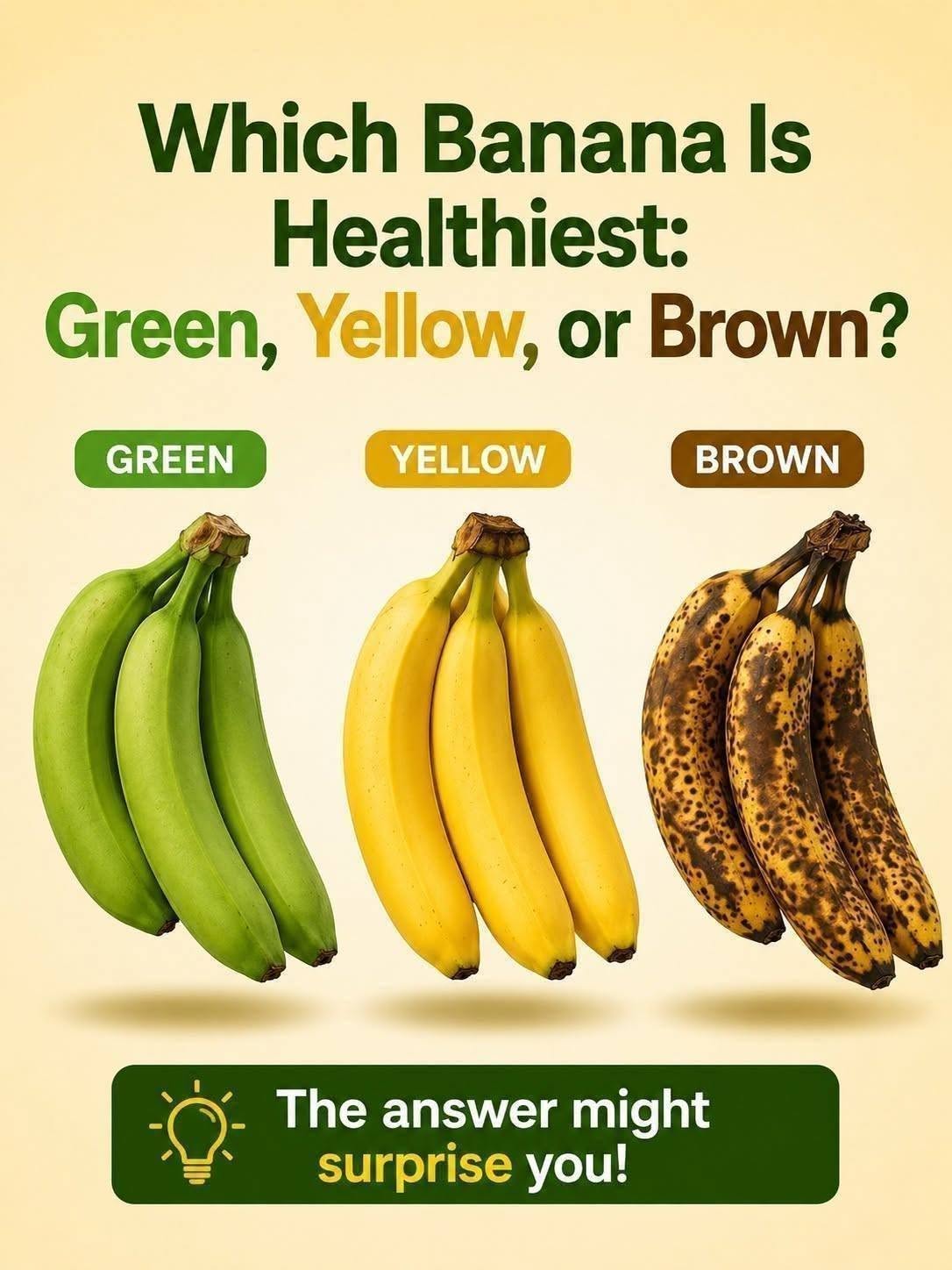
Which Banana Should You Eat? Green, Yellow, or Brown? The Surprising Differences in Ripeness and Nutrition
Green, yellow, or brown-spotted bananas offer different textures, flavors, and nutritional characteristics. As bananas ripen, their starches change into sugars, affecting their sweetness, digestibility, and how they can fit into a balanced diet. But which stage is best for your health?
Bananas are among the world’s most popular fruits, valued for their convenience, natural sweetness, and nutrients. They provide carbohydrates, fiber, potassium, and vitamin B6, making them a practical choice for breakfast, snacks, and meals.
However, not all bananas are nutritionally identical. The ripening process changes their composition, particularly the balance between starch and sugar. Understanding these differences can help you choose the banana that best suits your preferences and dietary needs.
1. Green Bananas: Higher in Resistant Starch
Green bananas are firm, less sweet, and contain more resistant starch than fully ripe bananas.
Resistant starch is a type of carbohydrate that resists digestion in the small intestine and can be fermented by bacteria in the large intestine. It may help support a healthy gut environment and can influence blood sugar responses.
Potential benefits of green bananas
- Support digestive health: Resistant starch can act similarly to dietary fiber and provide nourishment for certain beneficial gut bacteria.
- May produce a smaller immediate blood sugar response: Green bananas often contain more resistant starch and less free sugar than ripe bananas, although the actual response depends on portion size and individual factors.
- Provide longer-lasting fullness for some people: Their starch and fiber content may help support satiety.
Green bananas are less sweet and can have a firm, slightly starchy texture. They work well in cooking, particularly in savory dishes.
However, their higher resistant starch content may cause bloating or gas in some people, especially when consumed in large quantities.
2. Yellow Bananas: A Balanced Everyday Choice
Yellow bananas are ripe, softer, and naturally sweeter than green bananas. As the fruit ripens, some of its starch is converted into simpler sugars, changing both its flavor and texture.
They continue to provide potassium, vitamin B6, carbohydrates, and other nutrients.
Potential benefits of yellow bananas
- Provide convenient energy: Their carbohydrates can help fuel everyday activities and exercise.
- Offer useful nutrients: Potassium contributes to normal muscle function, nerve signaling, and blood pressure regulation.
- Are easy to incorporate into meals: They can be eaten alone, added to oatmeal, blended into smoothies, or paired with yogurt and nuts.
For many people, yellow bananas are an excellent everyday option because they offer a pleasant balance of sweetness, texture, and nutritional value.
Pairing a banana with a source of protein or healthy fat, such as plain yogurt or peanut butter, may help make a snack more satisfying.
3. Brown-Spotted Bananas: Sweeter and Softer
As bananas continue to ripen, brown spots develop on the peel and the fruit generally becomes softer and sweeter. Much of the starch has been converted into sugars, although the exact composition depends on the variety and degree of ripeness.
Brown-spotted bananas are often especially useful for recipes because they are easy to mash and provide natural sweetness.
Potential benefits of ripe bananas
- Naturally sweet flavor: They can add sweetness to oatmeal, pancakes, and homemade baked goods.
- Convenient carbohydrate source: Their sugars and remaining starch provide energy.
- Useful for reducing added sugar in recipes: Mashed ripe bananas can replace some added sugar in certain recipes, although the final nutritional content depends on the other ingredients.
Despite common claims, brown-spotted bananas have not been proven to prevent cancer, dramatically boost immunity, or provide extraordinary health benefits compared with other bananas.
Brown spots on the peel are usually a normal sign of ripening. However, bananas with visible mold, leaking liquid, or an unusual fermented or rotten smell should be discarded.
Which Banana Is Best for Blood Sugar?
The ripeness of a banana can influence how quickly its carbohydrates are digested, but it does not determine the entire blood sugar response.
Green bananas generally contain more resistant starch, while ripe bananas contain a greater proportion of readily available sugars. This means less-ripe bananas may produce a different blood glucose response for some people.
However, portion size, the rest of the meal, physical activity, and individual metabolic health also matter.
People with diabetes do not necessarily need to avoid ripe bananas. They can consider portion size, monitor their individual response, and follow advice from their healthcare professional.
Which Banana Is Best for Gut Health?
Green bananas may be particularly useful for people looking to increase their intake of resistant starch. This starch can be fermented by gut bacteria, producing short-chain fatty acids that play a role in intestinal health.
As bananas ripen, their resistant starch content generally decreases. Nevertheless, ripe bananas still provide dietary fiber and can be part of a healthy diet.
There is no single ripeness level that is best for everyone’s digestive system. People who experience bloating or gas after eating green bananas may find riper bananas more comfortable to digest.
Green vs. Yellow vs. Brown: A Quick Comparison
| Feature | Green banana | Yellow banana | Brown-spotted banana |
|---|---|---|---|
| Taste | Mild, less sweet | Sweet | Very sweet |
| Texture | Firm | Soft but structured | Very soft |
| Resistant starch | Generally higher | Generally lower | Usually lowest |
| Sugar content | Generally lower | Higher | Often higher |
| Best use | Cooking and savory dishes | Everyday snacks | Smoothies and baking |
These are general trends. Exact nutrient levels vary by banana variety, storage conditions, and degree of ripeness.
So, Which Banana Should You Choose?
The best banana depends on your preferences and goals.
- Choose green bananas if you prefer less sweetness and want more resistant starch.
- Choose yellow bananas for a convenient, balanced everyday snack.
- Choose brown-spotted bananas if you enjoy sweeter fruit or want a naturally sweet ingredient for baking.
There is no need to choose only one stage of ripeness. All three can fit into a balanced diet, and variety is often the most practical approach.
Final Thoughts
Bananas change as they ripen, particularly in their starch content, sweetness, and texture. Green bananas generally contain more resistant starch, yellow bananas offer a versatile everyday option, and brown-spotted bananas are especially useful for naturally sweet recipes.
The healthiest choice is not necessarily the greenest or the ripest banana. It is the one that suits your nutritional needs, digestive comfort, and overall eating pattern.