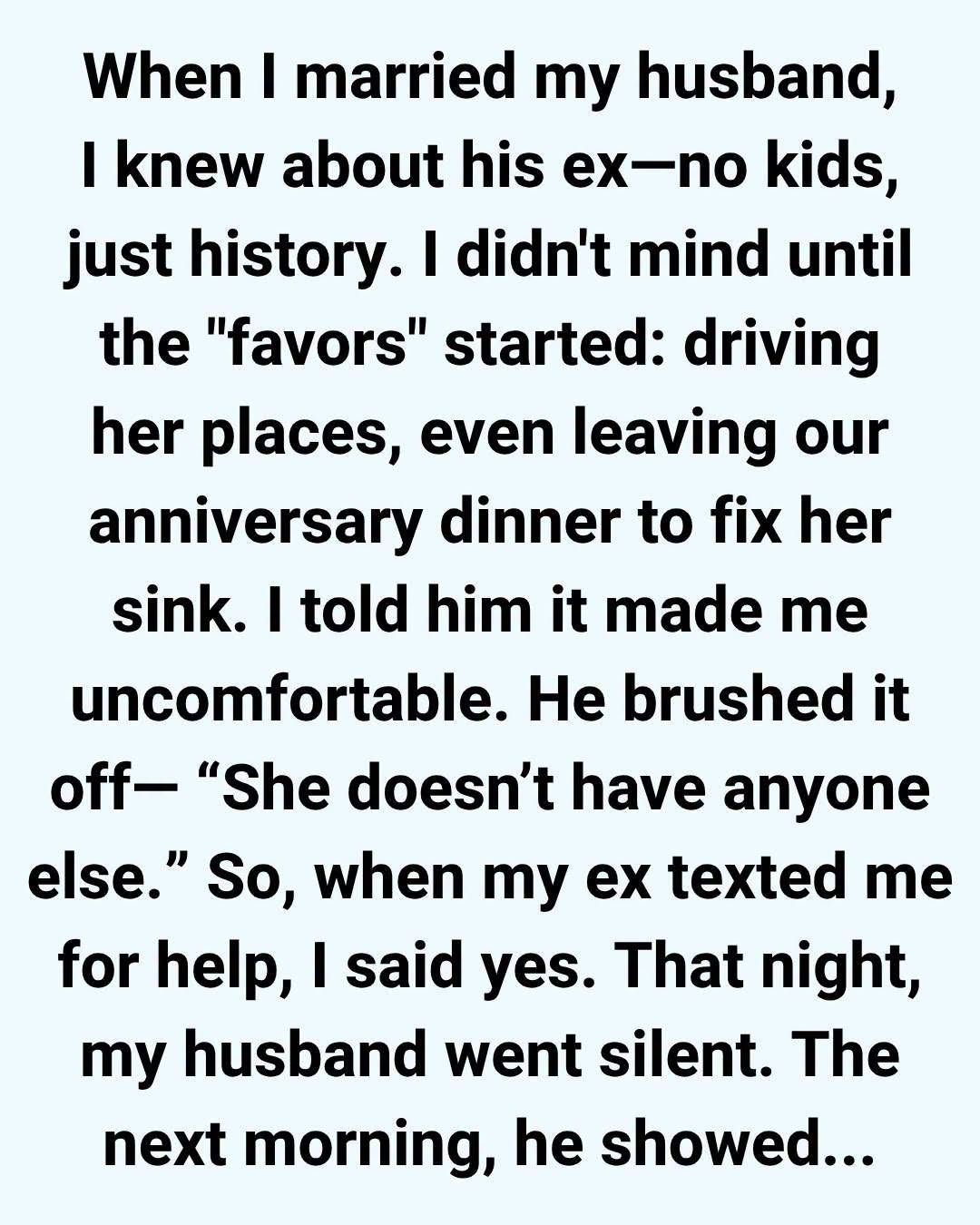
The change between them was almost impossible to notice at first. There were no explosive arguments, no betrayal, and no dramatic breakup waiting around the corner. Instead, distance settled quietly into their relationship, growing through small moments that seemed harmless on their own. A favor offered to an old partner. A text conversation that lasted a little too long. A feeling of discomfort repeatedly dismissed as insecurity. By the time they both recognized what was happening, they had already reached a turning point that forced them to rethink what respect, trust, and emotional boundaries truly meant.
Neither of them believed the relationship was in danger.
They still laughed together.
They still shared meals, made plans, and talked about the future.
But beneath those ordinary routines, something subtle had begun to change.
It started when he agreed to help his former girlfriend with what he described as “just a small favor.”
She didn’t object immediately.
She wanted to be understanding.
After all, everyone has a past, and she believed mature relationships were built on trust rather than control.
Still, something about the situation left her uneasy.
The messages continued.
Sometimes they arrived late in the evening.
Sometimes they stretched into conversations much longer than necessary.
Whenever she admitted the situation made her uncomfortable, he gently brushed her concerns aside.
“You’re overthinking it.”
“There’s nothing going on.”
“We’re just friends.”
She wanted to believe him.
So she convinced herself the uneasy feeling would eventually disappear.
Instead, it slowly grew stronger.
She wasn’t worried that he would cheat.
She wasn’t afraid of losing him overnight.
What hurt was something much quieter.
She no longer felt like the person receiving his first loyalty.
Little by little, she began questioning whether her comfort mattered as much as his desire to avoid disappointing someone from his past.
Months passed without any dramatic confrontation.
Then everything shifted.
An old boyfriend reached out to her with a simple request for help.
She agreed.
She answered a few messages.
Nothing inappropriate happened.
Nothing romantic.
Nothing secret.
She treated the situation exactly the way he had treated his own conversations.
For the first time, however, he found himself standing on the opposite side of the same situation.
Almost immediately, he noticed a feeling he hadn’t expected.
Every notification made him wonder who she was talking to.
Every mention of her former partner left him strangely unsettled.
It wasn’t rage.
It wasn’t possessiveness.
It was something much more uncomfortable.
He suddenly understood exactly how she had been feeling all along.
The realization arrived quietly.
He recognized that the problem had never really been about former relationships.
It had always been about emotional safety.
About wanting to feel like the most important person inside the relationship.
About knowing your partner would instinctively protect your peace before protecting someone else’s comfort.
Seeing his own actions reflected back at him made everything impossible to ignore.
For the first time, he stopped defending himself.
Instead of searching for another explanation, he listened.
Really listened.
She explained that she had never wanted to control who he spoke with.
She simply wanted reassurance that their relationship came first.
That if something consistently caused pain, it deserved attention instead of dismissal.
He finally understood.
Not because someone proved him wrong.
But because he had experienced the same quiet discomfort himself.
That evening became one of the most honest conversations they had ever shared.
Neither of them shouted.
Neither blamed the other.
Instead, they made a simple promise.
If either of them ever felt overlooked, unimportant, or emotionally unsafe, those feelings would no longer be brushed aside as jealousy or insecurity.
They would be treated as something worthy of compassion.
Together, they decided to create healthier boundaries with former partners.
Not because either of them believed friendship was impossible.
Not because they wanted to control each other’s lives.
But because protecting the relationship they were building mattered more than maintaining unnecessary emotional connections from the past.
They realized trust isn’t protected by winning arguments.
It’s protected by consistently choosing each other’s peace.
From that day forward, the relationship felt different.
Not because they had become perfect.
But because both of them finally understood that love isn’t measured only by grand romantic gestures or beautiful words.
More often, it’s found in the quiet daily choices people make to protect each other’s hearts.
Real love doesn’t ask, “Am I technically doing anything wrong?”
It asks, “Is this helping the person I love feel secure, valued, and respected?”
And sometimes, the strongest relationships are built not through dramatic declarations, but through two people quietly deciding, day after day, that they would rather stand beside each other than prove themselves right.