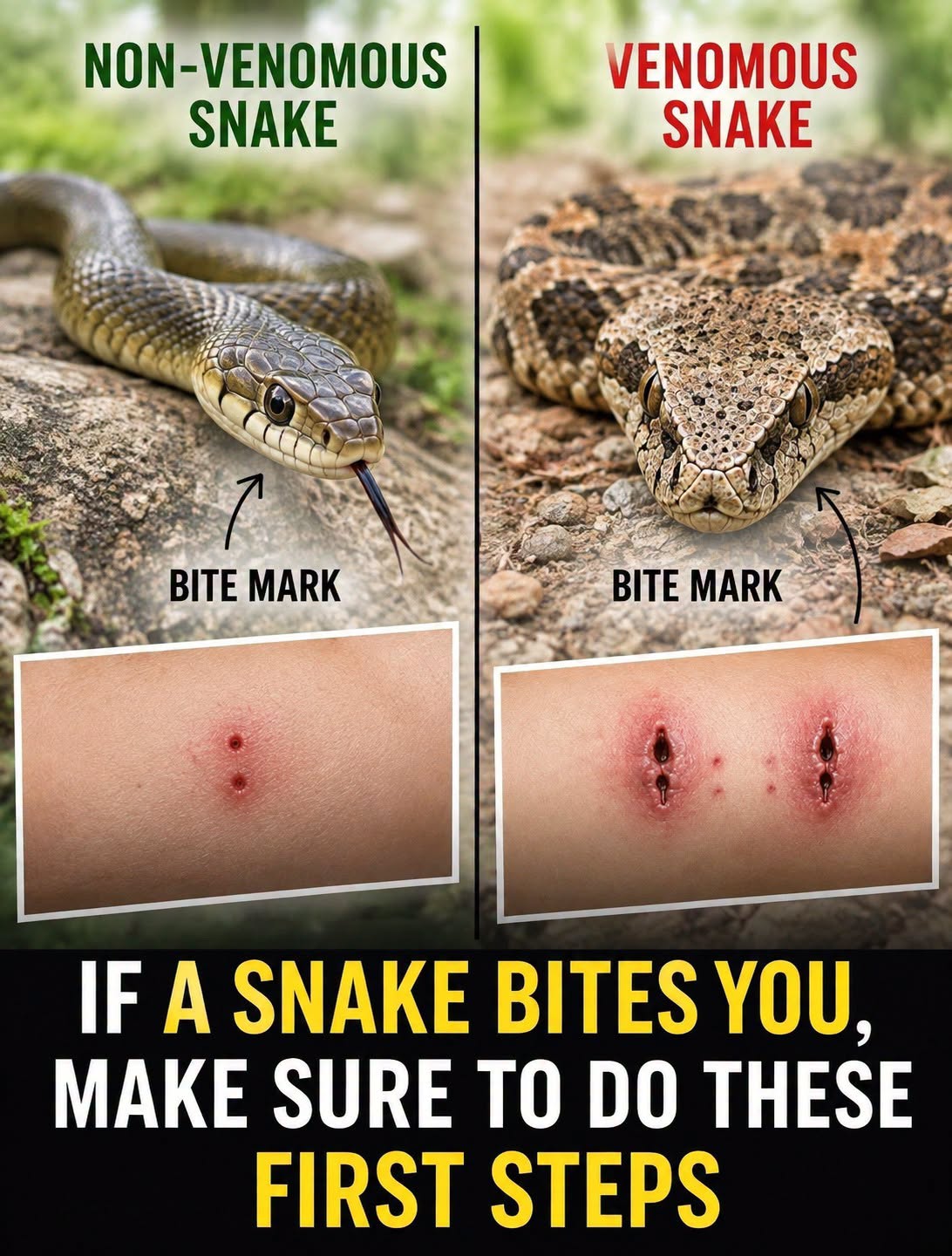
Po — ja një version më i zgjeruar, duke ruajtur mesazhin kryesor të sigurisë dhe duke e bërë më të qartë e më të plotë.
:::writing{variant=”document” id=”73518″ title=”Expanded Snake Bite Safety Guide”} After a suspected snake bite, professional medical assessment is essential, even when the snake cannot be identified and even when the person initially feels completely well. Some serious effects may not become obvious immediately, so a lack of early symptoms should not be treated as proof that the bite is harmless. The safest approach is to arrange emergency medical assistance as quickly as possible rather than waiting to see whether symptoms develop.
If help is available, the injured person should avoid walking unnecessarily. Movement can increase physical strain and may complicate the situation, particularly if swelling or other symptoms begin to develop. Keep the person as calm and still as reasonably possible, and support the bitten limb while waiting for medical assistance. Reassurance is also important, because panic and unnecessary activity can make an already frightening situation more difficult to manage.
Remove rings, watches, bracelets, shoes, or other tight items from the affected limb as soon as it can be done safely. Swelling may develop after a bite, and objects that become constrictive as the limb enlarges can create additional problems. Do not, however, delay emergency care in an attempt to perform unnecessary procedures.
Follow the instructions provided by emergency dispatchers or medical professionals. They can guide you through the safest steps based on the circumstances and the resources available in your area. If the snake is still nearby, observe it only from a safe distance if doing so does not create additional risk. There is no reason to approach it for identification. Never attempt to catch, kill, trap, or handle the snake, because doing so can result in another bite.
Several commonly repeated home remedies can actually make an injury worse. Do not cut into the bite in an attempt to release venom, and do not try to suck venom from the wound. Avoid applying ice directly to the bite and do not use a tourniquet unless specifically directed by an appropriate medical professional. These measures can cause additional tissue damage or interfere with circulation without providing a reliable solution to envenomation.
Medication choices should also be handled carefully after a suspected snake bite. Avoid alcohol and other substances that could interfere with assessment or worsen the situation. Do not take aspirin or anti-inflammatory pain medications unless a clinician specifically advises that they are appropriate. Instead of attempting to manage the injury with medications at home, seek professional medical guidance as soon as possible.
Hospital evaluation is important because medical teams can monitor the person for changes that may develop after the initial injury. Depending on the species of snake, the nature of the bite, the symptoms, and the clinical assessment, treatment may include observation, supportive care, laboratory testing, or antivenom when appropriate. Medical professionals can determine what treatment is necessary rather than relying on assumptions about the snake or the severity of the bite.
Prevention can also reduce the risk of encounters in the first place. When walking or working in areas where snakes may be present, sturdy footwear can provide an additional layer of protection. At night, carrying a flashlight can help reveal animals or obstacles that might otherwise be difficult to see. Before reaching into holes, piles of vegetation, wood, rocks, boxes, or other concealed spaces, check the area carefully rather than placing your hands somewhere you cannot see.
The same principle applies when moving through unfamiliar outdoor environments: awareness is often more useful than fear. Snakes generally do not need to be approached, and people can reduce unnecessary encounters by watching where they step and keeping their hands away from hidden spaces.
If a bite does occur, however, the priority should immediately shift from prevention to medical care. Do not waste valuable time experimenting with home remedies or attempting to prove whether venom was injected. Keep the injured person calm, limit unnecessary movement, maintain a safe distance from the snake, and obtain professional help.
The safest response to a suspected snake bite is not a homemade treatment or an improvised technique. It is protecting the injured person, avoiding actions that could cause additional harm, and getting expert medical assistance as quickly as possible. When it comes to potentially serious envenomation, professional assessment is far more important than trying to handle the situation alone. :::