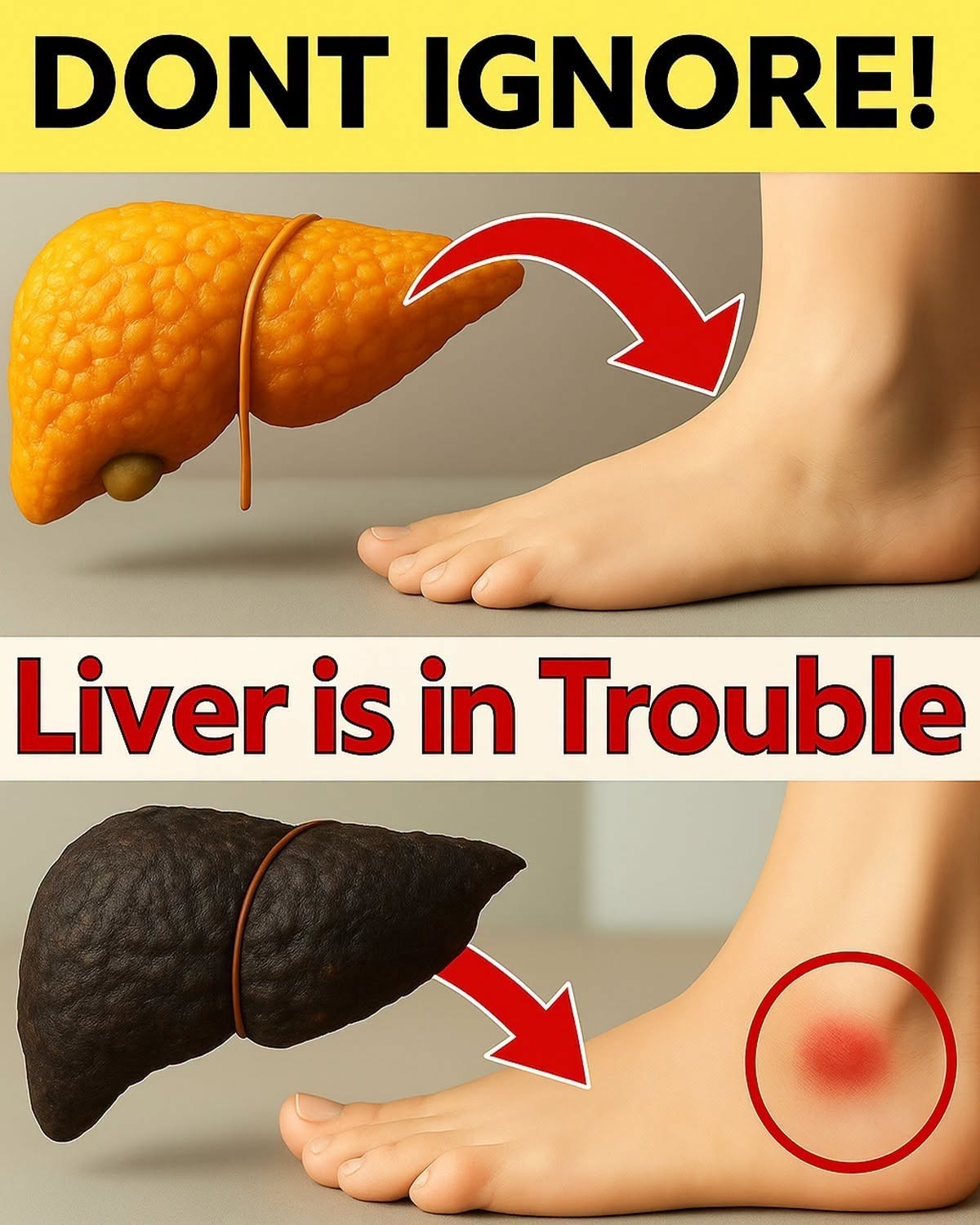
What Your Feet May Be Trying to Tell You About Your Liver
Your feet may reveal clues about your overall health—including, in some cases, problems affecting your liver. Although changes in the feet are often caused by everyday conditions, certain symptoms can sometimes be associated with liver disease and should not be ignored.
The liver plays an essential role in filtering substances from the blood, producing proteins and helping regulate fluid balance. When it becomes seriously damaged, the effects can sometimes become noticeable in other parts of the body, including the feet and ankles.
1. Swelling in the Feet and Ankles
One possible warning sign is persistent swelling in the feet or ankles, known as edema. Advanced liver disease can reduce the production of albumin, a protein that helps keep fluid inside blood vessels. Changes in circulation and fluid regulation can also contribute to swelling.
However, swollen feet are much more commonly associated with a variety of possible causes, including prolonged standing, certain medications, heart problems and kidney disease.
2. Persistent Itching
Unexplained itching can sometimes be associated with liver or bile duct conditions. In some cases, the itching affects large areas of the body, including the legs and feet, without a visible rash.
This symptom may occur when substances associated with impaired bile flow accumulate in the body. Nevertheless, dry skin, allergies and other skin conditions are much more common explanations for itchy feet.
3. Yellowing of the Skin
Yellowing of the skin or the whites of the eyes is known as jaundice. It can develop when bilirubin, a yellow substance processed by the liver, builds up in the blood.
If you notice yellowing, seek prompt medical assessment, especially if it is accompanied by dark urine, pale stools or abdominal pain.
4. Unusual Bruising or Bleeding
Advanced liver disease can interfere with the production of proteins needed for blood clotting. As a result, some people may bruise more easily or experience unusual bleeding.
Bruising on the feet alone does not necessarily indicate a liver problem, but unexplained or frequent bruising deserves medical attention.
5. Changes in Skin Color or Appearance
Certain liver conditions can cause changes in skin appearance, although these are not specific to the feet. Redness, rashes, discoloration and other changes may have many explanations, including circulation problems, infections and dermatological conditions.
It is important not to assume that a change in the appearance of your feet means your liver is damaged.
When Should You See a Doctor?
Seek medical advice if you experience persistent swelling, unexplained itching, unusual bruising or other symptoms that concern you. Sudden swelling in one leg, particularly with pain or redness, requires urgent assessment. Severe difficulty breathing or chest pain warrants emergency care.
The bottom line: Your feet cannot diagnose liver disease. However, certain changes may provide clues about your health when considered alongside other symptoms and your medical history. A healthcare professional can determine whether blood tests, a physical examination or additional investigations are needed.
Paying attention to changes in your body is useful, but getting the right medical assessment is the best way to understand what those changes mean.