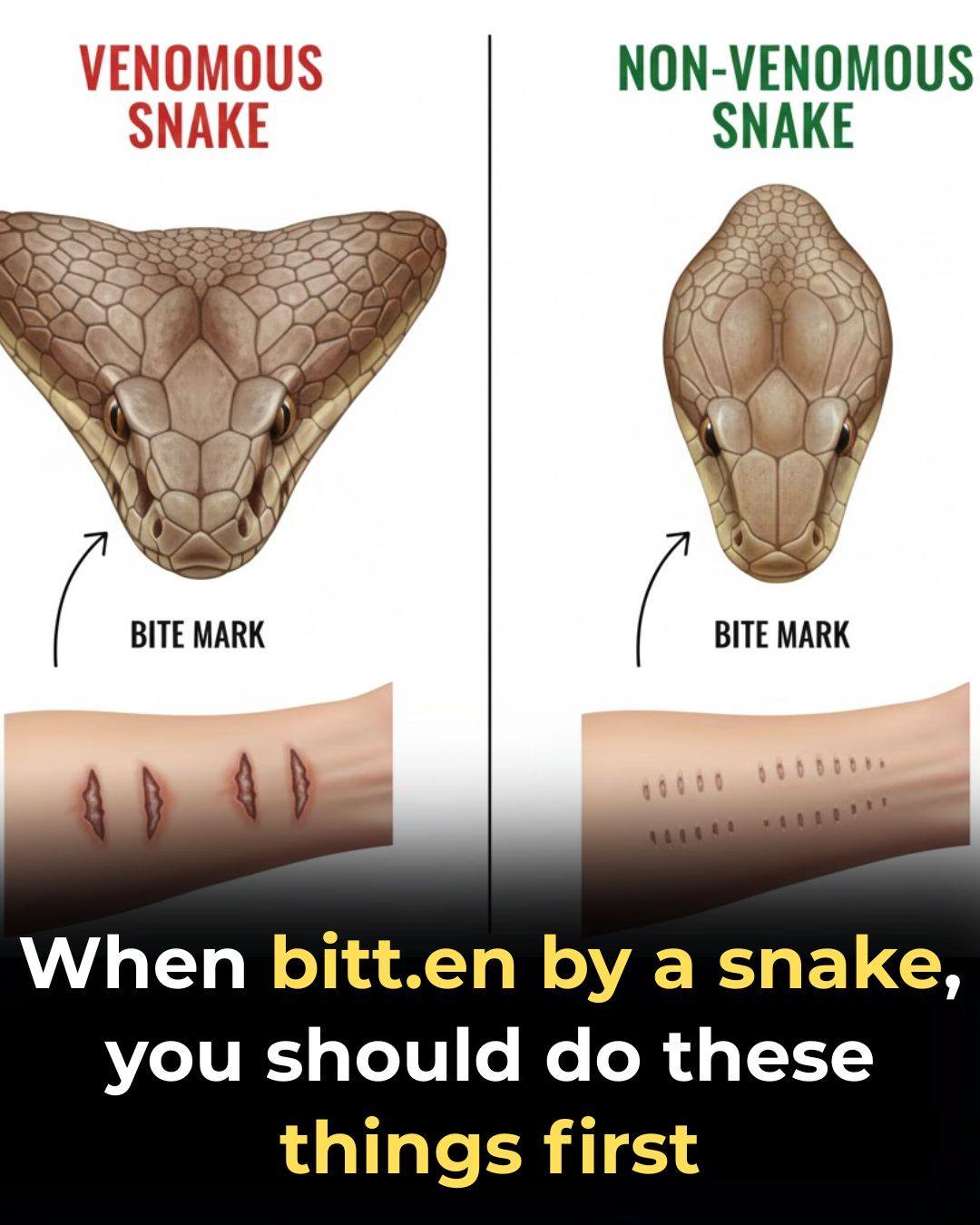
Snakebites strike without warning. One careless step into tall grass, one routine chore at dusk, one moment of distraction while reaching beneath a pile of wood—and life can change instantly. Most people never imagine it will happen to them. Snakes are quiet, patient, almost invisible until the exact second fear explodes. During warmer months, farms, gardens, hiking trails, and even suburban backyards become silent hunting grounds where humans and snakes accidentally cross paths. A single mistake can lead to permanent injury, organ damage, or death within hours. But experts say the greatest danger is not always the bite itself. It’s panic, delay, and the wrong response afterward that often decide whether someone survives.
Snakebites frequently occur during the most ordinary moments of daily life. Someone hangs laundry outside barefoot. A child runs through long grass chasing a ball. A homeowner reaches into a garden bed without gloves. A farmer lifts corrugated metal or stacked timber where snakes seek shade from the heat. These are not dramatic movie scenes deep in the wilderness—they are normal routines happening just metres from homes and families. In countries like Australia, where venomous snakes are common, thousands of bites and snake encounters are reported every year. Many victims never even see the snake clearly before being bitten.
The first emotion after a bite is usually shock. Adrenaline surges. The heart races. Thoughts spiral instantly toward death, paralysis, or losing a limb. Witnesses often panic just as badly, screaming, running, or trying dangerous “first aid” methods they’ve seen online or in old movies. But medical experts repeatedly warn that fear itself can worsen the situation. Movement increases blood circulation, which may help venom travel through the lymphatic system more quickly. A calm, controlled response can dramatically improve survival chances, while chaotic reactions can make injuries far worse.
One of the biggest misconceptions about snakebites is that people always know immediately how serious the situation is. In reality, symptoms can appear slowly or differently depending on the species involved. Some bites cause severe pain and swelling within minutes. Others may seem minor at first before dangerous symptoms develop later: nausea, blurred vision, difficulty breathing, dizziness, muscle weakness, or internal bleeding. Because of this unpredictability, health authorities stress that every snakebite should be treated as potentially venomous and medically urgent, even if the victim initially feels “fine.”
Prevention remains the strongest protection. Experts say many snake encounters can be avoided by making homes and properties less attractive to snakes in the first place. Overgrown vegetation, piles of debris, stacked firewood, cluttered sheds, and rodent infestations create perfect hiding places and hunting grounds. Snakes are often drawn not to humans, but to shelter, warmth, and food sources like mice or frogs. Keeping lawns trimmed, sealing gaps under buildings, removing rubbish piles, and reducing rodent activity can dramatically lower the risk of dangerous encounters around homes.
Simple protective habits also save lives more often than people realize. Wearing boots instead of sandals outdoors, especially in rural areas, creates a critical barrier between fangs and skin. Long pants and thick socks add protection while walking through bushland or tall grass. Gloves are essential when gardening, lifting rocks, or handling wood piles where snakes may be hidden underneath. Many bites happen because people instinctively place their hands somewhere they cannot fully see. Taking a few extra seconds to check surroundings can prevent tragedy entirely.
Still, even careful people get bitten. And when that moment comes, the response in the first few minutes becomes critical.
Medical professionals strongly advise treating every bite as an emergency. The victim should remain as still and calm as possible. Running, panicking, or trying to chase and kill the snake wastes precious time and may spread venom faster through the body. Emergency services should be called immediately. If possible, another person should help keep the victim seated or lying down while waiting for help to arrive.
One of the most important first aid steps for many venomous snakebites is applying a firm pressure bandage over the bite area and wrapping upward along the affected limb. This technique helps slow venom movement through the lymphatic system. The limb should then be immobilized using a splint or sling if available. Crucially, experts warn people not to wash the wound. Tiny traces of venom left on the skin can help hospitals identify the species involved and choose the correct antivenom treatment. Cutting the bite, sucking out venom, using ice, or applying tourniquets are outdated and dangerous myths that can cause even greater harm.
Time matters enormously. Modern medicine has made survival rates far higher than in previous generations, but delayed treatment can still become fatal. Antivenom, respiratory support, and emergency care save lives every year, especially when victims reach medical professionals quickly. What often separates recovery from catastrophe is not luck alone, but preparation and knowledge before the emergency ever happens.
For survivors, the emotional impact can linger long after the physical wound heals. Many describe replaying the moment repeatedly in their minds—the rustle in the grass, the sudden pain, the terrifying realization of what happened. Some develop anxiety about returning outdoors or working in places where snakes may live. Families too are often shaken by how quickly an ordinary day nearly turned tragic.
That is why experts continue urging people not to dismiss snake safety as something that only matters in remote wilderness areas. Snakes adapt surprisingly well to human environments, especially during warmer seasons when they search for food, water, and cooler shelter. Awareness is not paranoia; it is protection.
The truth is frighteningly simple: snakebites rarely arrive with warning signs. They happen in seconds, often during the most routine moments imaginable. But knowledge changes outcomes. Understanding how to reduce risk, recognizing the seriousness of every bite, and responding calmly instead of emotionally can mean the difference between life and death.
With preparation, clear thinking, and fast medical attention, what begins as a terrifying encounter does not have to end in tragedy. Sometimes survival comes down not to strength or luck, but to staying calm long enough to make the right decisions when every second matters.