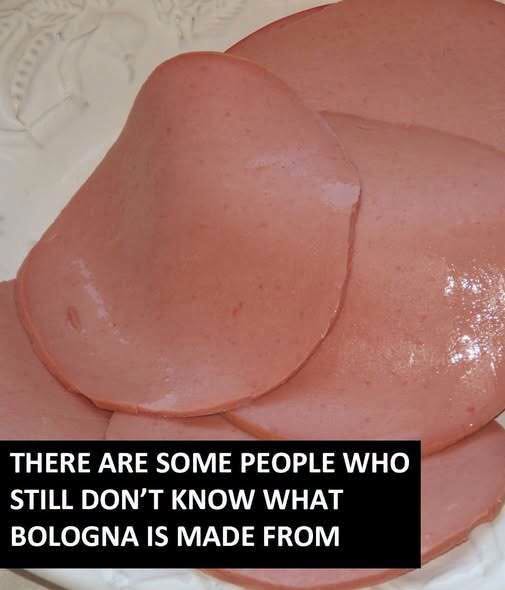
Bologna has spent decades carrying a reputation that few other foods can match. It has been mocked in jokes, dismissed as “mystery meat,” and surrounded by rumors that seem to grow more dramatic with every passing generation. Ask almost anyone what bologna is made from, and you’ll likely hear a different answer each time. Some repeat stories they heard as children, while others confidently share internet myths they’ve never bothered to verify. Despite remaining a staple in countless households, school lunches, and family refrigerators, surprisingly few people actually understand how bologna is made or why it became such a familiar part of everyday life. Instead, the truth has often been buried beneath exaggeration, urban legends, and decades of misunderstanding.
Part of the confusion comes from the fact that bologna is a processed meat. For many consumers, the word “processed” immediately raises suspicion, even though processing simply refers to altering food through grinding, seasoning, cooking, curing, or preserving. Over time, sensational stories have replaced simple explanations, creating the impression that bologna contains mysterious or shocking ingredients. In reality, modern food production is subject to strict regulations in many countries, and manufacturers must meet detailed safety and labeling standards before products ever reach store shelves.
Behind every slice of bologna is a production process that is far more straightforward than most rumors suggest. The meat is carefully selected, trimmed, ground into very fine particles, blended with seasonings and approved ingredients, then emulsified into a smooth mixture. This mixture is placed into casings before being slowly cooked under controlled temperatures until it reaches the familiar texture people recognize. Every step is designed to create consistency so that each package delivers the same flavor, appearance, and texture customers expect every time they buy it.
That consistency isn’t accidental—it’s the very goal of the product. Unlike handcrafted sausages that naturally vary from batch to batch, commercial bologna is manufactured so every slice looks and tastes nearly identical. Whether someone buys it today or months from now, the experience remains remarkably similar. This predictability helped make bologna one of the most affordable and dependable lunch meats available for generations of families.
The story of bologna, however, begins long before modern factories existed. Its roots trace back to centuries-old European sausage-making traditions, where butchers developed practical ways to preserve meat while making full use of available ingredients. These methods weren’t created to deceive consumers but to reduce waste and provide communities with food that could be stored longer than fresh meat alone.
One of bologna’s closest ancestors is mortadella, a celebrated Italian sausage with a history stretching back hundreds of years. Unlike modern American bologna, traditional mortadella proudly displays its craftsmanship through visible cubes of pork fat, whole peppercorns, pistachios, and carefully balanced spices. Every slice reveals texture and character rather than complete uniformity.
Mortadella reflects an older philosophy of food preparation—one that embraced variation instead of eliminating it. No two handmade batches were perfectly identical, and that uniqueness became part of the product’s charm. The visible ingredients reminded people that skilled artisans had carefully prepared each sausage by hand.
As food production expanded during the twentieth century, manufacturers adapted these traditional recipes to meet the demands of growing populations. Consumers increasingly wanted foods that were affordable, widely available, and consistent regardless of where they were purchased. American bologna gradually evolved to satisfy those expectations.
To achieve that level of consistency, producers refined both the texture and appearance. The meat was ground more finely, spices were balanced for broader appeal, and the finished product became smoother than its European predecessor. The result was a lunch meat that could be mass-produced while maintaining a familiar taste from one package to the next.
This transformation reflected more than changing recipes—it reflected changing lifestyles. As cities grew and families became busier, convenience became increasingly valuable. Foods that required little preparation and remained affordable quickly earned a permanent place in many kitchens.
For parents, bologna offered a simple solution for preparing quick lunches. A few slices between two pieces of bread could become a complete meal in minutes. For children, its mild flavor and soft texture made it an easy favorite that appeared in countless lunchboxes throughout the school year.
Over the decades, however, popularity also brought criticism. Nutrition conversations evolved, and processed foods came under greater scrutiny. Bologna found itself at the center of debates about sodium, preservatives, additives, and healthy eating habits. While some concerns focused on broader dietary patterns, many exaggerated claims spread far beyond the actual facts.
The nickname “mystery meat” only fueled those misconceptions. Although intended as humor, it encouraged generations of people to assume the product contained unknown or hidden ingredients. In reality, food labeling regulations require manufacturers to identify ingredients according to established standards, allowing consumers to make informed choices.
That doesn’t mean every variety of bologna is identical. Recipes differ between manufacturers, countries, and regional traditions. Some versions rely primarily on beef, others use pork, chicken, turkey, or combinations of approved meats, each creating slight differences in flavor and texture.
Like many foods, bologna occupies a complicated place in modern diets. Nutrition experts generally recommend enjoying processed meats in moderation as part of an overall balanced eating pattern. For many families, however, occasional bologna sandwiches remain associated with childhood memories, school lunches, and simple moments shared around the kitchen table.
Its continued popularity demonstrates how food often carries emotional meaning beyond its ingredients alone. People don’t simply remember the taste—they remember who prepared it, where they ate it, and the memories connected to those meals. Nostalgia can become just as important as flavor itself.
At the same time, changing consumer preferences have encouraged manufacturers to develop newer versions containing different ingredients, reduced sodium, fewer preservatives, or alternative protein sources. These innovations reflect evolving expectations while preserving the familiar character many customers still appreciate.
Perhaps the most fascinating thing about bologna isn’t the product itself but the conversations surrounding it. Few foods have inspired so many myths while remaining so ordinary in everyday life. Its reputation has often been shaped more by rumor than by reality, turning a simple lunch meat into a surprisingly controversial topic.
In the end, bologna is neither the villain described by sensational stories nor the culinary masterpiece celebrated by tradition. It is the product of centuries of food evolution, combining old sausage-making techniques with modern manufacturing methods to create something affordable, familiar, and dependable. Whether people love it, avoid it, or continue debating it, bologna quietly reflects the way modern society balances tradition, convenience, affordability, and the stories we choose to believe about the foods on our plates.