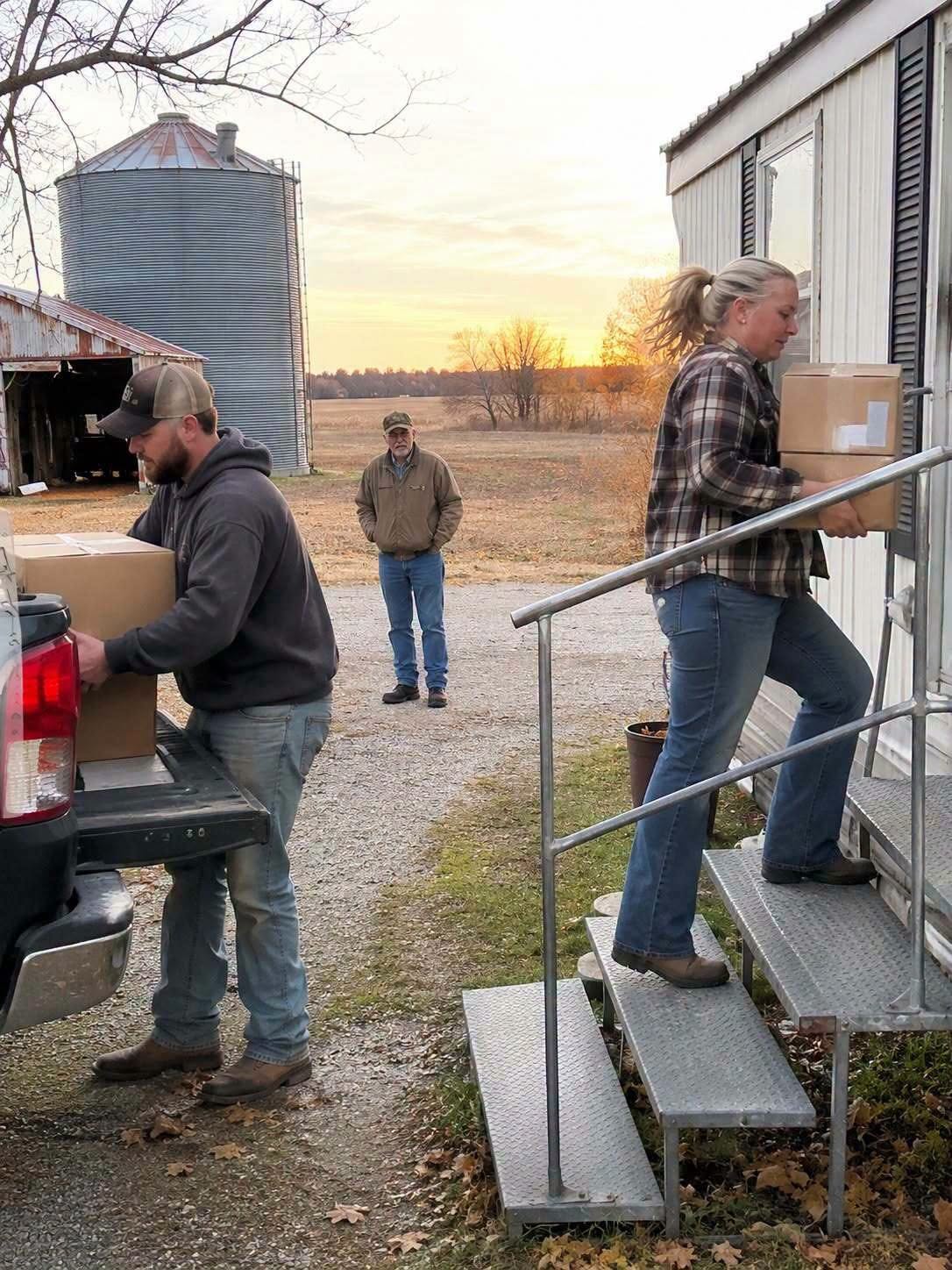
For ten years, we put our lives on hold while my husband’s father continued promising us that one day the family farm would belong to us. We worked through freezing Minnesota winters, exhausting summers, and endless harvest seasons, believing that every sacrifice was bringing us closer to the future he had promised. But when he refused to give us a small raise while spending thousands of dollars on his daughter’s wedding, we finally realized that promises alone could not keep our family going. We packed our belongings, accepted an opportunity elsewhere, and walked away from the farm we had spent a decade helping to maintain. We thought that was the end of the story. But the following morning, my father-in-law showed up at our new employer’s farm, and what he said surprised everyone.
Nate and I had spent ten years working on Vern’s 1,200-acre farm in Minnesota. Together, we received just $1,500 a month, despite the long hours and enormous responsibilities that came with running such a large operation. We repaired equipment, handled livestock, worked the fields, and did whatever needed to be done. Our lives revolved around the farm, and we rarely had time to think about anything beyond the next task.
Vern always reminded us that the farm would eventually be ours. Those promises kept us going, especially during the difficult months when the weather was brutal and money was tight. We believed that our hard work was an investment in our family’s future. We never expected to become wealthy overnight, but we thought we deserved enough to live comfortably while helping preserve the property we had worked so hard to maintain.
Then came a winter that made our situation impossible to ignore. Our trailer’s furnace needed replacing, and the repair was going to cost approximately $3,200. With the freezing Minnesota temperatures, this was not a luxury or an optional improvement. We needed reliable heat to keep our home safe and comfortable. I approached Vern and asked whether he could increase our monthly pay by another $500.
His answer was no.
What made the refusal especially painful was what happened afterward. Vern received money from the corn sales and began spending thousands of dollars on preparations for his daughter Tiffany’s wedding. While we struggled to afford basic repairs to our home, he was willing to spend generously on a celebration. It was difficult not to notice the difference in how he treated his children and the sacrifices he expected from us.
That was when something finally changed in our thinking. We had spent ten years trusting his promises, but we could no longer build our future around an inheritance that might never arrive. We needed financial security now, not another promise about what might happen someday.
After the harvest, we accepted an offer from a neighboring farmer named Paul. He offered Nate an annual salary of $58,000, health insurance, and a warm farmhouse where we could finally live without worrying about the heating system failing in the middle of winter. It was an opportunity we could not afford to ignore.
Leaving the farm was emotional. We had spent a decade there, and almost every corner held memories of hard work and difficult seasons. But we packed our belongings, loaded what we could into our vehicle, and drove away knowing that we were finally choosing our own future.
The following morning, Vern appeared at Paul’s farm. We had no idea what he wanted or whether he had come to argue about our decision. Instead, he asked Paul about the salary he was paying Nate. When he heard the amount, he looked at our new employer and said something neither of us had expected.
“Pay him more. He’s worth it. Because I never did.”
Then Vern turned toward Nate and apologized.
For the first time in ten years, he acknowledged that our work had been worth far more than what he had paid us. His words did not erase the difficult years, but they showed that he had finally recognized the unfairness of the situation. It was a moment neither of us would forget.
Several months later, Vern began backing up his words with actual agreements. He arranged a farming lease, a machinery purchase contract, and ownership of the farmhouse and forty acres. Instead of relying on vague promises about a future inheritance, we finally had concrete arrangements that gave us something real to build upon.
Two years later, I handed Vern his crop-share payment of $52,318. It represented the proceeds from the farming arrangement we had established. But he surprised us once again. He returned a check for $5,500, explaining that it covered the furnace expense and the raise he had refused to give us years earlier, including interest.
It was a gesture that carried a meaning far beyond the money itself. He was acknowledging a debt that had existed for years, not simply in dollars, but in the trust and fairness he had failed to show us.
We never completely forgot the decade we spent working for promises. But we also decided not to let those years define everything that came afterward. We kept the wooden deck from our old trailer and turned it into a small reminder of where our journey had begun.
Today, a sign hangs above it:
“HIRED MAN’S PORCH. EVERYBODY GETS PAID.”
It reminds us that hard work deserves respect, that family should not be an excuse for unfair treatment, and that promises mean very little without actions to support them.
For ten years, our future depended on what someone else said might happen. Now, it rests on something much stronger: fair agreements, honest work, and the freedom to make our own decisions.