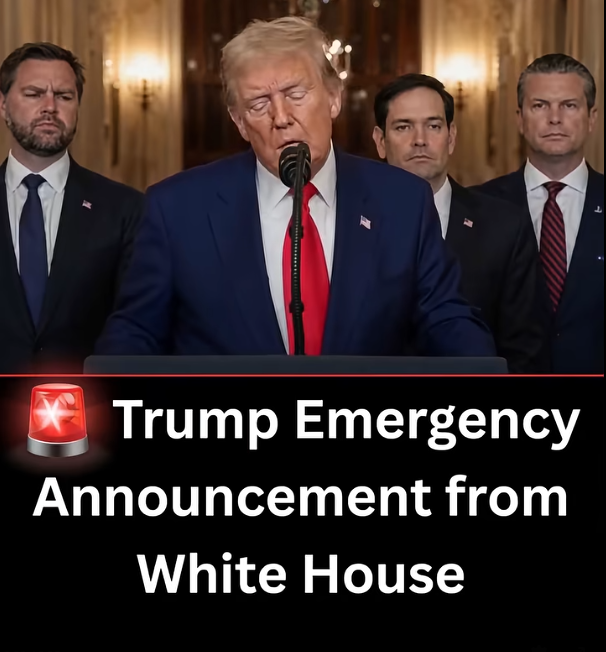
President Donald Trump has forcefully defended the recently signed U.S.-Iran Memorandum of Understanding (MOU), rejecting criticism from opponents while portraying the agreement as one of the most significant foreign policy achievements of his administration. Responding to critics who questioned both the negotiations and their potential consequences, Trump argued that the agreement represents a major step toward peace, stronger national security, and economic stability. His message to those who doubted the deal was brief but unmistakable: **”You’re welcome.”**
In a series of posts on Truth Social, Trump described the memorandum as a diplomatic breakthrough that accomplishes multiple objectives simultaneously. According to the president, the agreement strengthens international security by ensuring that Iran will never obtain a nuclear weapon while also helping protect global energy markets and reinforcing America’s strategic position around the world. Trump argued that preventing nuclear proliferation in the Middle East benefits not only the United States but also its allies and the broader international community.
The president also tied the agreement directly to his administration’s broader economic agenda. Trump pointed to what he described as strong financial markets, robust employment numbers, and easing consumer prices as evidence that confidence in his leadership remains high. He claimed the diplomatic progress with Iran contributes to greater stability in global energy supplies, helping keep oil flowing while supporting economic growth at home. In his view, the combination of foreign policy success and domestic economic performance demonstrates that the United States is “strong, safe, and respected like never before.”
Trump’s comments also sought to answer criticism coming from multiple directions. Some opponents had warned that renewed tensions with Iran could eventually lead to military conflict, while others argued that diplomatic engagement risked appearing too conciliatory toward Tehran. The president rejected both narratives, presenting the memorandum as proof that firm negotiations backed by American strength can produce meaningful results without compromising national interests. By emphasizing both peace and economic prosperity, Trump framed the agreement as a cornerstone of his administration’s overall governing strategy.
One of the administration’s central messages has focused on addressing concerns surrounding financial concessions to Iran. White House officials have repeatedly stated that the initial memorandum does **not** include the release of frozen Iranian assets, the lifting of existing sanctions, or direct financial payments to the Iranian government. Administration representatives have emphasized that any future economic relief would depend entirely on Iran meeting strict compliance requirements established under the agreement.
Officials argue that this “compliance-first” framework preserves maximum economic pressure while creating incentives for verified progress. Under this approach, sanctions relief would only become possible if Iran fulfills its obligations regarding its nuclear activities and complies with extensive international monitoring and verification measures. According to the administration, maintaining this leverage ensures that diplomatic engagement does not come at the expense of national security.
Vice President JD Vance has played a prominent role in explaining and defending the agreement during recent White House briefings. Vance argued that the United States enters the arrangement from a position of considerable strength, pointing to America’s economic influence, military capabilities, and extensive regional partnerships. While acknowledging that no agreement can completely guarantee long-term changes in Iranian behavior, he maintained that the memorandum was intentionally designed to protect American interests regardless of how Tehran ultimately responds.
According to Vance, if Iran complies fully with the agreed-upon conditions, regional tensions could decline while reducing the risk of nuclear proliferation. If Iranian leaders fail to meet those commitments, however, they would receive none of the potential economic benefits envisioned under the framework. He described the structure as one that preserves American leverage while rewarding only verifiable compliance rather than promises alone.
The vice president also addressed reports suggesting that the agreement could eventually include an enormous reconstruction or investment package worth hundreds of billions of dollars. Vance dismissed those reports as inaccurate, explaining that any future international investment—potentially involving Gulf nations—would depend on Iran permanently abandoning its nuclear weapons ambitions, eliminating enriched nuclear material beyond agreed limits, and accepting comprehensive inspection and verification procedures. Until those conditions are fully satisfied, he stressed, no such financial commitments would move forward.
Another important aspect of the negotiations involves the Strait of Hormuz, one of the world’s most strategically significant maritime routes for global energy shipments. Administration officials argue that reducing tensions surrounding this critical waterway benefits international commerce while helping stabilize global oil markets. By emphasizing security, verification, and continued diplomatic engagement, the White House hopes the memorandum will contribute to long-term regional stability without reducing pressure on Tehran prematurely.
Throughout the administration’s public messaging, officials have consistently argued that the agreement creates strong incentives for compliance while preserving significant consequences for violations. Rather than relying solely on diplomatic assurances, they contend that the framework is built around measurable actions, ongoing inspections, and continued economic leverage. From the administration’s perspective, this structure allows the United States to pursue peaceful outcomes while maintaining the ability to respond firmly if commitments are not honored.
Supporters of the agreement describe it as a pragmatic effort to reduce the threat of nuclear escalation while safeguarding American interests and strengthening regional security. Critics, meanwhile, continue to question whether Iran can be trusted to comply fully with any long-term commitments and whether the framework will ultimately achieve its intended objectives. As implementation moves forward, both supporters and opponents are expected to closely monitor Iran’s actions and the administration’s enforcement of the agreement’s provisions.
For President Trump, however, the message remains consistent. He views the memorandum as evidence that his administration can combine diplomatic negotiation with economic pressure to achieve results without sacrificing American strength. Whether the agreement ultimately fulfills its long-term goals will depend on future developments, but the administration has made clear that it considers the memorandum a major foreign policy accomplishment and intends to defend it vigorously against continuing criticism.