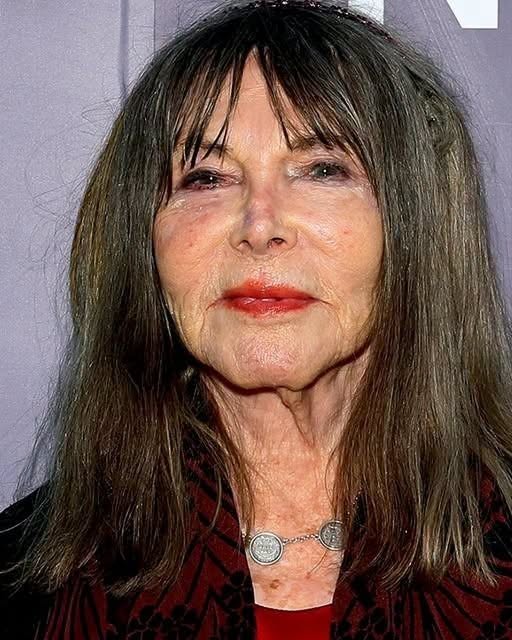
She was supposed to be untouchable. A face that stopped cameras, a talent that silenced rooms—and then, almost overnight, she vanished from the Hollywood spotlight. In the glittering brutality of 1950s Hollywood, Lee Grant’s fall wasn’t simply an accident of timing; it became a warning to others who dared to speak too openly. One speech, one funeral, one truth spoken too loudly, and the studios decided her fate. Her name was quietly pushed aside, her opportunities disappeared, and an actress who had seemed destined for greatness suddenly found herself shut out of the industry she had worked so hard to enter.
In the early 1950s, Lee Grant seemed destined to define a generation. Her breakthrough performance in *Detective Story* drew enormous attention, earning critical praise and an Academy Award nomination and convincing audiences that they were witnessing the arrival of a major new talent. She possessed the intensity, intelligence, and presence that could command a screen without needing to raise her voice. Yet Hollywood was changing around her, and beneath the glamour was an atmosphere of fear created by political investigations, accusations, and the growing pressure surrounding the House Un-American Activities Committee.
Then came the moment that altered everything. At the funeral of actor J. Edward Bromberg, Grant publicly connected his death to the pressure and torment surrounding HUAC investigations. Bromberg had been blacklisted after refusing to cooperate with the committee, and Grant’s decision to speak about what she believed had contributed to his suffering placed her directly against a system that demanded silence. In a town where careers could depend on staying on the right side of powerful institutions, her words carried consequences far beyond the funeral itself.
For twelve long years, Grant paid a devastating professional price for that moment of honesty. Roles disappeared, opportunities dried up, and the calls that had once connected her with producers and directors largely stopped. The industry that had celebrated her talent suddenly behaved as though she had become invisible. It was not simply the loss of individual jobs; it was the disappearance of an entire period of professional life. While other performers continued building careers, Grant was forced to endure years in which the future she had once expected seemed to have been taken away.
The blacklist changed the direction of her life, but it did not destroy her determination to work. During those years, she found other ways to remain connected to performance and eventually began rebuilding her career. Her path back was slow and difficult, requiring patience and resilience after more than a decade of professional exclusion. When opportunities finally returned, she approached them with the experience of someone who understood exactly how quickly fame could disappear.
Grant eventually reclaimed much of the recognition that had been denied to her. She returned to major film and television work, collaborated with celebrated directors, and ultimately won an Academy Award for Best Supporting Actress for *Shampoo* in 1976. She also established herself as a director and documentary filmmaker, demonstrating that the years she lost had not taken away her creativity or ambition. Her later achievements proved that the blacklist could delay her career, but it could not permanently erase her talent.
Yet even with those accomplishments, the lost years could never be returned. Twelve years is an enormous portion of a working actor’s life, particularly during an era when careers were built through momentum and constant visibility. The roles she might have played, the films she might have appeared in, and the opportunities that might have shaped her career existed only as possibilities. Success later in life could not completely compensate for everything that had been taken away.
Her story remains a powerful reminder of how fear can transform an entire industry. Hollywood’s blacklist was not only about actors losing jobs; it was about the pressure placed on people to choose between their careers and their principles. For Grant, speaking publicly about what she believed was an injustice came with a price that lasted more than a decade. Her experience shows how quickly admiration can turn into silence when powerful institutions decide someone has become inconvenient.
Today, Lee Grant’s legacy extends beyond the roles she eventually reclaimed. Her career represents both extraordinary artistic achievement and the personal cost of standing firm during one of Hollywood’s darkest periods. She survived the blacklist, rebuilt her reputation, won an Oscar, and created meaningful work long after the industry had attempted to close its doors. But the years lost can never be rewritten. Her story lingers as a quiet indictment of an era when truth was dangerous, silence was rewarded, and survival could demand a surrender that some people simply refused to make.