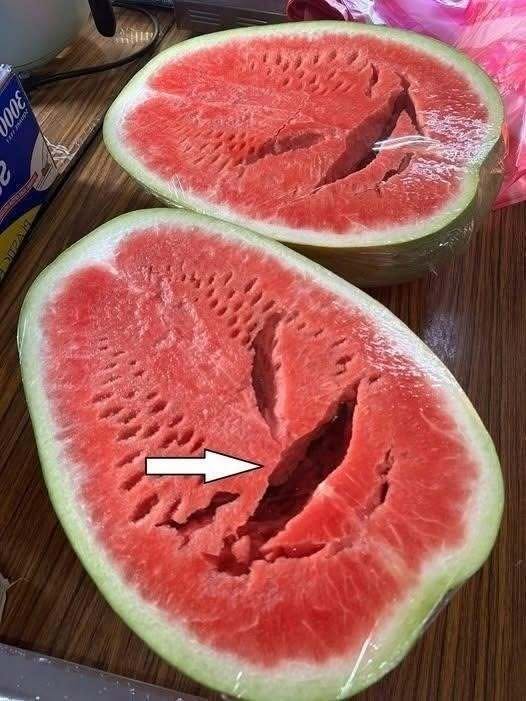
You bring home a large, ripe-looking watermelon, already imagining cold slices on a hot summer day. But the moment you cut it open, your excitement fades. Instead of smooth, juicy flesh, you find strange cracks, hollow spaces, and uneven fibers running through the center. Suddenly, a simple piece of fruit starts looking suspicious. Is it still safe to eat, or is it a sign that something went wrong during production?
Many people encounter this situation every year and immediately assume the worst. The truth, however, is usually far less alarming. Internal cracks inside a watermelon are often the result of natural growing conditions rather than dangerous contamination. Still, because most consumers are unfamiliar with these imperfections, seeing them can raise understandable concerns.
One of the most common causes is a condition known as “hollow heart.” This occurs when the fruit grows too quickly or experiences sudden environmental changes during development. Watermelons are highly sensitive to weather patterns. Long dry periods followed by heavy rainfall can cause the inner flesh to expand more rapidly than the outer rind, creating cracks and empty spaces inside the fruit. While these gaps may look unusual, they are generally harmless and simply reflect how the melon developed in the field.
Temperature fluctuations can produce similar effects. Rapid growth caused by favorable weather conditions may place stress on the fruit’s internal structure, leading to the formation of cavities or irregular textures. Although the appearance may not be perfect, these watermelons are usually safe to consume and often taste very similar to those without internal defects.
In recent years, discussions about farming practices have also contributed to consumer concerns. Some growers use plant growth regulators to improve crop size, appearance, or consistency. These products are subject to strict regulations in many countries and are monitored to ensure safety standards are met. Nevertheless, public skepticism surrounding modern agriculture often causes people to question any fruit that looks different from what they expect.
For most shoppers, the key issue is determining whether a watermelon is merely imperfect or genuinely spoiled. Fortunately, there are several clear warning signs. A watermelon that smells sour, fermented, or unpleasant should not be eaten. Likewise, dark brown areas, slimy patches, visible mold, or excessively mushy flesh indicate deterioration and should be treated as signs that the fruit has gone bad.
Texture is another important clue. While some fibrousness is normal in watermelons with hollow heart, an unusually soft or wet consistency can signal spoilage. When in doubt, it is always safer to discard questionable produce rather than risk consuming it.
Choosing a quality watermelon begins before you even cut it open. A good melon should feel heavy relative to its size, suggesting a high water content and proper development. The field spot—the area where the watermelon rested on the ground—can also reveal a great deal. A creamy yellow spot typically indicates that the fruit remained on the vine long enough to ripen naturally, while a pale white spot may suggest it was harvested too early.
The stem can provide additional clues. A dry, brown stem often signals maturity because it indicates the plant has completed its feeding cycle. In contrast, a green stem may suggest the fruit was picked before reaching full ripeness.
Finally, inspect the rind carefully. It should feel firm and solid, without soft spots, deep bruises, cracks, or signs of damage. Since the rind acts as the fruit’s protective barrier, maintaining its integrity helps preserve freshness and reduces the likelihood of spoilage.
In the end, most internal cracks found inside watermelons are nothing more than natural imperfections caused by growth conditions. They may affect appearance and texture, but they rarely pose a health risk. By paying attention to smell, texture, and visible signs of spoilage, consumers can confidently distinguish between a harmless cosmetic flaw and a fruit that truly belongs in the trash.