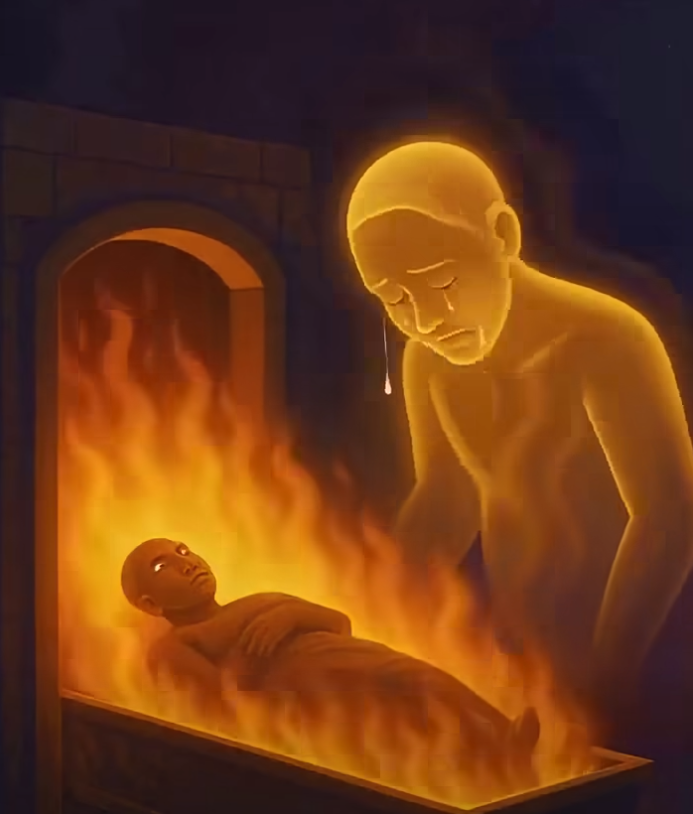
Could the choice you make for your body after death determine your spiritual fate for eternity? For generations, many Christians believed that burial was the only truly sacred option, but an ongoing debate is now challenging long-held assumptions and stirring intense discussion within churches around the world. If you have ever questioned whether cremation goes against God’s design, the reality may be more complex—and more surprising—than many people realize. The discussion touches on faith, tradition, and the meaning of resurrection in ways that continue to divide believers today.
In recent decades, cremation has become increasingly common throughout Western societies. Rising funeral expenses, limited cemetery space, and growing environmental concerns have all contributed to this dramatic shift. Many families now face difficult decisions, balancing religious customs with practical realities. For committed Christians, however, the issue often extends far beyond finances or convenience. It raises profound questions about the sacredness of the body, respect for religious traditions, and confidence in the promises of eternal life.
At the center of the debate is a simple but deeply significant question: Is cremation sinful? Those who favor traditional burial often point to biblical examples. Throughout the Old Testament, key figures of faith—including Abraham and Moses—were laid to rest through burial. This practice reflected more than cultural preference; it expressed a belief that the body was a sacred creation of God, intended one day to be restored through divine power. Because of this understanding, burial came to symbolize honor, reverence, and respect for the human form.
Many Christians also point to the burial of Jesus Christ as the strongest example supporting this tradition. After His crucifixion, He was placed in a tomb, establishing a pattern that influenced Christian practices for centuries. Burial became closely associated with the image of a seed being planted in the ground before emerging into new life. The Apostle Paul used this symbolism extensively when describing the resurrection, comparing death and rebirth to the cycle of planting and growth. Over time, this imagery strengthened the connection between burial and Christian hope in the resurrection.
Yet the biblical evidence is not as straightforward as some assume. A careful reading of Scripture reveals that there is no direct commandment explicitly forbidding cremation. While fire is often connected with judgment or extraordinary circumstances in various biblical accounts, the Bible never specifically declares cremation to be a sin. Because of this, many contemporary theologians maintain that although burial remains a respected and historic tradition, the method used to care for human remains ultimately falls within the realm of personal conviction rather than essential doctrine.
A major part of the discussion centers on the teaching that the human body is a temple of the Holy Spirit. Some opponents of cremation argue that burning the body may appear disrespectful or may suggest a weakened belief in bodily resurrection. They believe that preserving the body demonstrates honor for God’s creation and affirms confidence in future restoration. Others respond by emphasizing God’s unlimited power. They argue that whether a body returns to dust naturally over time or is reduced to ashes through fire, God remains fully capable of resurrecting it. The condition of earthly remains does not limit divine authority.
It is also important to understand the historical reasons behind Christianity’s preference for burial. In many ancient pagan cultures, cremation was sometimes associated with beliefs that denied any future significance of the body after death. Early Christians often chose burial as a visible declaration of their belief in resurrection and eternal life. Their practice distinguished them from surrounding cultures and reinforced their theological convictions. In the modern era, however, cremation is rarely chosen as a rejection of faith. More often, it reflects practical considerations rather than spiritual rebellion.
Today, the majority of Christian denominations teach that cremation does not affect salvation, the destiny of the soul, or the certainty of resurrection. The central focus of Christianity remains faith in God’s promise of eternal life rather than the physical preservation of human remains. Whether a person is buried in a cemetery or their ashes are placed in an urn, the hope of resurrection remains unchanged. Ultimately, many Christians conclude that the manner in which the body is laid to rest is far less important than the enduring promise of a transformed and eternal life beyond death, decay, and the limitations of the earthly world.