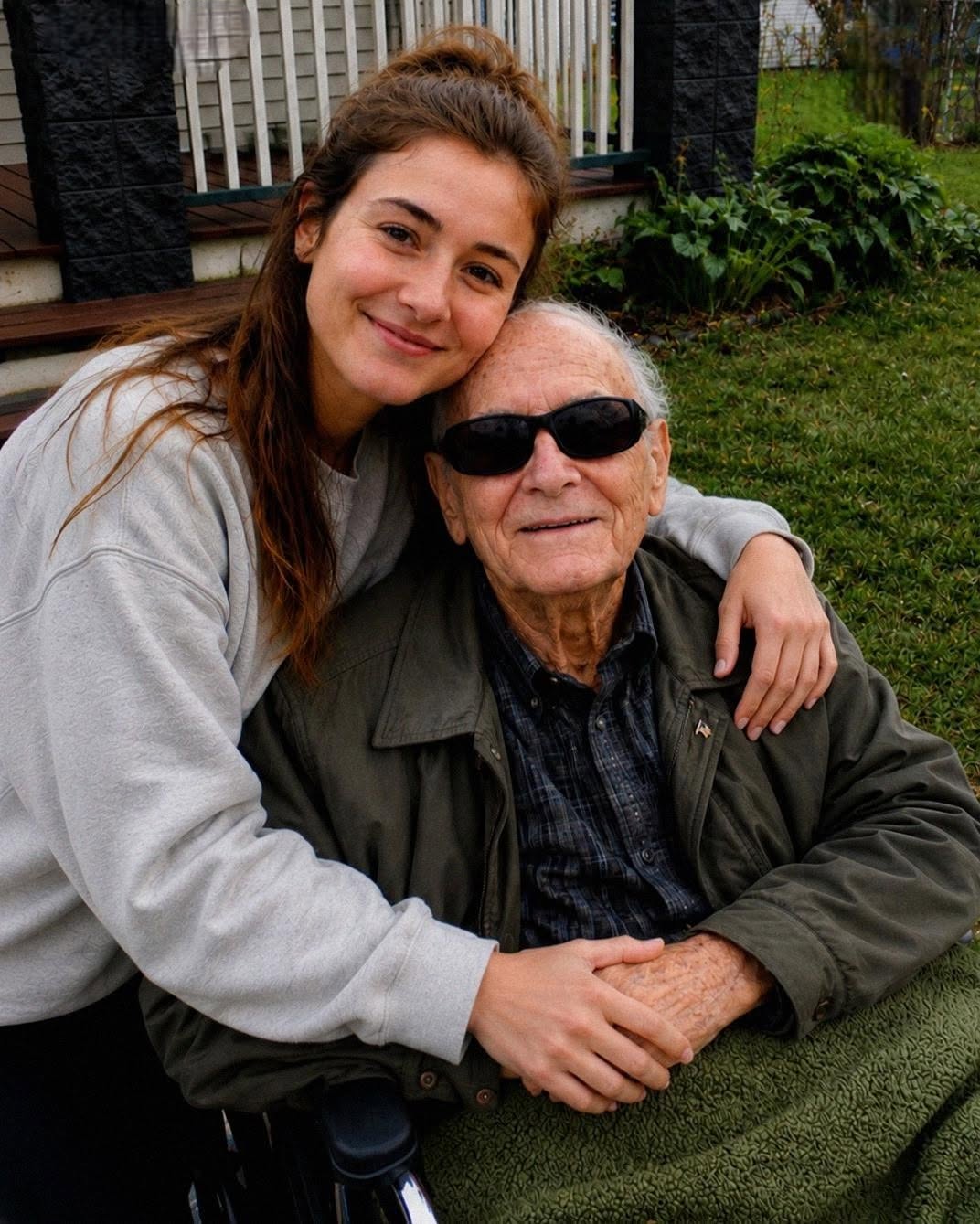
The advertisement looked ridiculous at first glance. Buried among hundreds of ordinary job listings was a request unlike anything I had ever seen. A wealthy family was offering a substantial amount of money to a young woman willing to pretend to be the long-lost granddaughter of an elderly blind veteran. It sounded dishonest, strange, and morally questionable. Under normal circumstances, I would have ignored it immediately. But my circumstances were far from normal.
At twenty-three years old, I was barely holding my life together. My days were divided between college classes, exhausting shifts at a local diner, and helping my mother care for my younger brother, Caleb. His medical condition required treatments we simply could not afford. Every month brought new bills, new prescriptions, and new fears. Our savings had disappeared long ago, and debt had become a permanent part of our lives.
When another expensive treatment bill arrived, reality left me with few options.
The job offered enough money to keep Caleb’s care going for several more weeks.
I convinced myself it was temporary.
Just acting.
Just pretending.
Nothing more.
A few days after submitting my application, I received a call from a woman named Margaret.
She invited me to meet her at her family estate.
The house itself felt frozen in another era. The furniture, paintings, and decorations seemed untouched by time. Margaret greeted me with a calm, professional attitude that revealed very little about what she was truly thinking.
She explained everything.
Her father, Walter, was eighty-two years old.
A decorated veteran.
Blind for many years.
And heartbroken.
Twelve years earlier, his granddaughter Vanessa had disappeared from the family after a devastating personal tragedy. Walter never stopped hoping she would return.
Margaret handed me a folder.
Inside were photographs, school records, childhood memories, favorite foods, family traditions, and countless personal details.
My assignment was simple.
Become Vanessa.
Spend Sundays with Walter.
Give him comfort during what remained of his life.
The arrangement felt wrong.
Every instinct told me to walk away.
Then I thought about Caleb.
I accepted.
The first visit was terrifying.
As I entered Walter’s home, my stomach twisted into knots.
I expected suspicion.
Questions.
Exposure.
Instead, when he heard my footsteps, his face brightened instantly.
“Vanessa?” he whispered.
The hope in his voice nearly broke me.
“You finally came back.”
I took his hand and introduced myself as the person I was pretending to be.
The lie felt heavy.
Painful.
But I continued.
That afternoon we talked about his military service, his late wife Eleanor, and memories from decades earlier.
When I left, Margaret handed me an envelope containing more money than I earned in weeks at the diner.
The cash paid for another round of Caleb’s treatment.
That should have made me feel relieved.
Instead, I felt guilty.
The arrangement continued.
Every Sunday became another performance.
I studied Vanessa’s history like an actress preparing for an important role.
I memorized family stories.
Learned names.
Practiced details.
But something unexpected happened.
Walter wasn’t what I imagined.
He wasn’t fragile.
He wasn’t naive.
He was intelligent, funny, thoughtful, and surprisingly perceptive.
He told stories about Eleanor that made me laugh and cry in the same conversation.
He shared lessons learned from war, loss, and decades of life.
The more time I spent with him, the harder it became to see him as a job.
Gradually, I stopped counting the hours.
I started looking forward to Sundays.
Meanwhile, Margaret’s behavior became increasingly suspicious.
She rarely asked about her father’s happiness.
Instead, she constantly questioned me about financial matters.
Trust funds.
Property deeds.
Investments.
Family assets.
It became obvious she was less interested in Walter than in what he might leave behind.
Her cousin Richard wasn’t much different.
He frequently tested my knowledge of family history, trying to catch me in mistakes.
Every visit felt like walking through a minefield.
One wrong answer could destroy everything.
Still, Walter always seemed calm.
Almost amused.
As if he understood far more than anyone realized.
The truth finally emerged one quiet afternoon.
We were sitting together in the garden.
Birds chirped nearby.
A gentle breeze moved through the flowers.
Without warning, Walter squeezed my hand.
“What’s your real name?” he asked.
My heart stopped.
For several seconds, I couldn’t speak.
Then I quietly answered.
“Taylor.”
I expected anger.
Disappointment.
Betrayal.
Instead, Walter smiled.
A warm, understanding smile.
“I thought so,” he said.
I stared at him.
“You knew?”
“From the first day.”
The words left me speechless.
Walter explained that he had recognized immediately that I wasn’t Vanessa.
But he also recognized something else.
Loneliness.
Struggle.
Fear.
He saw a young woman carrying burdens she shouldn’t have been forced to carry.
And rather than exposing me, he chose compassion.
“I didn’t need my granddaughter,” he admitted softly.
“I needed someone who cared enough to sit beside me.”
Tears filled my eyes.
For months I had been terrified of discovery.
Yet the person I was deceiving had known all along.
That afternoon changed everything.
I stopped pretending.
Walter stopped asking questions about Vanessa.
From that point forward, our relationship became real.
We talked about my life.
About Caleb.
About my mother.
About dreams I had abandoned because survival came first.
For the first time in years, I felt truly understood.
The following months became some of the most meaningful of my life.
We spent hours in his garden.
Played cards.
Shared stories.
Laughed.
Argued about books.
Discussed everything from history to family.
His attorney, Mr. Hollis, occasionally joined us, quietly observing our conversations.
At the time, I didn’t realize those moments mattered as much as they did.
Walter’s health gradually declined.
His energy faded.
Walking became difficult.
Some days he seemed exhausted before noon.
Margaret became increasingly controlling, attempting to limit visitors and manage every detail of his care.
Yet despite her efforts, Walter continued asking for me.
Not Vanessa.
Me.
Taylor.
I remained by his side through hospital visits, difficult days, and painful setbacks.
When his final days arrived, I sat beside his bed holding his hand.
The room was quiet.
Peaceful.
For the first time since I met him, there were no lies between us.
Only gratitude.
Only love.
As his breathing slowed, I realized something I never expected.
I had answered a strange advertisement hoping to save my brother.
Instead, I had found a grandfather.
And when Walter finally closed his eyes for the last time, I wasn’t losing a client.
I was saying goodbye to family.