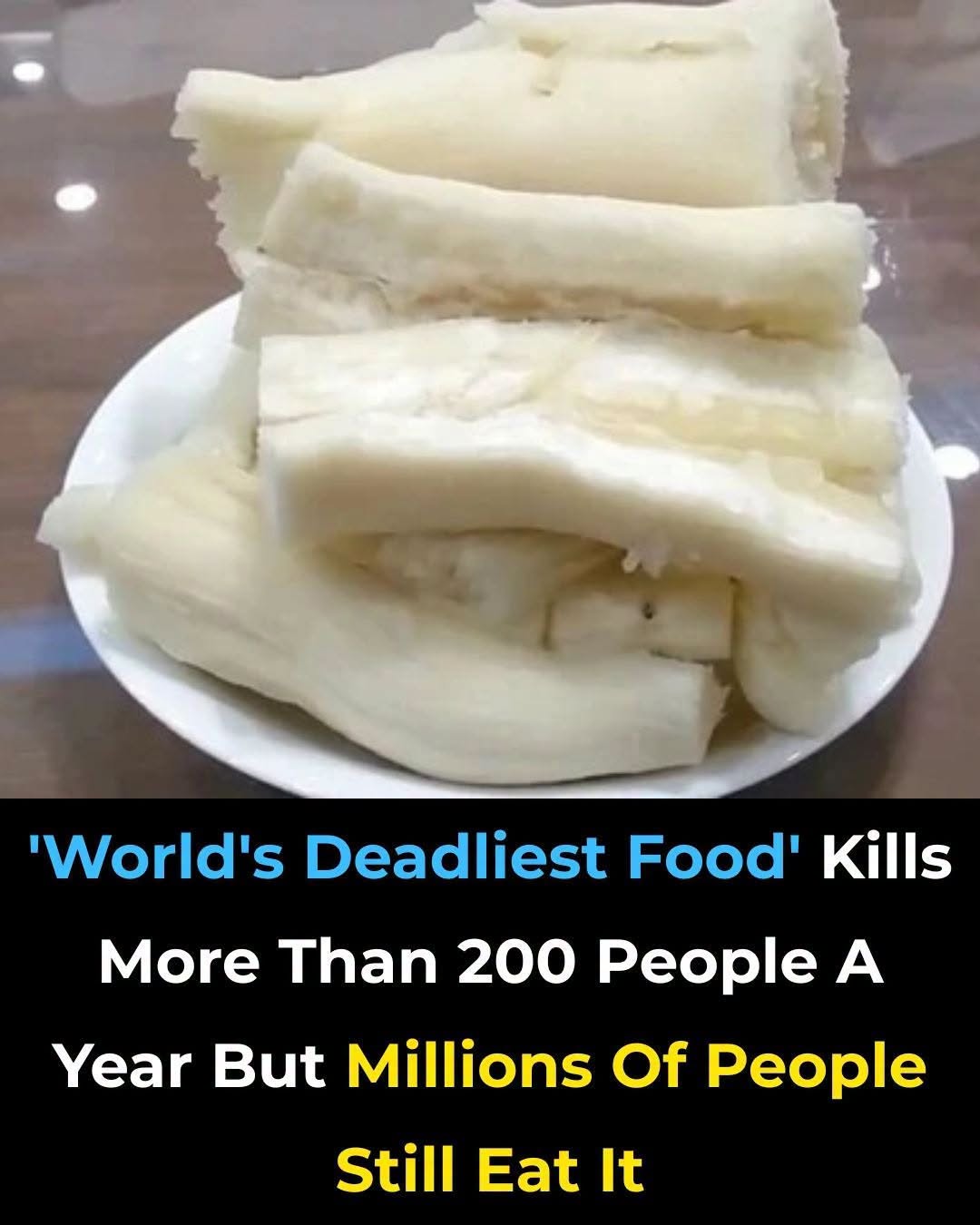
It may look like nothing more than an ordinary root vegetable resting on a grocery shelf or tucked away in a kitchen pantry, but hidden beneath its rough exterior is a naturally occurring defense system that has earned worldwide attention from food safety experts. Every year, improper preparation of this common staple contributes to serious poisonings and preventable deaths in parts of the world where it serves as a primary source of nutrition. Millions of people consume it safely every single day, yet when handled incorrectly, it can become surprisingly dangerous. This isn’t an exotic plant found deep in remote rainforests—it is cassava, a root crop that feeds nearly half a billion people across Africa, Asia, and South America. Its story is one of survival, science, and tradition, proving that even the most familiar foods deserve respect and proper preparation.
Cassava has long been considered one of the world’s most important food crops.
Its ability to grow in poor soil, survive prolonged droughts, and produce large harvests makes it invaluable in regions where other crops struggle to survive.
For countless families, cassava is not simply another vegetable—it is the foundation of daily nutrition and food security.
Its versatility allows it to be boiled, fried, baked, fermented, ground into flour, or processed into countless traditional dishes.
Yet behind these benefits lies a remarkable natural defense mechanism.
Like many plants, cassava evolved ways to protect itself from insects and animals.
Its leaves, stems, and roots naturally contain compounds known as cyanogenic glucosides.
When the plant is cut, crushed, chewed, or otherwise damaged, these compounds break down and release hydrogen cyanide—a highly toxic chemical that interferes with the body’s ability to use oxygen at the cellular level.
This protective system helps discourage animals from eating the plant in the wild.
For humans, however, it creates an important food safety challenge.
Fortunately, generations of experience have taught communities how to safely prepare cassava before it reaches the dinner table.
Problems arise only when those preparation methods are skipped, shortened, or performed incorrectly.
Health experts, including the World Health Organization, have documented cases of cyanide poisoning linked to improperly processed cassava, particularly during periods of famine, conflict, or food shortages when people may lack the time, resources, or knowledge to prepare it safely.
In desperate situations, individuals sometimes consume bitter varieties of cassava without adequate soaking or processing.
The consequences can be severe.
Acute cyanide poisoning may cause dizziness, vomiting, breathing difficulties, seizures, and, in extreme cases, death.
Repeated exposure to lower levels of cyanide can also contribute to long-term health problems.
One of the most devastating is a neurological condition known as **konzo**, which causes sudden, irreversible weakness and paralysis of the legs.
Konzo primarily affects vulnerable communities where bitter cassava forms the overwhelming majority of the diet and protein intake is extremely limited.
Protein plays an important role because certain sulfur-containing amino acids help the body detoxify small amounts of cyanide.
Without adequate nutrition, that natural protective process becomes far less effective.
This is why cassava safety is closely connected not only to food preparation but also to overall nutrition.
Traditional preparation methods have been refined over centuries.
These techniques are remarkably effective when followed correctly.
Fresh cassava is typically peeled to remove much of the outer layer where toxin concentrations may be higher.
The roots are then washed thoroughly.
Depending on the variety, they may be grated, soaked in water for one or more days, fermented, pressed, dried, and finally cooked completely before consumption.
Each step helps reduce cyanide levels.
Together, they transform a potentially hazardous root into a safe, nutritious source of carbohydrates enjoyed by millions every day.
In many communities, these methods have been passed from one generation to the next.
They represent not only culinary tradition but essential public health knowledge.
Today, agricultural researchers continue working to improve cassava safety.
Scientists have developed sweeter cassava varieties that naturally contain much lower concentrations of cyanogenic compounds.
Public health organizations also provide education programs teaching proper preparation techniques, particularly in rural areas where cassava remains a dietary staple.
These efforts have significantly reduced poisoning risks in many regions.
The story of cassava also reminds us that many foods require careful preparation before becoming safe to eat.
Kidney beans contain natural toxins that are destroyed through proper cooking.
Certain mushrooms can be poisonous if misidentified.
Some fish contain toxins unless carefully prepared.
Cassava belongs to this broader group of foods that demand knowledge and respect rather than fear.
For consumers purchasing commercially prepared cassava flour, tapioca products, or frozen cassava from reputable retailers, the risk is generally very low because these products undergo regulated processing before reaching the marketplace.
The greatest dangers occur where fresh bitter cassava is prepared without adequate knowledge or under circumstances that force people to skip important safety steps.
Rather than being viewed as an inherently “deadly” food, cassava is better understood as a remarkable crop that requires proper handling.
Its ability to nourish hundreds of millions of people demonstrates its enormous value.
Its potential dangers highlight the importance of education, traditional knowledge, and safe food preparation practices.
The next time you encounter cassava on a menu or in a grocery store, remember that its journey from field to plate is one of careful science and generations of accumulated wisdom. What appears to be a simple root has supported civilizations for centuries because people learned how to respect its natural chemistry. In the end, cassava is not a symbol of danger—it is a reminder that knowledge remains one of the most powerful ingredients in every safe meal.