Many people assume that nighttime heartburn is simply an unavoidable consequence of eating the wrong foods, but your sleeping position can also play an important role in managing acid reflux. While changing the way you sleep will not cure the underlying condition, medical research suggests that certain positions may reduce the likelihood of stomach acid flowing back into the esophagus, helping many people sleep more comfortably.
Acid reflux occurs when stomach contents travel backward through the lower esophageal sphincter, the muscular valve that normally keeps acid inside the stomach. During the day, gravity naturally helps keep stomach contents where they belong. At night, however, lying flat removes that advantage, making it easier for acid to reach the esophagus in some people. This can lead to symptoms such as heartburn, a sour taste in the mouth, chronic coughing, throat irritation, hoarseness, or interrupted sleep.
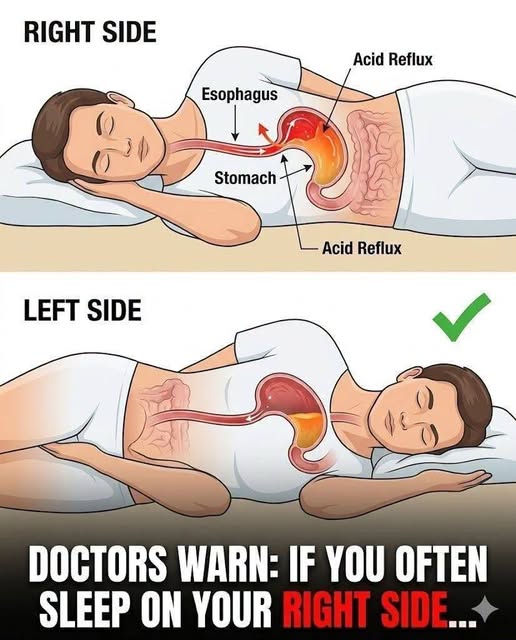
The position of the stomach within the body helps explain why sleeping posture matters. Because the stomach sits slightly toward the left side of the abdomen, sleeping on the right side may allow stomach acid to remain closer to the connection between the stomach and the esophagus. For some individuals, this position can increase the likelihood of reflux during the night, especially after a large evening meal.
Many gastroenterologists recommend sleeping on the left side for people who experience nighttime acid reflux. In this position, the junction between the stomach and the esophagus sits higher than much of the stomach’s contents, allowing gravity to help reduce the movement of acid into the esophagus. Although sleeping on the left side is not a cure, numerous studies have found that it can decrease both the frequency and duration of nighttime reflux episodes for many patients.
Sleeping position, however, is only one part of a comprehensive approach to managing reflux symptoms. Eating large meals shortly before bedtime places additional pressure on the stomach and increases the chance that acid will flow upward while lying down. Most healthcare professionals recommend finishing your final meal at least two to three hours before going to bed, giving your stomach time to begin emptying before you lie down.
Elevating the head of the bed can also provide meaningful relief. Rather than simply adding extra pillows, which may bend the neck without raising the upper body, many experts suggest using a wedge pillow or elevating the head of the bed by about six to eight inches. This gentle incline helps gravity keep stomach contents where they belong throughout the night.
Lifestyle habits also influence reflux symptoms. Maintaining a healthy body weight, limiting alcohol consumption, avoiding smoking, and reducing foods that trigger symptoms can all contribute to better digestive health. Common triggers include spicy foods, chocolate, caffeine, peppermint, citrus fruits, tomato-based products, and fatty meals, although individual triggers vary from person to person. Keeping a food and symptom diary can help identify which foods consistently worsen your symptoms.
If heartburn occurs frequently, becomes severe, or is accompanied by difficulty swallowing, unexplained weight loss, vomiting blood, black stools, or persistent chest pain, medical evaluation is important. Chronic acid reflux can sometimes lead to complications such as inflammation of the esophagus or other digestive conditions that require professional treatment. Persistent symptoms should always be discussed with a healthcare provider to determine the most appropriate treatment plan.
Making a few simple adjustments to your bedtime routine may significantly improve your comfort and sleep quality. Choosing a left-side sleeping position, avoiding late-night meals, elevating your upper body, and identifying personal food triggers can all work together to reduce nighttime reflux. While these changes may seem small, they can make a meaningful difference for people who regularly struggle with heartburn and acid reflux after dark.