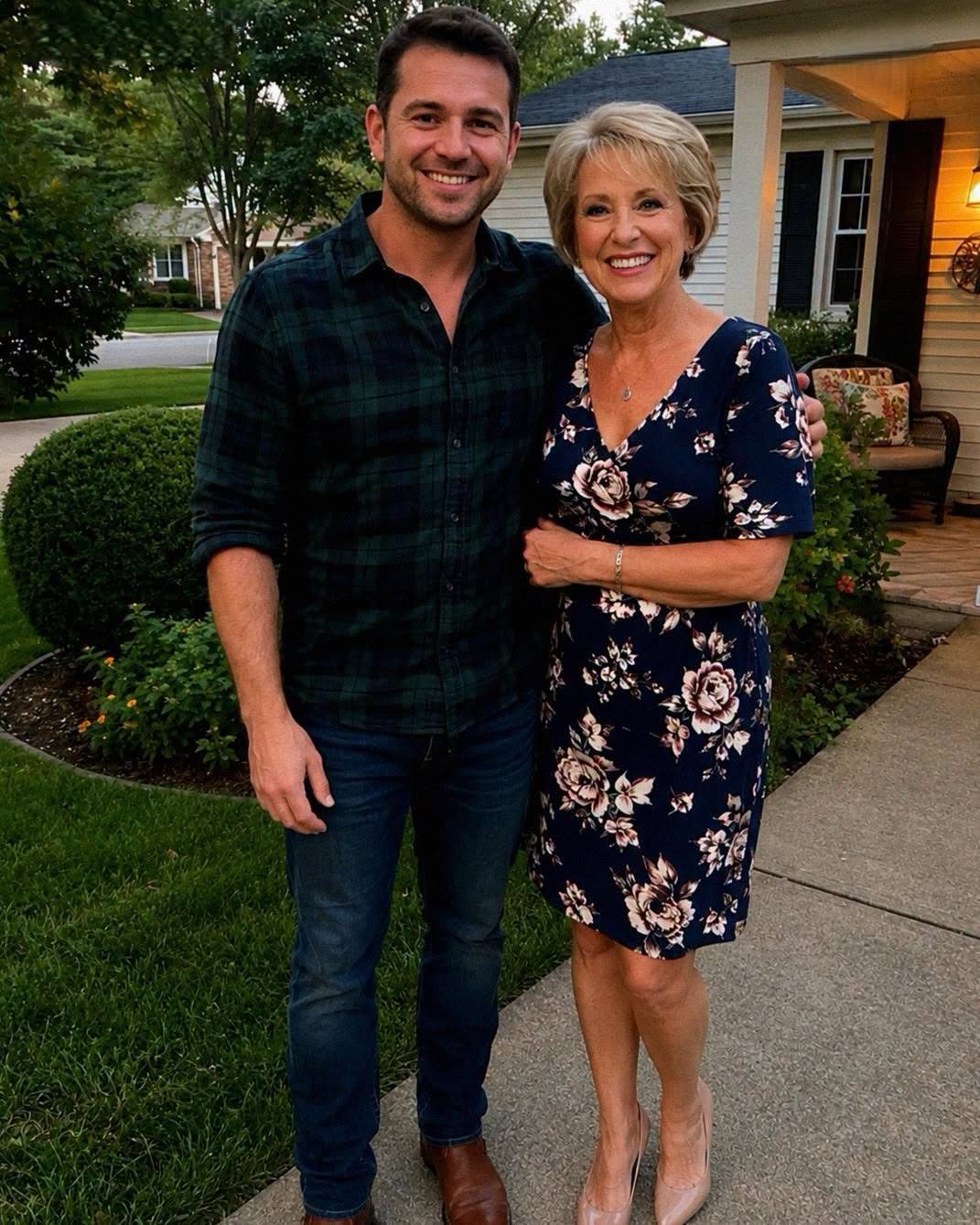
When I spotted my grieving, widowed mother laughing uncontrollably and stepping into a car with Patrick—my childhood friend from four houses down—my protective instincts instantly spirated into dark suspicion. Three agonizing years after losing my father, our family home had remained a silent tomb of dust and sorrow. I visited weekly, bringing casseroles she barely touched while desperately trying to prove I hadn’t failed my late dad. But watching her dress up in vintage anniversary clothes every Thursday night for secret outings with a thirty-six-year-old man shattered my peace. Convinced of a scandalous betrayal, I followed them across town, only to uncover a breathtaking truth that left me sinking to the floor in tears.
Ever since my father Thomas passed away, the house on Willow Lane had lost its music. My mother Eleanor moved through the rooms like a ghost, her smiles fleeting and hollow. Patrick, the boy who used to steal cookies from our counter, had grown into a quiet, reliable man who mowed her lawn and fixed her porch light. I deeply appreciated his kindness, telling myself he was the only reason she hadn’t completely disappeared. But my perspective warped the Thursday I caught her sneaking out, looking happier and more alive than she had in years.
When I pressed her about where they went, she offered a vague, defensive excuse about dancing in the park and fiercely demanded that I stay away. Panic and paranoia took over. I called my brother Marcus, whose nervous silence only fueled my darkest fears. Convinced that Patrick was exploiting her vulnerability or hiding an illicit affair, I staked out her house the following Thursday. When Patrick’s car pulled up, I intercepted him in the street, my voice shaking with anger as I accused him of manipulating a grieving widow.
Patrick looked at me with deep regret, his knuckles turning white on the steering wheel, but he refused to break his promise to my mother. Frustrated and desperate for answers, I tailed his car from a safe distance across town. They stopped outside a small blue house. An elderly woman opened the door, and my mother walked straight into her arms. As I watched from my car, a strange chill ran down my spine. Walking up the path, I froze when the elderly woman turned toward me. She had my mother’s exact eyes.
Inside the cozy living room, the heavy truth finally unraveled. Months earlier, while sorting through my grandmother’s attic, Patrick had helped my mother uncover an old, hidden letter. It was written decades ago by Margaret—the biological mother who had been forced to give my mother up at seventeen, only to have her own adoptive mother hide the correspondence away. Terrified of losing me or dredging up a painful past, my mother had kept the reunion a secret, using Thursday evenings to build a relationship with the woman who had prayed for her every birthday.
Patrick hadn’t been taking her dancing; he had been driving her to the grandmother I never knew we had, shielding her from my judgment while helping her heal. Standing in that quiet room, my anger dissolved into profound shame. I knelt beside Margaret’s chair, introduced myself as her granddaughter, and brought out an old family photo album to bridge the decades of lost time. The following Thursday, I didn’t spy from across the street. Instead, I stood on the porch with a home-cooked meal, and when Patrick pulled into the driveway, I climbed into the back seat, ready to join them as the music finally returned to our lives.