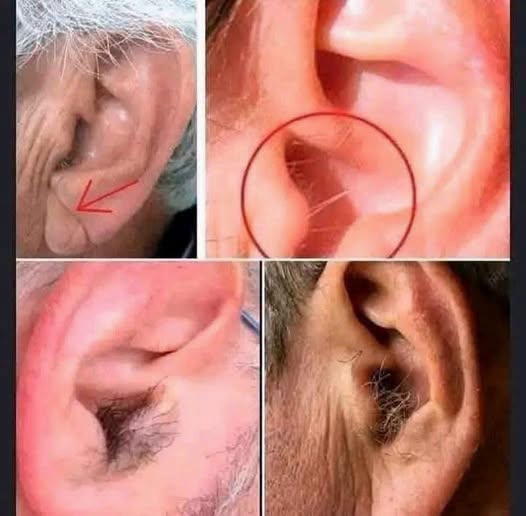
One morning, you catch a glimpse of yourself in the mirror and notice something completely unexpected—a thick, dark hair sticking out of your ear. For a split second, your mind races. Is something wrong? Is it a warning sign that your body is changing in ways you never imagined? Most of us spend years paying attention to our hairline, beard, or wrinkles, yet almost no one prepares us for this surprising part of getting older. The good news is that this unusual discovery is far more common than most people realize, and in the overwhelming majority of cases, it has nothing to do with serious illness.
For many adults, discovering ear hair for the first time comes as an unpleasant surprise. It often appears later in life, usually after middle age, and can trigger unnecessary concern or embarrassment. In reality, this change is simply another stage of the body’s natural aging process. As the years pass, the balance of hormones gradually shifts, causing different hair follicles to respond in different ways. While hair on the scalp may become thinner, follicles in areas such as the ears and nose can become increasingly active.
The reason behind this change lies largely in genetics and hormones. Throughout life, hair follicles remain sensitive to hormones known as androgens, including testosterone. As we age, certain follicles—particularly those around the ears and nose—become more responsive to these hormones. Fine, almost invisible hairs can gradually transform into thicker, darker terminal hairs that are much easier to notice. This process happens slowly over many years and varies from one individual to another depending on inherited traits.
Although ear hair is far more noticeable in men, women can experience similar changes as well, especially after menopause when estrogen levels naturally decline. Every person’s body follows its own genetic blueprint, determining where hair grows, how coarse it becomes, and how quickly these changes occur. Rather than indicating poor health, ear hair simply reflects the unique biological characteristics passed down through generations.
Many people assume ear hair serves no useful function, but it actually plays an important protective role. Together with earwax, these small hairs help prevent dust, dirt, tiny insects, and other particles from entering the ear canal. Acting as one of the body’s natural defense mechanisms, they help keep the delicate structures of the inner ear cleaner and better protected. While modern beauty standards may view visible ear hair as undesirable, its original purpose remains surprisingly practical.
For those who prefer to remove or trim ear hair, safety should always come first. Because the ear canal is extremely sensitive, experts recommend using specially designed electric ear trimmers or rounded-tip grooming scissors. Pulling hairs out with tweezers may increase the risk of irritation, ingrown hairs, or minor infections. Likewise, inserting sharp objects deep into the ear should always be avoided, as accidental injury to the ear canal or eardrum can occur much more easily than many people realize.
In the end, noticing ear hair is simply another reminder that the body continues changing throughout life. It is not a warning sign of disease or a reason to panic. Instead, it reflects the remarkable way our bodies adapt over time. Whether you choose to trim it or simply ignore it, a few unexpected hairs are perfectly normal. They are just another small chapter in the lifelong story of aging—a natural process shared by millions of people around the world. Rather than fearing these changes, understanding the science behind them makes them far less mysterious and far easier to accept.