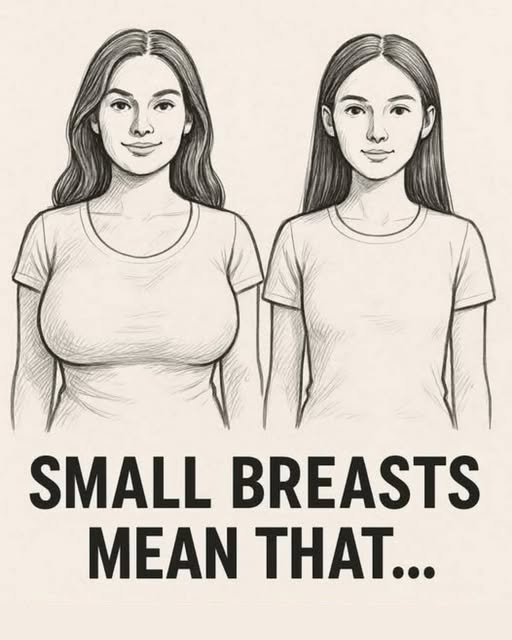
Get ready to rethink one of the most common beliefs about the human body. For years, countless myths have suggested that a woman’s physical appearance can reveal everything about her hormones and reproductive health. Many people assume that smaller breasts automatically indicate low estrogen levels, while larger breasts are often viewed as proof of strong hormonal balance or fertility. However, medical experts say these long-standing assumptions are inaccurate. The relationship between hormones and breast size is far more complicated than these popular misconceptions suggest.
For decades, many women have questioned whether their breast size reflects their hormonal health. One of the most widespread myths claims that women with smaller breasts have lower estrogen, while women with larger breasts naturally produce more of the hormone. According to endocrinologists and other medical professionals, this belief has no scientific basis. Breast size is influenced by many different biological factors, with hormones representing only one part of a much larger picture.
To understand why this misconception continues, it helps to look at how breast development actually occurs. During puberty, hormones such as estrogen play an essential role in stimulating the growth of breast tissue, while progesterone supports additional development and prepares the body for future reproductive functions. Once breast development is complete, however, breast size is no longer a reliable indicator of a woman’s current hormone levels. Two women with very different breast sizes can have virtually identical hormone profiles and equally healthy reproductive systems.
If hormones are not the primary reason for differences in breast size, what is? Genetics is one of the biggest determining factors. A woman’s family history often provides the strongest indication of her natural breast size. If close female relatives have similar body characteristics, genetics is likely the main reason. In addition, body fat percentage has a significant influence because breasts contain a large amount of fatty tissue. As body weight naturally changes over time, breast size may also increase or decrease without any meaningful change in hormone production.
Several other factors can also affect the appearance and feel of the breasts throughout life. Natural aging, pregnancy, breastfeeding, menopause, and routine hormonal fluctuations during the menstrual cycle all contribute to temporary or long-term changes. Many women notice increased fullness, tenderness, or mild swelling before their menstrual period due to normal hormonal shifts. These changes are expected and should not automatically be interpreted as signs of a hormonal disorder or permanent changes in breast size.
Because breast size naturally changes during different stages of life, healthcare professionals caution against using it as a measure of hormonal health. Hormonal imbalances typically involve a combination of symptoms rather than changes in breast size alone. Warning signs that may deserve medical attention include irregular or missed menstrual periods, persistent breast pain without an obvious cause, nipple discharge unrelated to pregnancy or breastfeeding, excessive facial or body hair growth, severe acne that develops in adulthood, unexpected hot flashes, or ongoing difficulty becoming pregnant.
Medical experts emphasize that the most accurate way to evaluate hormone health is through a proper medical assessment rather than relying on physical appearance. Blood tests, a review of symptoms, and a healthcare provider’s evaluation can determine whether hormone levels are within a normal range. Every woman’s body develops differently, and breast size alone does not provide meaningful information about fertility, estrogen levels, or overall endocrine health. Understanding these facts can help replace outdated myths with evidence-based information and encourage women to focus on their overall health rather than misconceptions about body shape.