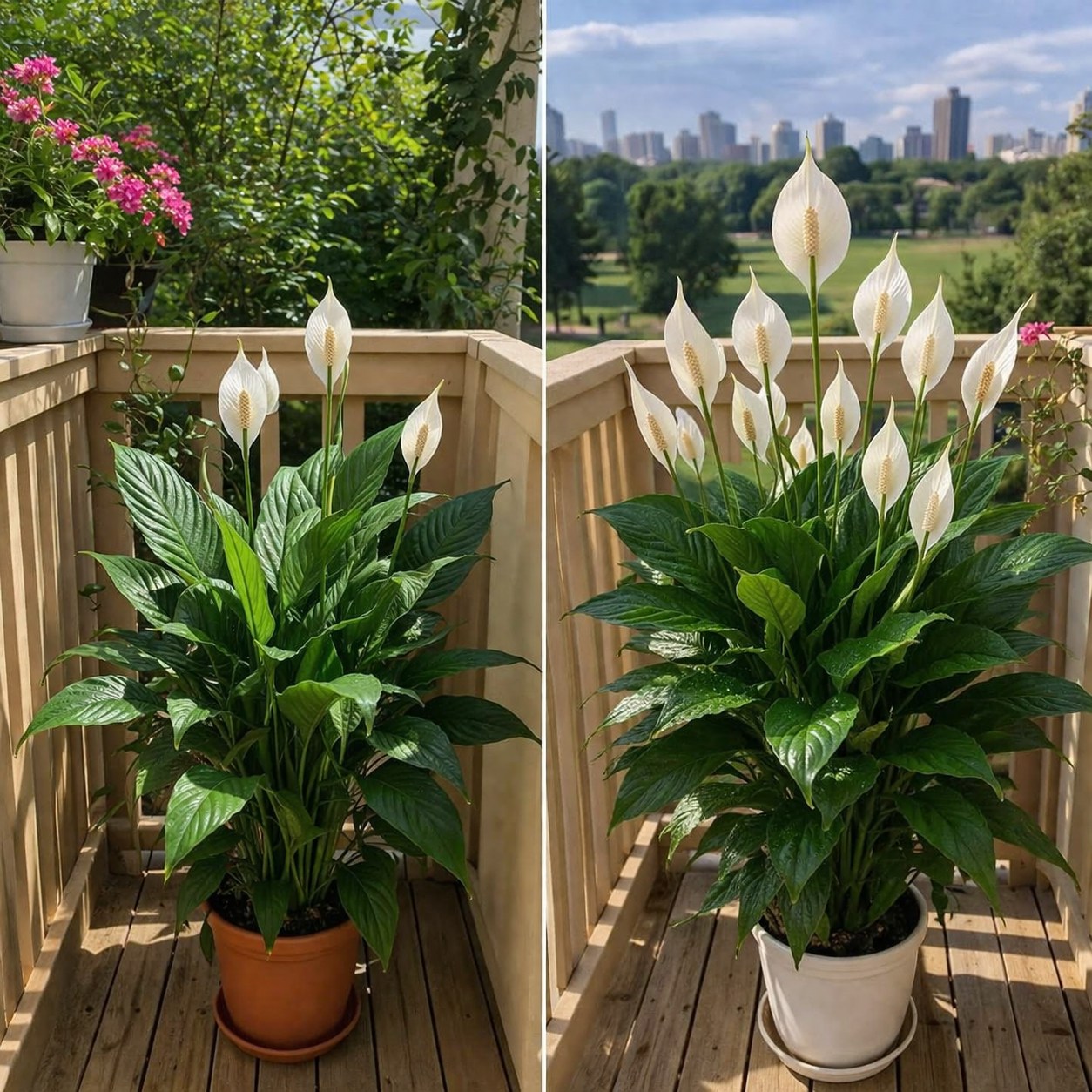
Few houseplants create the same calm, elegant feeling as a healthy Peace Lily. With their glossy dark-green leaves and soft white blooms, they seem almost effortless when thriving indoors. Yet many plant owners quickly discover that getting a Peace Lily to bloom consistently can feel surprisingly difficult. One plant bursts with flowers while another produces only leaves year after year, leaving people wondering what secret they are missing.
The truth is that Peace Lilies respond less to “miracle tricks” and more to steady, balanced care over time.
A blooming Peace Lily is usually a sign that several conditions are working together properly: light, moisture, drainage, humidity, temperature, and gentle feeding. No single shortcut instantly forces blooms. Instead, the plant gradually rewards stability and healthy growth with flowers when it feels comfortable enough to enter an active blooming phase.
That is why patience matters so much with indoor plants.
Some growers use diluted rice water as a mild supplemental treatment, especially during active growing periods. The idea is simple and inexpensive. Plain rice is blended or rinsed in water until the liquid becomes cloudy, then carefully strained to remove every solid particle. What remains is a lightly starchy solution some plant enthusiasts use occasionally while watering.
The method is popular because rice water may contain trace nutrients and organic compounds that can support soil activity and leaf health when used carefully. However, moderation is critical. Too much can create odor, encourage mold, or upset the balance of the soil. Peace Lilies are sensitive plants, and overfeeding often causes more harm than neglect.
If someone chooses to try rice water, it should be used lightly — only enough to moisten the soil without leaving it soggy. Most growers who use it successfully treat it as an occasional supplement rather than a primary fertilizer. Once or twice a week during active growth periods is usually more than enough, especially for younger or recently repotted plants adjusting to a new environment.
Still, the real foundation of blooming has much more to do with environment than supplements.
Light placement is especially important. Peace Lily thrives in bright, indirect light. Many people mistakenly place them in dark corners because Peace Lilies tolerate low light better than some houseplants. While the plant may survive there, blooming often becomes rare or stops completely. A spot near a bright window with filtered light usually produces stronger growth and more flowers over time.
Direct sunlight, however, can scorch the leaves quickly.
The balance Peace Lilies prefer is soft brightness rather than intense exposure. Morning light filtered through curtains often works beautifully. When lighting is correct, the leaves remain deep green and upright rather than pale, stretched, or burned at the edges.
Watering habits matter just as much.
Peace Lilies enjoy evenly moist soil but dislike sitting in waterlogged conditions. Overwatering is one of the most common reasons they decline. Good drainage is essential because constantly soaked roots can rot silently beneath healthy-looking leaves. At the same time, letting the plant dry completely for long periods stresses it and weakens blooming potential.
One of the charming things about Peace Lilies is how clearly they communicate thirst.
Their leaves often droop dramatically when water is needed, almost like the plant is politely asking for attention. Usually, a proper watering restores the leaves within hours. While occasional drooping is normal, constant cycles of severe drying and soaking can exhaust the plant over time.
Humidity also plays a role many people overlook.
Because Peace Lilies originate from tropical environments, they appreciate moderate humidity indoors. Dry indoor heating or air conditioning can make leaf tips turn brown and crispy. Some owners improve conditions simply by grouping plants together, using pebble trays with water nearby, or occasionally misting the leaves lightly.
Another factor affecting blooms is age and growth stage.
Young plants sometimes focus primarily on leaf development before flowering heavily. Older plants that have stopped blooming may become root-bound or depleted of nutrients. Repotting every couple of years into fresh, well-draining soil can help revitalize growth. Gentle fertilizers designed for houseplants can also support blooming more predictably than homemade supplements alone.
Yet even with perfect care, Peace Lilies still operate on their own rhythm.
They are not machines responding instantly to inputs. Indoor plants adjust slowly to seasonal changes, room temperature shifts, and light cycles. Some years produce abundant blooms; other periods focus more heavily on foliage. The healthiest approach is often consistency rather than constant experimentation.
That is what makes a thriving Peace Lily feel rewarding.
Its beauty comes from accumulated care — the small repeated habits of proper watering, thoughtful placement, occasional feeding, and patience. Over time, those steady conditions create the environment the plant needs to flourish naturally.
And when the white blooms finally rise above the dark green leaves, they feel less like a product of tricks or shortcuts and more like quiet proof that calm, attentive care still works best.