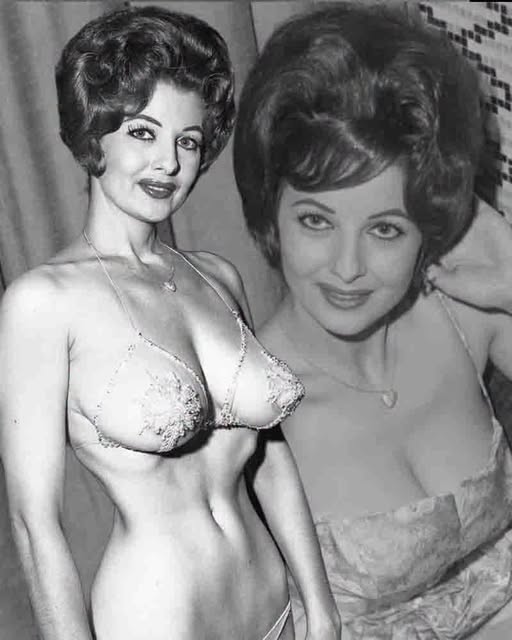
Tempest Storm was born Annie Blanche Banks, and her journey to becoming one of the most famous burlesque performers of the twentieth century began far from the bright lights of the stage. Her early life was marked by poverty, instability, and painful experiences that forced her to grow up quickly. Long before audiences knew her as Tempest Storm, she was a young woman searching for independence, security, and a chance to escape the circumstances in which she had been raised.
By her teenage years, she had already experienced two marriages and had begun making decisions that would take her far from home. Determined to build a different future, she eventually headed to California, where the entertainment industry offered opportunities that were difficult to imagine in the world she had left behind.
It was there that a casting agent helped give her a new name: Tempest Storm. The name was dramatic, memorable, and perfectly suited to the striking performer she would become. With her glamorous appearance, elaborate costumes, carefully choreographed movements, and commanding stage presence, she quickly began attracting attention in the world of burlesque.
But Storm was never simply another performer wearing beautiful costumes. She understood how to create an atmosphere, build anticipation, and hold an audience’s attention. Her performances combined glamour, confidence, theatricality, and a strong sense of personal identity. At a time when burlesque was often dismissed by mainstream society, she helped turn it into a form of entertainment that demanded attention and personality.
### The Rise of a Burlesque Superstar
During the 1950s, Tempest Storm’s popularity grew dramatically. She became one of the most recognizable names in American burlesque, performing for audiences who came specifically to see her. Her image appeared in promotional material, photographs, and entertainment publications, helping establish her as a major attraction.
Her success came during a period when burlesque performers occupied an unusual place in American popular culture. They were celebrated by devoted audiences while often facing criticism from more conservative sections of society. The entertainment industry could make a performer famous, but that fame did not necessarily bring respect or acceptance.
Storm understood how to work within that contradiction. She cultivated a glamorous public image and developed a reputation for confidence and independence. Her costumes became part of her identity, and her performances were designed to leave a lasting impression.
Her fame also brought her into contact with well-known entertainers and personalities. Stories about her relationships, glamorous lifestyle, and extraordinary figure helped make her a subject of public fascination. One frequently repeated piece of burlesque lore involved claims that her famous figure had been insured, although such stories should be treated cautiously unless supported by reliable documentation.
She also appeared in films connected to the burlesque world, including productions that later developed cult followings. These appearances helped preserve her image beyond the theaters where she performed and introduced her to audiences who might never have seen her live.
### A Marriage That Challenged the Rules of the Time
One of the most significant chapters of Storm’s personal life involved her marriage to Herb Jeffries, a celebrated singer and entertainer who was also known for his work in western films. Their relationship became particularly controversial because Jeffries was Black and Storm was white.
In the United States during that period, interracial relationships and marriages faced enormous prejudice. In some states, laws explicitly prohibited interracial marriage, while social discrimination could follow couples even where their marriages were legally recognized.
Their marriage therefore carried consequences that extended beyond the private lives of two entertainers. It challenged racial attitudes that were deeply embedded in American society. The couple faced public criticism and hostility, and the controversy reportedly affected Storm’s professional opportunities.
For a performer whose career depended on public appearances, bookings, and audience acceptance, such backlash could be damaging. Yet Storm did not allow the reaction to define her entire life. Her relationship with Jeffries became part of a larger story about the personal costs of challenging the expectations of the time.
Their marriage did not last forever, but its place in her biography remains important. It reveals a woman who made personal choices in an era when society often expected women, particularly women in entertainment, to remain within narrow boundaries.
### Refusing to Disappear
As the years passed, the entertainment industry changed. Burlesque experienced periods of decline and revival, and new forms of popular entertainment competed for audiences. Many performers from Storm’s generation eventually retired, while others found that the public had moved on to younger stars.
Storm, however, maintained a connection to the stage for decades. She continued performing well beyond the age when most people expected entertainers to step away from the spotlight. Even in her later years, she remained associated with the confidence and glamour that had made her famous.
Her longevity was remarkable. Performing into her eighties, she demonstrated that her identity was not entirely dependent on youth. She had built a career around personality, presence, and the ability to connect with an audience, qualities that did not simply disappear with age.
She also became a link to an earlier period of American entertainment history. For younger generations discovering classic burlesque, her story offered a glimpse into a world of traveling performers, theatrical costumes, nightclub stages, and a culture that existed between mainstream acceptance and social disapproval.
### More Than a Famous Stage Name
Tempest Storm’s life was filled with contrasts. She rose from a difficult childhood to become an internationally recognized entertainer. She transformed herself from Annie Blanche Banks into a name that audiences remembered. She experienced fame and controversy, made personal decisions that challenged social expectations, and continued working long after many of her contemporaries had left the stage.
Her story is not simply about glamour or scandal. It is also about reinvention and determination. She built a life in an industry that could be demanding and unforgiving, while navigating the judgments directed at women who chose unconventional careers.
When people remember Tempest Storm today, they often recall the costumes, the photographs, the dramatic stage persona, and the stories surrounding her celebrity. But behind that carefully constructed image was a woman who had spent much of her early life trying to find a way forward.
She refused to let her difficult beginnings determine her future, and she refused to disappear when the spotlight began moving elsewhere.
For decades, Tempest Storm remained a symbol of burlesque’s golden age: glamorous, outspoken, resilient, and impossible to forget.