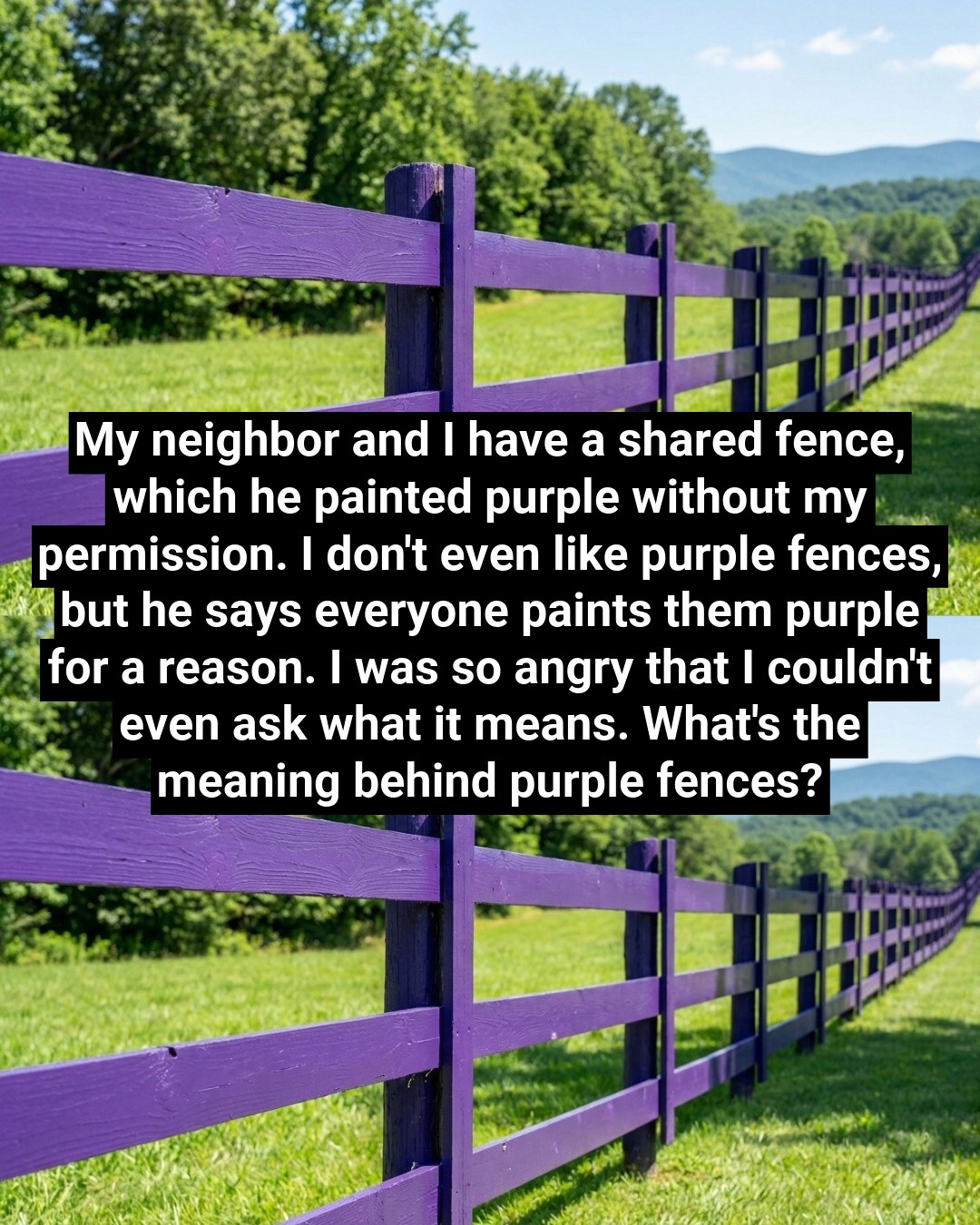
A tree trunk decorated with vertical purple stripes or a fence painted a striking shade of violet may initially appear to be the creation of a local artist or eccentric homeowner attempting to bring some color to the rural scene. Many hikers, hunters, and weekend explorers would be forgiven for thinking the hue is only cosmetic in a time when strong aesthetic choices and “do it yourself” home improvement projects are more popular than ever. They may interpret the purple markings as a child’s outdoor art effort, a trail marker, or a humorous design decision. However, this particular color is everything from a fashion statement in dozens of states around the nation. Ignoring this legally enforceable “Keep Out” order might have serious legal repercussions. It has the same weight as an official sign.
The Purple Paint Law is a phenomena that illustrates the intriguing meeting point of custom, law, and pragmatism in rural America. Landowners have faced logistical challenges in designating their property limits for many generations. Conventional “No Trespassing” signs are infamously frail; they are composed of thin plastic or metal that easily fades in the rain, gets brittle in the summer sun, or is torn away by strong winds. Signs are often removed by vandals or utilized as targets by passing hunters in more isolated regions, leaving vast tracts of private land unmarked and open to unintentional invaders. It is extremely expensive and labor-intensive for a landowner with hundreds or even thousands of acres to change these signs on a regular basis.
State legislatures started enacting laws that provide a more durable and unbreakable warning system in order to address this issue. This movement began in Arkansas in 1989 and has since spread to several other states, including Texas, Missouri, Florida, Illinois, and Kansas. Purple was picked because of its uniqueness. It doesn’t mix in with the forest’s natural foliage as brown or green does, and it can’t be mistaken for typical markings used by utility personnel, surveyors, and logging firms like red or orange. Above all, the warning will be seen to as many people as possible since purple is a hue that is noticeable even to colorblind persons.
In order to guarantee that there is no confusion for anybody approaching the border, the legal criteria for these marks are remarkably exact. The purple markings must be vertical stripes that are at least eight inches long and one inch broad in order to be legally recognized. They must be repeated at intervals of no more than 100 feet and positioned three to five feet from the ground, or exactly eye level for an average adult. This guarantees that whenever someone tries to enter a piece of land, they will see an obvious visual indication that they are going to leave a public area or someone else’s property.
Understanding this code is a legal requirement for outdoor enthusiasts, not merely a question of manners. These signs function as “prior notice” in states where the Purple Paint Law is recognized. Therefore, even if someone claims they never saw a physical sign or were unaware they were on private property, they may still face criminal trespassing charges if they cross a purple-marked boundary. The invader has the burden of knowing under the law. The instant you cross that purple line, you have broken the law, whether you are a hunter after a deer, a hiker seeking a picturesque shortcut, or a photographer trying to capture the ideal sunset.
Landowners reap enormous rewards. In addition to the paint’s long lifespan—it doesn’t need to be touched up for years—the legislation offers a degree of protection that a straightforward sign could never match. It is very hard to remove a stripe of high-durability paint from a cedar fence post or a rough-barked oak tree, yet a trespasser may knock down a sign and claim ignorance in court. It offers a silent, permanent sentry that safeguards the security and privacy of the land’s occupants. Additionally, it helps avoid the unintentional liability problems that occur when outsiders stray into properties that can have concealed hazards, such cattle, open wells, or active hunting areas.
But there have been certain growing pains associated with the adoption of these legislation. Public education continues to be the largest obstacle. Many people who move from one area to another are totally ignorant of the “purple code” because the legislation is not applicable in all fifty states. A hiker from a state without these regulations may meander through private Missouri forests for an entire afternoon, appreciating the “pretty purple trees,” completely oblivious to the fact that they are breaking the law with each step. In order to close the gap between rural culture and urban leisure, there is a drive for improved trailhead signs and more PSAs.
The emergence of the purple fence also reveals more about how privacy and land ownership are evolving in the twenty-first century. The conflict between private property rights and public access has grown as suburban development approaches rural farmlands and more people venture into the woods for “off-grid” experiences. The purple line is a compromise that preserves the border’s sanctity while preserving the landscape’s openness without the clutter of thousands of metal signage. In a world that is getting more and more busy, it is an instrument of clarity.
The purple fence should be seen as a symbol of appreciation for people who value the outdoors. It stands for a landowner’s wish to safeguard their house, their pets, and their tranquility. We may make sure that we are responsible neighbors and visitors by mastering this basic visual language. The next time you see a fence glistening with that particular shade of violet while taking a drive or strolling, keep in mind that it’s not an invitation to investigate a vibrant interest. It’s a quiet, strong appeal for privacy. It is a border that makes it very evident that “I value my solitude and this is my home.” In addition to avoiding a fine, being on the correct side of the line contributes to a long-standing custom of respect for one another that maintains the tranquility of the American countryside for everybody. In the realm of property law, the purple paint is the most striking warning you will ever see. It is a tiny detail with enormous significance.